5 Secrets for the Best Himalayan Salt Block Chicken Breast Recipe
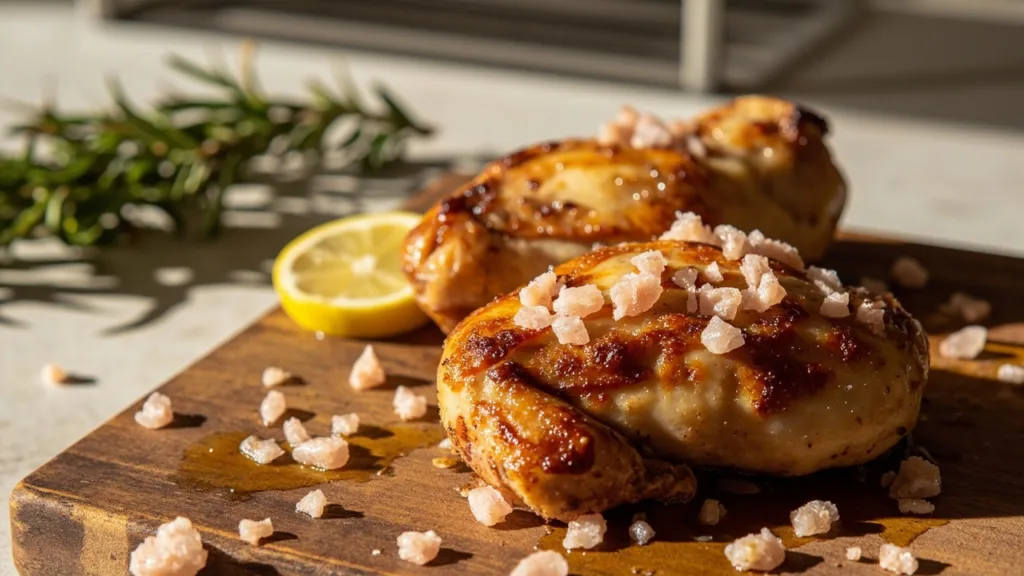
Chicken breast is a staple, but let’s be honest: it is famously bland and incredibly easy to overcook into a dry, chalky mess. This is precisely why developing a foolproof Himalayan salt block chicken breast recipe is one of the most valuable techniques a home cook can learn. This single piece of equipment, when used correctly, solves the two biggest problems with chicken breast: moisture and flavor. However, you cannot simply throw a piece of chicken on the block and expect magic.
Based on our years of culinary analysis, cooking on a salt block is a science. It’s about heat transfer, moisture control, and precise timing. This guide will provide more than just a recipe; it will deliver the five core secrets that we use as professionals to guarantee a juicy, intensely flavorful, and perfectly seared chicken breast every single time. Consequently, you will learn why this method is superior and how to replicate it flawlessly.
Why a Salt Block Creates the Perfect Chicken Breast
First, we must understand *why* this tool is so effective. A Himalayan salt block is not just a gimmick; it’s a unique cooking surface with three distinct advantages for a lean protein like chicken breast.
1. The Perfect Sear (The Maillard Reaction)
A heavy, dense salt block, once properly heated, holds an incredible amount of heat. This stable, high temperature is the key to achieving a perfect sear. When the chicken hits the hot surface, it immediately kicks off the Maillard reaction. This is the chemical process, as detailed by culinary science authorities like Serious Eats, responsible for creating the savory, complex, “browned” flavors that we find so delicious. In short, a pan sears; a salt block *encases* the chicken in a flavorful crust.
2. Built-in Moisture Control
A common mistake is to brine a chicken breast, which adds water. However, a salt block works differently. The block’s high heat sears the exterior instantly, which helps to lock in the chicken’s *natural* juices. It doesn’t add external water; it preserves the internal moisture, which is far more flavorful. This results in a much juicier, not water-logged, final product.
3. Subtle, Complex Seasoning
Finally, there’s the flavor. The block doesn’t just make the chicken “salty.” Instead, it imparts a delicate, complex mineral-forward salinity that you simply cannot get from a dash of table salt. The hot chicken pulls trace amounts of this nuanced flavor from the block, seasoning it perfectly from the outside in. It’s a foundational flavor, much like what you build when mastering stocks and sauces; it enhances everything else.
The 5 Secrets to the Best Himalayan Salt Block Chicken Breast Recipe
A great recipe is about technique, not just ingredients. Here are the five secrets our culinary team swears by. Master these, and you will master the salt block.
Secret 1: The Pre-Heat is a Non-Negotiable Law of Physics
This is, without a doubt, the most common mistake. You cannot cook on a cold or warm salt block. A block that isn’t hot enough will do the *opposite* of what you want: it will slowly draw moisture *out* of the chicken, dissolving the block’s surface into a salty sludge and leaving you with a pale, boiled piece of meat. Therefore, you must preheat your block slowly and thoroughly for at least 45-60 minutes to a surface temperature of 450-500°F (230-260°C). A properly heated block is the key to the entire recipe.
Secret 2: Stop Brining; Start Pounding
Many recipes call for brining. In our expert opinion, this is unnecessary with a salt block. In fact, it’s counterproductive, as the excess moisture can make the block cool down. The real secret to a juicy chicken breast is not adding water, but ensuring it cooks evenly. A typical chicken breast is thick on one end and thin on the other. Consequently, the thin end becomes overcooked and dry long before the thick end is safe to eat. The best practice is to place the chicken breast between two pieces of plastic wrap and use a meat mallet to pound it to an even thickness of about 3/4 inch (2cm). This is the *real* secret to a juicy final product.
Secret 3: Use an Oil-Based Marinade (The “Dry-Wet” Trick)
While you don’t want a watery marinade, you still want to add flavor. An oil-based marinade is the perfect solution. Oil protects the chicken from sticking and, more importantly, it is a fantastic conductor of heat, which promotes an even sear. A simple marinade of olive oil, black pepper, garlic powder, and paprika is all you need. The block will provide all the salt.
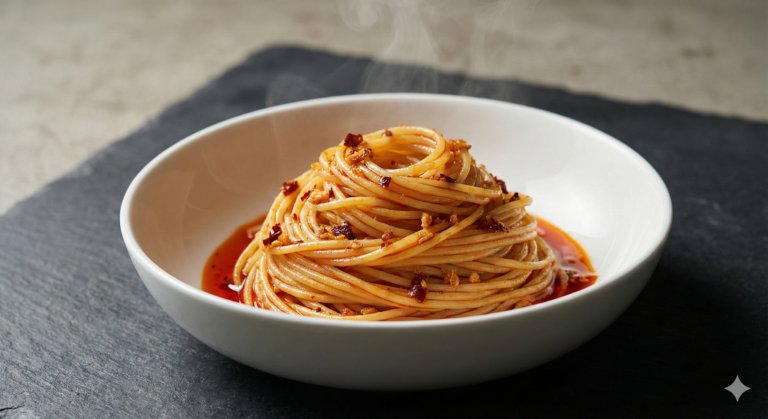
Furthermore, if you want to add a layer of complexity, an infused oil like this homemade chili oil can serve as a phenomenal base for your marinade, adding a gentle, background heat. Just remember: before placing the chicken on the block, you must pat it dry with paper towels. You want the oil and flavor, not the surface liquid.
Secret 4: Slice *Against* the Grain for Tenderness
This may seem like a post-cooking step, but it’s a critical part of the recipe’s success. After you cook the chicken, you must let it rest. However, *how* you slice it afterward is just as important. Chicken breast has a natural “grain”—the direction the muscle fibers run. A common mistake is to slice *with* the grain, which results in long, stringy, tough fibers. For a tender, melt-in-your-mouth bite, you must slice the chicken against the grain. This severs those fibers, making the meat infinitely more tender.
Secret 5: Cook by Temperature, Not by Time
How long to cook chicken on a salt block? The only correct answer is: “until it’s done.” We can give you estimates, but the exact time depends on your block’s temperature and the chicken’s thickness. The best practice, and the only one we use in professional kitchens, is to use an instant-read digital thermometer. You must cook the chicken until the thickest part registers an internal temperature of 165°F (74°C). Pulling it off the heat at the exact right moment is the final secret to guaranteeing a juicy, safe, and perfectly cooked breast.
Our Ultimate Himalayan Salt Block Chicken Breast Recipe
This recipe is a framework that incorporates all five secrets. It is simple, fast, and foolproof, focusing on technique to deliver a perfect result. This recipe assumes you have already preheated your salt block on a grill or in the oven following safe procedures.
H3: Ingredients
- 2 boneless, skinless chicken breasts (about 6-8 oz each)
- 2 tablespoons olive oil (or an infused oil like chili oil)
- 1 teaspoon garlic powder
- 1 teaspoon smoked paprika
- 1/2 teaspoon freshly ground black pepper
- (Optional) 1 tablespoon fresh herbs, chopped (e.g., parsley, thyme)
H3: Step-by-Step Instructions
- Prepare the Chicken: Place one chicken breast at a time inside a plastic bag or between two pieces of plastic wrap. Using the flat side of a meat mallet, pound the chicken to an even thickness of about 3/4 inch. This is crucial for an even cook.
- Marinate the Chicken: In a medium bowl, combine the olive oil, garlic powder, smoked paprika, and black pepper. Add the pounded chicken breasts and turn to coat them completely. Let this sit for at least 15 minutes (or up to 4 hours in the refrigerator). Note: We do not add any salt; the block will handle that.
- Preheat the Salt Block: While the chicken marinates, begin preheating your Himalayan salt block. You must do this slowly and gradually on a grill or in an oven. (Never on a direct electric coil!) Your target surface temperature is 450-500°F (230-260°C).
- Dry the Chicken: Remove the chicken from the marinade and, very importantly, pat it thoroughly dry with paper towels. You want a “dry” surface; this prevents the chicken from steaming instead of searing.
- Sear the Chicken: Carefully place the chicken breasts on the hot salt block. You should hear an immediate, loud sizzle. Let the chicken cook, undisturbed, for 3-5 minutes on the first side. It should develop a deep, golden-brown crust.
- Flip and Finish: Using tongs, flip the chicken. You will see a beautiful crust. Cook on the second side for another 3-5 minutes.
- Check for Doneness: Insert an instant-read thermometer into the thickest part of the breast. Once it reads 165°F (74°C), your chicken is perfectly cooked and safe. Immediately remove it from the salt block.
- Rest the Chicken: This is a vital step. Place the cooked chicken on a cutting board and let it rest for 5-10 minutes. This allows the juices to redistribute throughout the meat, ensuring a tender bite.
- Slice and Serve: Finally, identify the direction of the grain in the chicken and slice it *against* the grain. Serve immediately.
Flavor Variations for Your Salt Block Chicken
This core recipe is a perfect canvas. Once you have mastered the technique, you can endlessly customize the flavor profile with your marinade.
Mediterranean-Style Chicken
For a bright, herbaceous flavor, use a marinade of olive oil, lemon zest, dried oregano, and chopped fresh parsley. This pairs beautifully with a simple Greek salad. It’s a classic profile you’ll find when mastering European classics.
Asian-Inspired Chicken
Create a marinade using sesame oil, grated ginger, garlic, and a touch of rice vinegar. The salt block will provide the salinity you’d normally get from soy sauce. This is a great starting point if you’re interested in the fundamentals of mastering authentic Chinese food. You could even serve it with a drizzle of a balanced stir-fry sauce (after cooking, not in the marinade!).
Common Mistakes to Avoid With This Recipe
Beyond the 5 secrets, here are the three most common errors we see when people attempt this recipe for the first time.
- Using a Watery Marinade: Any marinade with high water content (like citrus juices, vinegar, or soy sauce) will boil on the block. This steams the chicken, prevents a crust, and, most importantly, dissolves your block, leaving pits and holes. Stick to oil-based marinades.
- Crowding the Block: If you put too much chicken on the block at once, the temperature of the block will plummet. This, consequently, leads to steaming instead of searing. Always cook in batches, leaving ample space between each piece.
- Slicing Too Soon: We mentioned it, but it bears repeating. If you slice into that chicken breast immediately off the block, all the juices you worked so hard to retain will pour out onto your cutting board. Resting is not optional.
Expert Answers to Your Salt Block Chicken Questions
Do I really not add any salt to the chicken breast marinade?
That is correct. The best practice is to add no salt to your marinade. The Himalayan salt block itself will perfectly season the chicken breast as it cooks. Adding salt to the marinade is a common mistake that will almost certainly result in a chicken that is far too salty. Trust the block.
How long do I cook chicken breast on a Himalayan salt block?
Cooking time is just an estimate. The only way to know is by temperature. For a 3/4-inch thick breast on a 500°F block, it will take approximately 3-5 minutes per side. However, you must use an instant-read thermometer. Remove the chicken from the heat immediately when the thickest part reads 165°F (74°C).
Why did my chicken stick to the salt block?
There are two likely reasons. First, your block was not hot enough. A properly preheated block will instantly sear the chicken, creating a crust that releases easily. Second, your chicken was too wet. You must pat the chicken completely dry before placing it on the block. A light coating of oil in your marinade will also help prevent any sticking.
Can I use this recipe for chicken thighs?
Absolutely. In fact, chicken thighs are more forgiving due to their higher fat content. You can use the same marinade and technique. Since thighs are often thinner, they may cook slightly faster, so start checking the internal temperature (which should also be 165°F) after about 3 minutes per side.
Ultimately, this Himalayan salt block chicken breast recipe is a lesson in mastering heat and moisture. By following these expert secrets—preheating properly, pounding for evenness, using an oil marinade, slicing correctly, and cooking to temperature—you will move beyond the simple “recipe” and into the realm of true culinary technique. The result is a simple chicken breast, transformed.