5 Epic Secrets Traditional Indonesian Food Recipe
Last Updated on 2025-11-04 by Suryo

So, you think you know Southeast Asian food? Perhaps you’ve had a Pad Thai, maybe a Pho. That’s a great start. But let me tell you, you haven’t truly lived until you’ve dived headfirst into the chaotic, complex, and utterly mind-blowing world of a traditional Indonesian food recipe. As a chef who has spent decades chasing flavors, I can tell you this: Indonesian food isn’t just food. It’s an adventure on a plate, a symphony of chaos that somehow, magically, works. It’s “amazing” in the best possible way.
Consequently, it’s time to forget what you think you know. We’re not just talking “fried rice” here—though we’ll get to why you’re probably doing that wrong, too. We’re talking about an archipelago of 17,000 islands, each with its own culinary dialect, all tied together by one glorious, fragrant, spicy thread. This isn’t just cooking; it’s a commitment. And today, I’m going to be your guide. Let’s get cooking.
What Makes a Traditional Indonesian Food Recipe So Amazing?
Before we even light the stove, let’s get one thing straight. The “amazing” quality of authentic Indonesian cuisine recipes comes from one place: Bumbu. This is the Indonesian word for spice paste, and it’s the soul of everything. Unlike many Western dishes where you season as you go, most classic Indonesian dishes recipe starts with a complex, mortar-and-pestle-pounded paste of 10, 15, even 20 different ingredients. Think galangal, turmeric, candlenuts, shallots, garlic, and shrimp paste.
Based on our analysis, the biggest mistake Western cooks make is trying to skip or substitute parts of the bumbu. Bumbu is a foundational element, not an optional seasoning. You can’t skip it. That’s like trying to make an authentic Italian pasta sauce without tomatoes. The balance of sweet (from kecap manis or palm sugar), sour (tamarind), spicy (chilies), and savory (shrimp paste) is a non-negotiable. This is where the magic, and the complexity, lies.
The ‘Big 3’ Traditional Indonesian Food Recipes That Define an Archipelago
If you’re going to start anywhere, you start here. These three dishes are the pillars of Indonesian cuisine. Mastering them gives you the license to brag at your next dinner party. And trust me, you’ll want to.
1. Rendang: A Classic Indonesian Dish Recipe of Patience
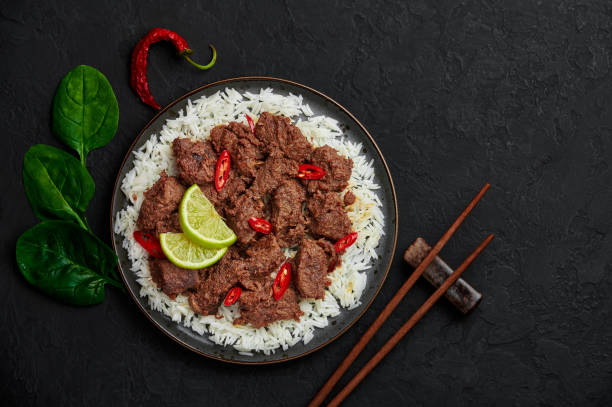
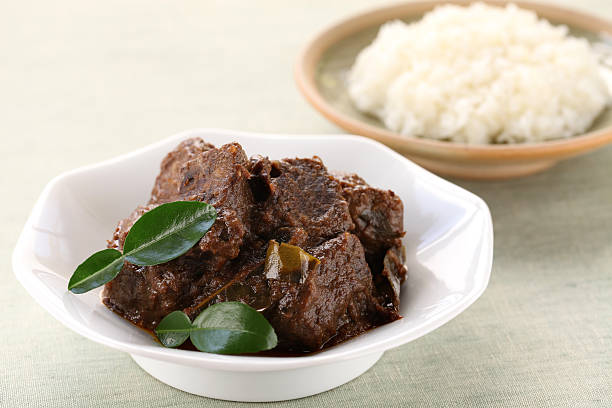
Rendang is less a recipe and more a life choice. This isn’t a 30-minute weeknight meal; it’s the pinnacle of dedication. Originally from West Sumatra, this “dry curry” involves slowly, incredibly slowly, simmering beef in coconut milk and a ridiculously complex bumbu for hours. And I mean hours. Four, six, sometimes eight hours.
The process involves stages. First, it’s a liquid curry. Then, as the coconut milk reduces, the oil (the blondo) separates. A common mistake is stopping here. Don’t you dare. The key is to keep going, “frying” the beef in that coconut oil and spice paste until it’s dark brown, caramelized, and so tender it collapses at the mere suggestion of a fork. The flavor is nutty, spicy, rich, and unlike anything else on Earth. It’s a true labor of love and the pinnacle of many a classic Indonesian dishes recipe.
Chef’s Tip: The real secret is constant stirring in the last two hours. The moment you walk away, the coconut solids will burn. This dish demands your full attention. Nevertheless, it’s worth the commitment. The process is a bit like mastering French sauces; it’s all about reduction and patience.
2. Nasi Goreng: The Best Indonesian Food Recipe You’re Making Wrong
Ah, Nasi Goreng. The “National Dish” that everyone thinks they know. Let me guess: you made some rice, threw it in a pan with an egg and some soy sauce, and called it a day? My friends, that’s not it.
The “amazing” part of Nasi Goreng is its flavor-to-effort ratio, if you do it right. The number one, unforgivable, cardinal sin of making Nasi Goreng is using fresh, hot rice. Stop doing this, home cooks! Real Nasi Goreng must be made with day-old, cold, refrigerated rice. This ensures the grains are firm and separate, allowing them to fry, not steam.
Furthermore, the real flavor comes from a simple bumbu (shallots, garlic, chili) pounded into a paste, a healthy dose of savory-sweet kecap manis (sweet soy sauce), and a touch of shrimp paste (terasi) for that unidentifiable “umami” punch. It’s fast, it’s furious, and it should be slightly smoky (the “wok hei”). You’ll find it’s a different beast entirely from your typical Chinese-style fried rice.
3. Sate (Satay): An Authentic Indonesian Cuisine Recipe for Grilling
This is where things get personal. Everyone has their favorite Sate. But whether it’s Sate Ayam (chicken) or Sate Kambing (goat), the secret is twofold: the marinade and the sauce. The meat is marinated in a blend that often includes sweet soy sauce and spices, skewered, and then grilled over screaming-hot charcoal. Not a gas grill. Charcoal. You need that smoke.
But let’s be honest. The meat is just a vehicle for the sauce. And in Indonesia, that means a rich, complex, “incredibly” delicious peanut sauce. This isn’t just peanut butter mixed with water. Oh no. It’s a proper bumbu of fried peanuts, ground with shallots, garlic, chilies, palm sugar, tamarind, and sweet soy sauce until it’s a perfect balance of sweet, spicy, sour, and creamy. It’s the best Indonesian food recipe for a party, period.
Practice truly is everything. That peanut sauce is the heart and soul of so many dishes, not just Satay. Getting it right will change your life.
Chef’s Analysis: A Video That Nails This Authentic Indonesian Cuisine Recipe
Okay, let’s put this into practice. I’m always skeptical of online recipe videos. Most of them are just… wrong. They miss the soul. They skip the terasi. They use a non-stick pan when they should be using a wok. But I’ve found a simple video here that actually gets the fundamentals of a traditional Indonesian food recipe right, specifically for Nasi Goreng.
Now, before you press play, here is my expert analysis. Watch how they use a proper ulekan (mortar and pestle) for the bumbu. This isn’t just for show; pounding the spices, as opposed to blending, releases the oils differently and creates a superior flavor profile. Also, notice the color they achieve with the kecap manis. It’s a deep, caramelized brown. This is what you’re looking for. My one critique? They could be using higher heat for more “wok hei,” but for a home cook, this is a fantastic, authentic approach.
Tonton: Resep Nasi Goreng Sederhana di YouTube
Diving Deeper: Authentic Indonesian Cuisine Recipes for the Brave
You’ve mastered the big three? You’re feeling confident? Good. Let’s get weirder. And by weirder, I mean more delicious. The rabbit hole of Indonesian cooking is deep, my friends.
Chef’s Expert Takeaway
The best practice for any authentic Indonesian cuisine recipe is to taste and adjust constantly. These recipes aren’t rigid formulas like European pastry. They are a dance. Does it need more tamarind for sourness? More palm sugar for sweetness? More chili for kick? Trust your palate.
4. Gado-Gado: The ‘Everything’ Salad That’s Actually a Meal
Calling Gado-Gado a “salad” is a disservice. It’s a glorious, chaotic pile of blanched vegetables (cabbage, spinach, bean sprouts), fried tofu and tempeh, boiled potatoes, and hard-boiled eggs, all brought together by… you guessed it… that incredible peanut sauce. It’s often served with lontong (compressed rice cakes) and buried under a shower of krupuk (crackers) and fried shallots. It’s a textural masterpiece and a complete, satisfying meal.
5. Soto Ayam: A Comforting Traditional Indonesian Food Recipe
Every culture has its chicken soup. Indonesia has Soto. And it’s on another level. Soto Ayam is a fragrant, bright yellow chicken soup, getting its color from fresh turmeric. The bumbu is (of course) complex, featuring candlenuts to give the broth a slight, creamy body. It’s served with shredded chicken, glass noodles, bean sprouts, and a hard-boiled egg. The “amazing” part? The toppings. It’s finished with fresh lime, fried shallots, celery leaves, and a spoonful of koya—a magical powder made from ground prawn crackers and fried garlic. It’s a hug in a bowl, and a must-try dish highlighted by Indonesia’s own tourism board.
Beyond the ‘Big 5’: Two Classic Indonesian Dishes You Can’t Ignore
We’re just scratching the surface. To truly appreciate the breadth of this cuisine, you need to explore the regional specialties. These two are showstoppers.
6. Rawon: A Unique Black Soup (Classic Indonesian Dish)
First-timers are always visually shocked by Rawon. It’s black. Like, motor-oil black. This “amazing” color comes from the keluak nut, a unique ingredient that is, get this, poisonous if not prepared correctly. (Don’t worry, the ones you buy are processed and safe!). The nut has to be cracked open, and the black, oily flesh inside is dug out. It has a deep, earthy, almost chocolatey-mushroom flavor that is impossible to describe. It’s used to create a rich, black beef stew that is nutty, savory, and utterly unique. This is a traditional Indonesian food recipe for the adventurous.
7. Ikan Bakar: Grilled Fish That’s All About the *Sambal*
On the lighter side, you have Ikan Bakar (grilled fish). But this isn’t some delicate piece of steamed fish. A whole fish (usually snapper or pomfret) is butterflied, slathered in a paste of bumbu and sweet soy sauce, and grilled over charcoal. The “amazing” part is that the fish, while delicious, is merely the opening act. The headliner is the sambal. Whether it’s a fiery Sambal Terasi or a bright Sambal Matah (a raw shallot and lemongrass salsa), the sambal is everything. It’s the soul of the dish. It’s almost like a cousin to the chili oils you might know, but fresher and more complex.
Common Mistakes When Attempting Authentic Indonesian Cuisine
As a chef, I see the same mistakes over and over. Let’s fix them right now. Avoid these pitfalls, and you’ll be 90% ahead of everyone else.
- Being ‘Polite’ with the Bumbu: Don’t be shy. If the recipe calls for 10 shallots, 6 cloves of garlic, and a thumb of galangal, it means 10 shallots, 6 cloves of garlic, and a thumb of galangal. Do not reduce it. You’re not “lightening it up”; you’re ripping its soul out.
- Using a Blender Incorrectly: A blender is fast, but a mortar and pestle is better. If you must use a blender, add as little oil or water as possible and “pulse” it. You want a paste, not a smoothie.
- Rushing the Bumbu: You must fry your bumbu. You have to cook it over medium-low heat until it’s fragrant, the color deepens, and the oil starts to separate. Specifically, this cooks out the raw taste of the shallots and garlic and melds the flavors. This is a non-negotiable step in almost every traditional Indonesian food recipe.
- Fearing the Terasi (Shrimp Paste): Yes, it smells… pungent… when raw. But when you toast it and fry it as part of your bumbu, it transforms into the deepest, most complex savory flavor imaginable. Don’t skip it. Just open a window.
Cooking Indonesian food is a commitment, but the payoff is a flavor explosion that is second to none. It’s a journey, and like any great journey, it’s worth the effort. So go on, get in the kitchen. It’s time to get a little “amazing.”
Frequently Asked Questions (FAQ) about Indonesian Recipes
It’s a tie! Nasi Goreng (fried rice) is eaten by everyone, everywhere, at any time of day. However, Rendang is often cited as the “king” of Indonesian dishes, having been voted the ‘World’s Best Food’ in several international polls. Both are essential.
This comes from Indonesia’s history as the “Spice Islands.” For centuries, the region was the world’s only source of cloves, nutmeg, and mace. This history, combined with influences from India, China, the Middle East, and Europe, created a culture of complex, layered spice-blending (bumbu) that is the hallmark of the cuisine.
Bumbu is the Indonesian word for the spice paste that forms the base of almost all savory dishes. It’s not just a “little” seasoning; it is the entire flavor foundation. A common mistake is not making enough bumbu or not cooking it properly. It’s the heart and soul of the dish.
Based on our analysis, it’s not “hard” in terms of technique (you’re mostly just stirring!), but it requires patience and preparation. The “hard” part for most beginners is pounding or blending the bumbu and then having the patience to cook it slowly to perfection, as with Rendang.
Padang food (or “Masakan Padang”) is the specific cuisine of the Minangkabau people of West Sumatra. It’s famous for Rendang, Gulai (curries), and its serving style (Nasi Padang), where dozens of small plates are served at once. It’s known for being particularly rich (using lots of coconut milk) and spicy.