7 Simple Beef Stir Fry Secrets for a Quick Dinner
Last Updated on 2025-11-04 by Suryo
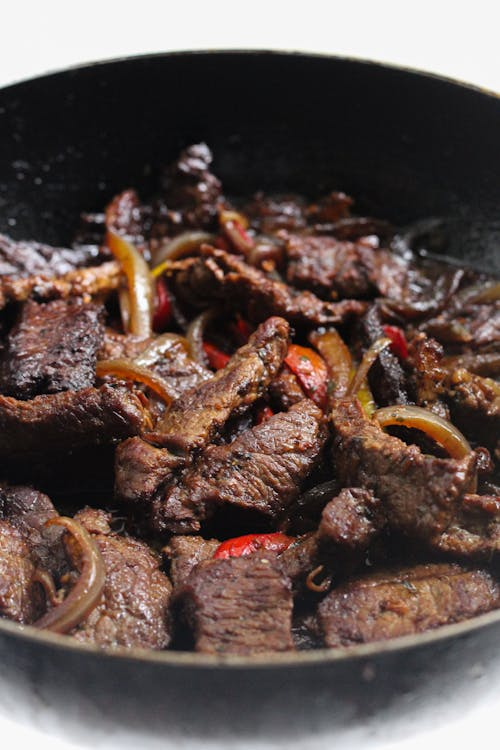
Alright, let’s have a talk. You searched for a Simple Beef Stir Fry guide, and you’ve probably seen a dozen recipes that promise a “quick dinner.” But let’s be honest. Your past attempts have probably been… disappointing. We’re talking soggy, grey beef floating in a watery, bland puddle. That’s not a stir-fry; that’s beef soup. And you’re making it wrong.
As a chef with decades of experience, I’m here to tell you that a real simple beef stir fry is a 10-minute masterpiece of flavor and texture. It’s a symphony of seared, tender beef, crisp-crunchy vegetables, and a glossy sauce that clings to every single bite. It is the ultimate quick dinner. But, like any masterpiece, it has rules. Most “complete guides” miss the critical steps.
Consequently, we are going to fix that. Today. This isn’t just a recipe. This is a complete guide to the method. Forget what you think you know. We’re building the perfect `easy beef stir fry for dinner` from the ground up. Let’s get to work.
Why Your Past Simple Beef Stir Fry Attempts Failed Miserably
Before we build, we must understand the failures. Based on our analysis of common cooking mistakes, stir-fry failures almost always come down to a few cardinal sins. Do any of these sound familiar?
- You Used the Wrong Cut of Beef: You grabbed “stew meat” or some random “beef for stir fry” pack from the supermarket. This meat was destined to be tough, no matter what you did.
- You Crowded the Pan: You dumped all your beef, broccoli, and carrots into a lukewarm pan at the same time. Instead of searing, you steamed everything. This is the primary cause of grey, watery sadness.
- Your Sauce Was… Bad: You either used a bottled sauce full of sugar and corn syrup, or you threw some soy sauce in at the end and hoped for the best. A great stir-fry sauce is a balance of five flavors, and yours had one.
- You Didn’t Prep: You were slicing mushrooms while your beef was burning. A stir-fry cooks in minutes. Your mise en place (all ingredients prepped and ready) is non-negotiable. This is lesson one in authentic Chinese food preparation.
This “quick dinner” becomes a frustrating mess because the most critical steps happen before you even turn on the heat. Let’s fix every single one of these problems right now.
The Holy Trinity of a Perfect Quick Beef Stir Fry Recipe
Forget the 20-ingredient list. A truly great, simple stir-fry relies on three core components, executed perfectly. Master these, and you’ve mastered the dish.
1. The Beef: Slicing and ‘Velveting’ for Ultimate Tenderness
Your journey to a `how to make beef stir fry` masterpiece starts here. First, choose the right cut. Flank steak or skirt steak are my top choices. They have a strong beefy flavor and a clear, long-grained texture. Sirloin is also a good, tender option.
Next, you must slice it correctly. See the lines (the “grain”) running down the meat? You must slice against that grain, and thinly (about 1/8 inch). This shortens the muscle fibers, making the meat tender instead of chewy. But here’s the real secret, the one that restaurants use: velveting. A simple toss with a tiny bit of baking soda (or a cornstarch marinade) chemically tenderizes the beef, guaranteeing a silky, tender result. This chemical reaction (as beautifully explained by food scientists) is a game-changer.
2. The Heat: How to Get ‘Wok Hei’ Without a Wok
You don’t need a 50,000 BTU jet engine wok burner. What you need is heat. Specifically, a heavy-bottomed pan—like a cast-iron skillet or a heavy stainless-steel pan—that can get screaming hot and, more importantly, stay hot. The goal is to sear the beef, creating a delicious brown crust (the Maillard reaction). You achieve this by cooking in small batches and not overcrowding the pan. This creates that unique, smoky flavor known as ‘wok hei’ (a complex aroma prized by chefs), which is the soul of a great stir-fry.
3. The Sauce: The Soul of Your Easy Beef Stir Fry for Dinner
Stop buying that bottled junk. A professional stir-fry sauce is about balance: salty (soy sauce), sweet (a touch of sugar or mirin), savory (oyster sauce, toasted sesame oil), and sour (a hint of rice vinegar). Crucially, it’s also a thickening agent. A “slurry” of cornstarch and water, added at the very end, is what takes your sauce from a watery liquid to a glossy, rich coating that clings to the beef and vegetables. This is a fundamental concept in mastering stocks and sauces.
A Chef’s Complete Guide to the Stir-Fry Method
Here is the exact, non-negotiable process I follow for a perfect simple beef stir fry every single time. Follow this, and you will not fail. This is the “complete guide” part, so pay attention.
Step 1: The ‘Mise en Place’ (Prep Everything)
I cannot stress this enough. Once cooking starts, you have no time.
- The Beef: Slice thinly against the grain. Place in a bowl.
- The ‘Velvet’: Add 1 teaspoon of cornstarch (or 1/2 tsp baking soda), 1 tsp soy sauce, and 1 tsp oil to the beef. Mix well and set aside for 15-30 minutes.
- The Aromatics: Finely mince your garlic, ginger, and any scallion whites. Put them in a small bowl.
- The Vegetables: Cut your vegetables. Here’s the key: cut them for uniform cooking. Hard veg (broccoli, carrots) should be cut small and thin. Soft veg (mushrooms, bell peppers) can be cut larger.
- The Sauce: In a separate bowl, whisk together all your sauce ingredients (soy, oyster sauce, sugar, sesame oil, etc.) AND the cornstarch slurry. Have this ready by the stove.
Step 2: The Sear (Cook in Batches)
Get your cast-iron or stainless-steel pan on high heat. Add a tablespoon of a high-smoke-point oil (like canola, grapeseed, or peanut). When it is shimmering and just starting to smoke, it’s ready.
Add half your beef in a single layer. Do not touch it. Let it sear for 60-90 seconds until a deep brown crust forms. Flip, sear the other side for 30 seconds, and immediately remove it to a clean plate. Add a bit more oil, and repeat with the second batch of beef. Yes, it will be undercooked in the middle. That’s what you want. Remove it all.
Step 3: The Build
Lower the heat to medium-high. Add a little more oil to the pan. Add your aromatics (garlic, ginger). Stir-fry furiously for 30 seconds until they are fragrant. Do not let them burn!
Immediately add your hardest vegetables first (e.g., broccoli florets, sliced carrots). Stir-fry for 2-3 minutes. You can add a tablespoon of water and cover for 1 minute to speed-steam them. Then, add your softer vegetables (e.g., bell peppers, mushrooms, snow peas) and cook for another 1-2 minutes until everything is crisp-tender.
Step 4: The Finish (Combine and Thicken)
Add the seared beef (and any juices) back into the pan. Toss everything to combine.
Give your sauce-slurry mixture one last quick whisk (the cornstarch will have settled). Pour it all over the pan. Stir continuously. Within 30-60 seconds, the sauce will bubble, thicken, and turn into a beautiful, glossy glaze. The moment it’s thick, kill the heat. You’re done. Drizzle with a tiny bit of homemade chili oil if you like heat.
Chef’s Expert Takeaway: How to Guarantee a Quick Dinner
The “quick” part of this quick beef stir fry recipe is the cooking. The “guide” part is the prep. You can prep everything hours or even a day in advance. Slice the beef, make the sauce, chop the veg. Store them in separate containers in the fridge. When it’s dinnertime, the entire cooking process will take less than 10 minutes. This is the true secret of a “quick” dinner.
Expert Analysis: Watch This ‘How to Make Beef Stir Fry’ Video
I find it’s always helpful to see the process in action. I’ve curated a video that does a fantastic job of showing the basics of a home stir-fry. It’s not me, but the technique is solid, especially for a beginner working in a home kitchen.
Here is my expert analysis: Pay close attention right at the beginning (around 0:30) to how they slice the beef—that’s a perfect “against the grain” example. Then, at 1:40, notice the “velveting” step with cornstarch, which we discussed. The most important part for you to watch is the cooking (starting around 3:30). Notice how they sear the beef first and remove it from the pan. This is the non-negotiable step to prevent overcooking. They also add the sauce last to thicken. It’s a great, simple demonstration of the core principles.
Tonton: Simple Beef Stir Fry Recipe on YouTube
Common Mistakes That Ruin Your ‘Simple Beef Stir Fry’
Even with this guide, there are pitfalls. Let’s make sure you avoid them. These are the most common errors I see from home cooks.
Mistake 1: You Used a Non-Stick Pan
I know, I know. It’s easy to clean. But non-stick pans are terrible for searing. They are designed to *prevent* food from sticking, which means they also prevent a good, hard crust from forming. That’s why your beef always looks pale. Practice the best technique: use a heavy-bottomed pan that can take the heat.
Mistake 2: You Were Scared of the Heat
Stir-frying is a high-heat sport. Your pan needs to be hot. Your oil needs to be shimmering. If you add your beef and you don’t hear an immediate, aggressive TSSSSSS, your pan is too cold. Take the beef out and wait. A cold pan steams. A hot pan sears.
Mistake 3: You Used a Bottled “Stir Fry” Sauce
Let’s look at the ingredients on that bottle. The first one is probably high-fructose corn syrup or water. The second is salt. You’re paying for sugar-water. A great sauce, like the one from our internal recipe, takes 2 minutes to whisk together and has 100x the flavor. Stop cheating yourself.
Mistake 4: You Added the Sauce Too Early
If you add the sauce while the vegetables are still raw, you’re finished. The water content in the sauce will prevent the vegetables from ever getting crisp. The sauce will burn. The cornstarch will get gummy. The sauce is a finishing step, added in the last 60 seconds to thicken and bind. Not a simmering liquid.
This “simple” dish is a masterclass in technique. But now, you have the complete guide. You have the method. You have the secrets. Go make a Simple Beef Stir Fry tonight and see the difference for yourself. You’re not making soup anymore.
Frequently Asked Questions (FAQ) on Simple Beef Stir Fry
Based on our analysis, the best cuts are flank steak, skirt steak, or sirloin. They are tender, have a great beefy flavor, and hold up well to high-heat cooking. The most important step is to slice them thinly against the grain.
There are two common reasons. First, you’re slicing with the grain, leaving long, tough muscle fibers. Second, you are overcooking it. You must sear the beef in batches over high heat for only 1-2 minutes and remove it. It finishes cooking when you add it back at the end.
Yes, absolutely. A large, heavy-bottomed pan, like a cast-iron skillet or a stainless-steel sauté pan, is actually better for most home stoves. These pans hold heat better than a cheap, thin-bottomed wok, which is key for getting a good sear.
The secret is a “slurry.” This is a mixture of cornstarch (or potato starch) and a little cold water or soy sauce. This mixture is whisked into your main sauce. When you pour it into the hot pan at the very end, the starch activates and thickens the sauce, making it glossy and clingy in seconds.
The best practice is to use a mix of hard and soft vegetables. Hard veg (like broccoli, carrots, and snap peas) should be added first. Soft veg (like mushrooms, bell peppers, and zucchini) should be added 1-2 minutes later. This ensures everything is perfectly crisp-tender at the same time.