7 Secrets to Authentic Hot and Sour Soup Stop Using Sriracha
Last Updated on 2025-12-26 by Suryo
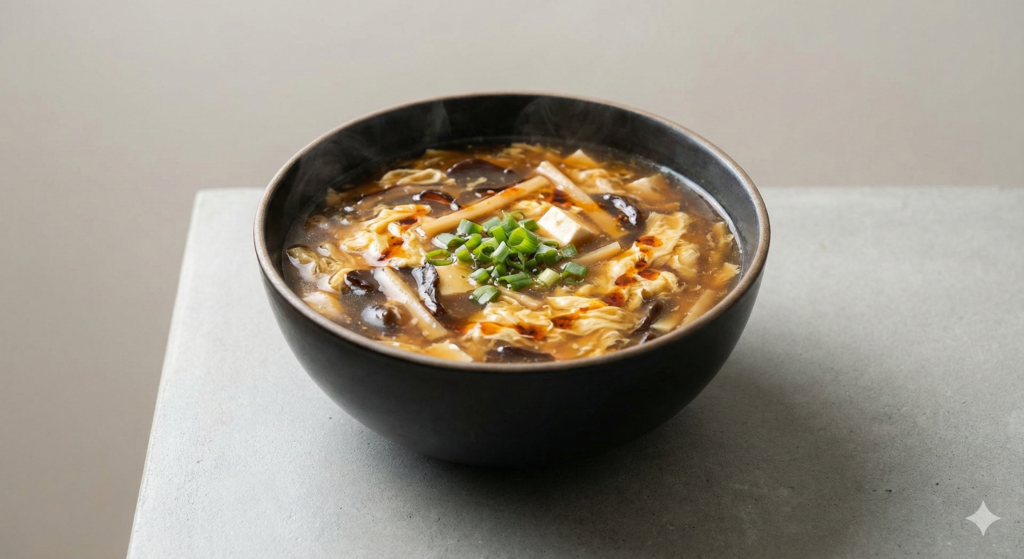
Authentic hot and sour soup is not defined by chili oil or red food coloring, but by the delicate balance of Suan (sourness from black vinegar) and La (heat from ground white pepper). The secret to the perfect glossy consistency lies in adding the vinegar at the very last second and using a “whirlpool” technique for the eggs, ensuring the broth remains silky rather than turning into a rubbery scramble.
Stop Using Sriracha The Secret to Authentic Hot and Sour Soup
You know that feeling when you order a bowl of soup at a high-end Sichuan restaurant? It is dark, amber-colored, glossy, and clears your sinuses instantly with a sharp, peppery kick. Now, compare that to what happens when most people try to make hot and sour soup at home. It usually turns out bright orange, tastes vaguely like warm ketchup, and lacks that signature “throat heat.”
I have spent over 15 years in professional kitchens and writing about food, and I can tell you exactly why this happens. We have been lied to by simplified internet recipes. They tell you to dump everything in a pot and boil it. In reality, this soup is a chemistry experiment. It requires respecting the volatility of vinegar and understanding that true heat in Chinese soup rarely comes from red chilies. If you are a restaurant owner looking to put this on your menu, or just a home cook wanting the real deal, we need to strip away the Sriracha and get back to the roots.
According to data from the USDA FoodData Central, mushrooms—a key component here—are packed with umami-boosting compounds, which is why we can make this soup rich without relying heavily on meat stocks.
The Takeout Lie Why Homemade Soup Usually Fails
Let’s be honest about the color. If your soup looks neon orange, something went wrong. In my experience consulting for simplified Asian fusion spots, the biggest mistake I see is chefs reaching for chili paste or red chili oil to create the “hot” flavor profile.
hot and sour soup is technically called Suan La Tang.
- Suan = Sour (from vinegar).
- La = Hot (from pepper).
In traditional Northern Chinese and Sichuan cooking, the “hot” does not come from Capsaicin (chilies) which burns your tongue; it comes from Piperine (white pepper) which warms your throat and stomach. It is a completely different sensation. When you use Sriracha, you introduce garlic and sugar, which clouds the clean, sharp flavors we are aiming for. The dark color shouldn’t come from soy sauce alone, but from the earthy combination of dried lily buds and black vinegar.
The Holy Trinity of Unusual Ingredients And Swaps
To get the texture right, we have to talk about ingredients that might scare a beginner. In the field, I often hear shop owners say, “My customers won’t eat fungus.” Trust me, if you chop it correctly, they will love the crunch.
Wood Ear Mushrooms & Dried Lily Buds
This is non-negotiable for texture. Wood ear mushrooms (often sold dried) have zero flavor but an incredible crunchy-snappy texture. They absorb the broth’s flavor.
- The Substitute: If you absolutely cannot find wood ears, fresh Shiitake mushrooms are an acceptable swap, though you lose the crunch.
- Lily Buds: These act as a thickener and add a floral, earthy aroma. If you skip them, the soup feels less “ancient.”
Bamboo Shoots
You need these for the “funk.” Canned bamboo shoots have a distinct smell that cuts through the rich broth.
- Pro Tip: I always boil canned bamboo shoots for 2 minutes in plain water before adding them to the soup to remove the metallic tin taste.
The Protein
Traditionally, recipes use pork blood or strips of pork loin. However, in a modern commercial context, firm tofu is the star.
- My Recommendation: Use both. Fine slivers of pork for savory depth and cubes of firm tofu for mouthfeel. If you are running a vegetarian kitchen, skip the pork but boost the umami with dark soy sauce.
⚠️ Important! Never use “Silken” tofu for this recipe. It will disintegrate into mush when you stir the thick soup. Always choose Firm or Extra Firm tofu to withstand the “whirlpool” stirring method.
You Are Killing Your Vinegar The 30-Second Rule That Changes Everything
This is the single most important technical advice I can give you. I have watched countless line cooks ruin a perfect batch of hot and sour soup by adding the vinegar too early.
Vinegar contains acetic acid, which is highly volatile. If you add it while the soup is boiling and let it simmer for even 5 minutes, the sourness evaporates, leaving behind a dull, flat taste. You end up adding more and more vinegar, making the soup watery, but it never tastes sharp enough.
The Fix: The vinegar goes in after you turn off the heat. It should be the very last thing that touches the bowl before serving. This preserves that punchy, nose-tingling aroma that hits you before you even take a sip.
The Source of Heat White Pepper vs Chili Oil
Let’s dig deeper into the “La” (Heat). As I mentioned, we are debunking the red chili myth. The heat in an authentic hot and sour soup must come from Ground White Pepper.
White pepper is fermented black pepper with the skin removed. It has a barnyard-y, earthy, intense heat that builds up slowly in the back of the throat.
- Quantity: You need more than you think. For a standard pot (serving 4), I use a full tablespoon.
- The Reaction: When white pepper meets hot vinegar, it creates a chemical reaction that clears sinuses better than any cold medicine.
Can you add Chili Oil? Yes, but only as a garnish on top for visual contrast. It is not the foundational heat source.
Technique The Silky Ribbon Egg Drop Method
Have you ever made egg drop soup and ended up with chunky, rubbery scrambled eggs floating in water? That happens because the broth wasn’t thick enough, or the water was boiling too vigorously.
To get those restaurant-style “silky ribbons” or “egg flowers,” follow this practitioner’s trick:
- Thicken First: Ensure your cornstarch slurry has fully thickened the soup before adding the egg. The thick liquid provides resistance, spreading the egg out thin.
- The Whirlpool: Turn the heat down to a bare simmer. Use a ladle to stir the soup in a circle to create a whirlpool effect.
- The Drizzle: Pour the beaten egg in a thin stream (use a measuring cup with a spout) into the spinning water. Don’t stir immediately! Let it set for 5 seconds.
The Sodium Trap How to drink the broth without bloating
A common complaint I get from health-conscious clients is, “Is hot and sour soup actually healthy?” Nutritionally, it is low calorie (mostly broth, veggies, and tofu). The killer is sodium. Restaurant versions can hit 1000mg per bowl.
My Field Strategy for Lower Sodium:
- Use the Soaking Liquid: When you rehydrate your dried shiitakes or wood ears, filter that brown water and use it as your stock base. It is packed with flavor, meaning you need less salt.
- Ratio Shift: I reduce the light soy sauce (salt) and increase the Chinkiang vinegar (flavor). You get the intensity without the salt bloat.
The Master Recipe Sichuan Style
Here is how I build this soup to ensure consistency every time.
Prep Time: 20 Minutes | Cook Time: 10 Minutes | Yields: 4 Servings
The Base:
- 4 cups Chicken Stock (or Vegetable Stock + Mushroom soaking liquid)
- 1/2 cup Dried Wood Ear Mushrooms (rehydrated and sliced)
- 1/2 cup Bamboo Shoots (julienned)
- 1 block Firm Tofu (cut into batons/cubes)
- 2 tbsp Soy Sauce (Light)
- 1 tsp Soy Sauce (Dark) – primarily for color
The Thickener:
- 3 tbsp Cornstarch mixed with 4 tbsp Water
The Finish (The Soul):
- 2 large Eggs (beaten)
- 1 tbsp Ground White Pepper (freshly ground is best)
- 3-4 tbsp Chinkiang Black Vinegar (or a mix of Balsamic and Rice Vinegar)
- 1 tsp Sesame Oil
Step-by-Step Instructions
- Build the Foundation: In a wok or pot, bring your stock to a boil. Add the wood ears, bamboo shoots, and tofu. Simmer for 5 minutes to let the flavors marry. Add the light and dark soy sauce.
- The Slurry Check: Turn the heat up slightly. Give your cornstarch and water mix a good stir (cornstarch settles like cement), then pour it into the boiling soup while stirring constantly.
- Watch the Gloss: Let it boil for exactly 1 minute. You need the starch to activate completely. The soup should turn glossy and thick enough to coat a spoon.
- The Egg Ribbon: Turn the heat down to low. Create your whirlpool. Drizzle the egg in slowly. Wait 5 seconds, then gently push the egg ribbons apart.
- The Flavor Bomb: Turn the heat OFF. This is crucial. Now, stir in your white pepper, sesame oil, and finally, the Chinkiang vinegar. Taste immediately. It should make your mouth water instantly.
- Garnish: Serve hot with chopped green onions and a drizzle of chili oil if you want that visual pop.
Troubleshooting Soup too thin or Too thick
Even pros mess up the consistency sometimes. Here is how I fix it on the fly:
- Soup too thin? You probably didn’t let the cornstarch boil long enough, or you added vinegar while it was boiling (acid breaks down starch!). Fix: Mix more starch and water in a separate bowl, bring soup to boil, and add little by little. Never add dry powder directly to hot soup; it will clump.
- Soup too thick? It looks like glue? You added too much starch. Fix: Just add a splash of plain water or stock. Do not add more seasoning yet; adjust salt at the very end.
Bring the Authentic Taste Home
Making authentic hot and sour soup is less about a secret family recipe and more about understanding the science of heat and acidity. Once you switch to white pepper and stop boiling your vinegar, you will never look at the takeout version the same way again. You have the tools now—go make a pot that clears the sinuses and warms the soul!
FAQ (Frequently Asked Questions)
1. Can I make this soup vegetarian without losing the rich flavor? Absolutely. The secret to a meaty-tasting vegetarian hot and sour soup is using dried shiitake mushrooms. When you soak them, the water becomes a rich, dark “mushroom stock.” Use that instead of plain water or vegetable broth, and add a little extra dark soy sauce for depth.
2. What if I can’t find Chinkiang (Black) Vinegar? In my experience, this is the hardest ingredient to replace because it has a malty, almost smoky flavor. However, if you are stuck, mix 1 part Balsamic Vinegar with 1 part Rice Vinegar. It won’t be 100% authentic, but it gets you much closer than using just white vinegar or apple cider vinegar.
3. Why does my soup turn watery after sitting for a while? This is a chemical reaction called hydrolysis. The enzymes in your saliva (if you double-dipped a spoon) or the acidity in the vinegar eventually break down the cornstarch bonds. This soup is best eaten fresh. If you plan to have leftovers, do not add the vinegar to the big pot; add it to individual bowls just before serving.
![5 Pro Secrets for a Smoky Wok Hei Recipe on a Home Stove [Chef’s Guide]](https://lezata.com/wp-content/uploads/2025/10/image-58-768x419.png "5 Pro Secrets for a Smoky Wok Hei Recipe on a Home Stove [Chef's Guide] 5")