7 Secrets to Perfect Homemade Dumplings That Sell Out Fast [Business Edition]
Last Updated on 2026-01-07 by Suryo
homemade dumplings require a precise balance of moisture and protein structure. The “Golden Ratio” for commercial-grade wrappers is 55% hydration (55g water for every 100g flour), which ensures the dough is pliable enough to fold quickly without tearing, yet sturdy enough to hold heavy fillings during freezing and cooking.
Have you ever spent hours pleating trays of homemade dumplings, only to have them dissolve into a gummy mess in the boiling pot? Or perhaps you’ve had customers complain that the skins were tough and rubbery, like chewing on leather? In my 15 years consulting for culinary startups, I’ve seen more profit lost to “bad dough” than bad marketing. The reality is, consistent texture is what builds a loyal customer base. If you are running a food business, you cannot rely on “feeling” the dough like a grandmother might; you need replicable science. Today, we aren’t just making dinner; we are engineering a product that survives the freezer, the pot, and the delivery bike.
For legitimate food safety standards regarding flour handling and storage in a commercial environment, you should always refer to authoritative guidelines like those found on https://www.pom.go.id.
The Chewy vs Tender Paradox Understanding Dough Physics
In the culinary business world, there is a massive misconception that “one dough fits all.” This is false. I remember consulting for a dim sum shop in Jakarta that was trying to use the same cold-water dough for their boiled dumplings and their steamed har gow. The result? The steamed ones were tough as nails, and the boiled ones turned to mush.
The secret lies in temperature.
When you mix flour with cold water, the gluten proteins form a tight, strong network. This creates a “chewy” texture (perfect for boiled homemade dumplings that need to survive turbulent boiling water). However, when you use boiling water (over 150°F/65°C), you effectively “kill” or denature some of the gluten. This results in a soft, tender dough that doesn’t fight back when you roll it.
My Firm Recommendation for Your Shop
If you want to sell a versatile product, stop guessing.
- For Boiled Dumplings: Use cold water. You need that gluten strength to prevent bursting.
- For Pan-Fried (Potstickers) or Steamed: You must use Hot Water Dough (Tangmian). This is non-negotiable if you want that delicate, translucent mouthfeel that premium customers pay extra for.
⚠️ Important! Never use high-protein bread flour for dumpling skins unless you are making noodles. For homemade dumplings, strictly use All-Purpose Flour (medium protein). High protein flour makes the wrapper too elastic and difficult to plead quickly during a busy service rush.
Why Do My Dumplings Taste Dry It’s Not Just Fat
A dry filling is a business killer. Many beginners try to solve this by adding more fat or lard. While fat is important, the real secret to those “soup-exploding” dumplings is actually added water.
In professional Chinese kitchens, this technique is called Da Xian (beating the filling). We don’t just mix the meat; we emulsify it.
Field Context: I once worked with a client who was selling frozen dumplings. Her cost of goods sold (COGS) was high because she was using 100% meat. I taught her the Da Xian method: slowly whipping water or chicken stock into the ground meat until it was absorbed like a sponge.
- Result 1: The filling became incredibly juicy and tender.
- Result 2: The yield increased by 20% (more weight from water), significantly lowering her food costs without sacrificing quality.
If you are making homemade dumplings for sale, you must master this emulsion. If your filling looks like a loose hamburger mix, you have failed. It should look like a sticky, pale paste.
Technical Focus The Vegetable Dehydration Protocol
This is the number one reason homemade dumplings fall apart in the freezer: The Soggy Bottom Syndrome.
Vegetables like cabbage, chives, and onions are over 90% water. If you mix fresh cabbage directly into your pork or chicken, osmosis will kick in as soon as you add salt. The water will leak out inside the wrapper, turning your beautiful pleats into a wet, dissolving mess before they even hit the pan.
In a commercial setting, you cannot afford this inconsistency. You need a “dry” vegetable mix that re-hydrates only when cooked.
The Step-by-Step Dehydration Method
- Fine Chop: Process your cabbage or sturdy greens.
- The Salt Cure: Toss the veggies with 1-2% of their weight in salt.
- The Wait: Let them sit for 15-20 minutes. You will see a pool of liquid form.
- The Squeeze: This is crucial. Squeeze the living daylights out of those veggies using a cheesecloth or a clean potato ricer.
- The Oil Coat: Before mixing with meat, toss the squeezed veggies in a teaspoon of sesame oil. This coats the remaining cells and prevents them from absorbing the meat juices too early.
By following this protocol, your homemade dumplings will have a crunchy vegetable texture and a tight, intact skin, ensuring your customers get a premium experience every time.
The Architecture of the Fold Sealing for Structural Integrity
Many new business owners obsess over how many pleats they can make—trying to hit that legendary “18-fold” standard of Din Tai Fung. However, in a high-volume production environment, structural integrity beats aesthetics every time. If your homemade dumplings look beautiful on the tray but open up like a clam in the boiling water, you have zero product to sell.
The fold does more than look good; the curvature creates a “ribbed” structure that allows the dumpling to stand upright and hold its shape against the pressure of expanding steam inside.
Field Context: I once consulted for a “Ghost Kitchen” delivery brand that was receiving heavy refund requests. Their issue? They were using a flat “empanada-style” press to save time. The problem was that the flat shape caused the dumplings to stick together in the container, creating a giant, inseparable lump. We switched them to a “Nurse Cap” fold (folding the sides toward the middle). This shape minimized surface contact between units, and their customer complaints dropped by 90% overnight.
For your shop, I recommend mastering the “Two-Point Squeeze” first. It seals the air out effectively. Air pockets are the enemy; they expand rapidly in heat and will burst even the strongest wrapper.
The Flash-Freeze Method How to Store Dumplings Without Creating a Dough Brick
One of the most common questions I get from aspiring entrepreneurs is, “Can I make a week’s worth of stock in one day?” The answer is yes, but only if you respect the physics of freezing.
If you throw fresh homemade dumplings directly into a bag, the moisture on the skins will fuse them together as they freeze. You will end up with a solid brick of dough that is impossible to cook without destroying.
The Inventory Management Protocol:
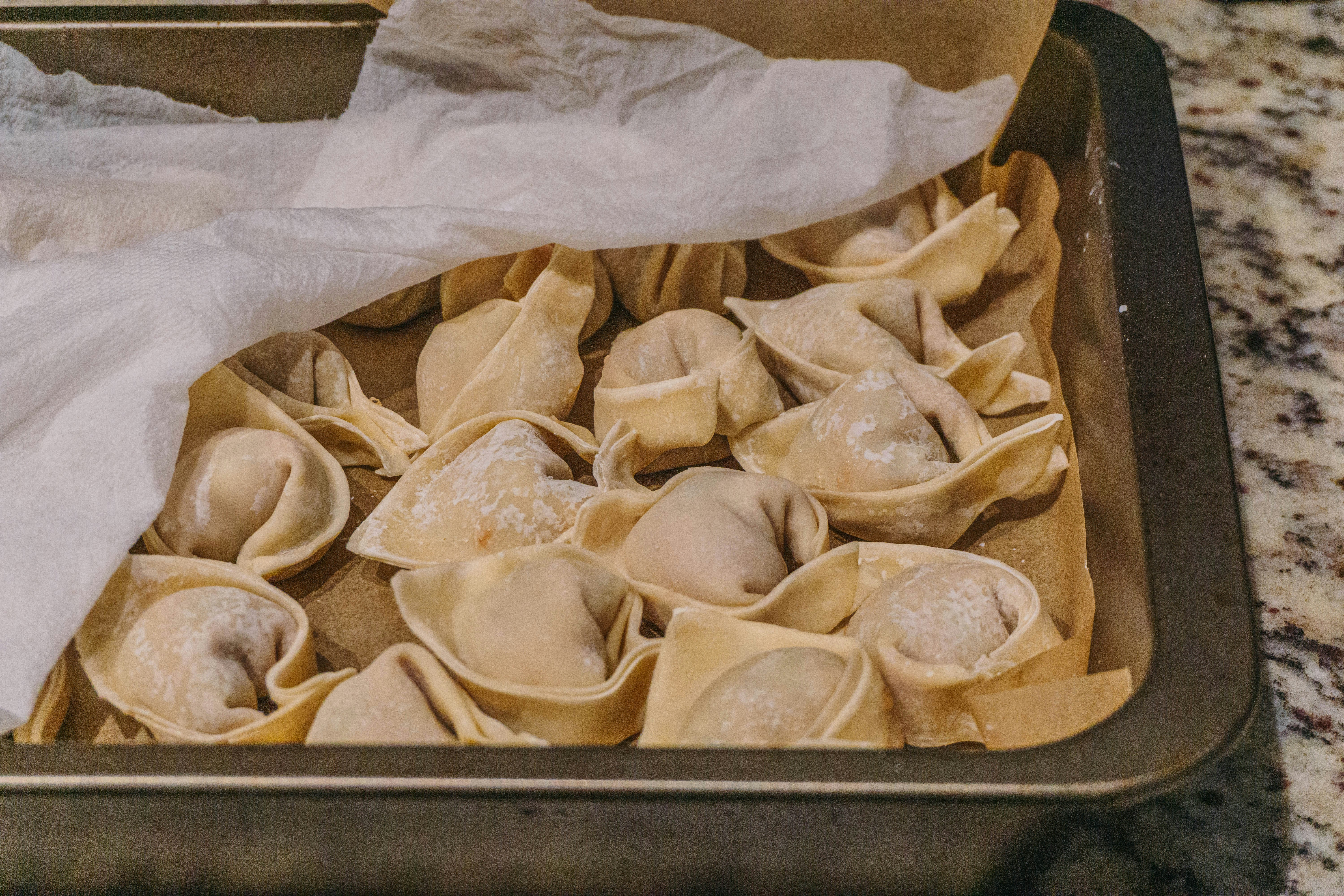
- The Dusting: Heavily dust a baking sheet with cornstarch (not flour). Flour gets absorbed by the wet dough; cornstarch creates a non-stick barrier.
- The Soldier Formation: Place the dumplings in rows, ensuring absolutely no touching between units.
- The Flash Freeze: Place the entire tray in the freezer uncovered for 2 hours.
- The Bagging: Once they are rock hard, transfer them to airtight bags.
By following this method, you can scale your production of homemade dumplings significantly, allowing you to prep on quiet days and sell on busy days without compromising quality.
⚠️ Important! Never refreeze a dumpling that has thawed. The temperature fluctuation causes ice crystals to puncture the gluten network, resulting in a mushy texture. If it thaws, cook it immediately or discard it. Quality control is your brand’s reputation.
Master Class The “Crispy Skirt” (Binghua) Science
If you want to charge a premium price for your homemade dumplings, you need a visual “hook.” The Binghua (Ice Flower) skirt—that lacy, golden-brown crust connecting the dumplings—is exactly that. It turns a standard snack into a gourmet experience.
This isn’t magic; it is a simple emulsion of water, oil, and starch. As the water boils off, it steams the dumplings. Once the water is gone, the oil remains, frying the starch into a delicate lattice.
The Golden Ratio for Commercial Kitchens:
- 1 tsp All-Purpose Flour (for structure)
- 1 tsp Cornstarch (for crunch)
- 1/2 cup Water
- 1 tbsp Neutral Oil (can be mixed in or added to the pan separately)
Field Context: A street food stall I advised was struggling to compete with a nearby franchise. We introduced the “Crispy Skirt” menu item. The visual appeal was so strong that customers started posting photos on social media without being asked. It was free marketing. That extra 2 minutes of cooking time and pennies worth of flour doubled their daily foot traffic.
Your New “Golden Ratio” for Every Batch
Running a food business is a battle against inconsistency. Your customers don’t care if you are tired or if the humidity is high today; they want the same delicious experience they had last week. By applying the 55% hydration rule, using the Da Xian filling technique, and strictly adhering to the vegetable dehydration protocol, you are no longer just cooking. You are manufacturing a high-quality product.
Homemade dumplings are deceptively simple. Everyone thinks they can make them, but very few understand the science required to make them profitably and consistently. Take these systems, train your staff on the “why” behind the “how,” and watch your waste go down and your reviews go up.
Start small, test your ratios, and remember: great food is just successful chemistry.
FAQ (Frequently Asked Questions)
1. Why are my dumpling wrappers tough and rubbery after cooking? This usually happens because the dough was overworked or the water used was too cold. For boiled homemade dumplings, cold water is fine, but you must let the dough rest for at least 30 minutes to relax the gluten. If you are steaming or pan-frying, switch to hot water dough to ensure tenderness.
2. Can I use a stand mixer to make the dough for my shop? Yes, and for a business, I highly recommend it to save labor costs. However, stop the mixer as soon as the dough comes together into a rough ball. Finish kneading by hand for 1-2 minutes until smooth. Over-kneading in a machine can develop too much gluten, making the dough impossible to roll out thinly.
3. How long can I keep frozen dumplings before selling them? Commercially, you should aim to sell them within 1 month. While they remain safe to eat for up to 3 months, the quality of homemade dumplings degrades over time. The freezer burns the edges, and the filling can absorb “freezer flavors,” causing the fat to oxidize and taste stale. Rotate your stock strictly using the First-In-First-Out (FIFO) method.