5 Secrets for Pro Results How to Seasoning a Wok
Last Updated on 2025-10-29 by Suryo
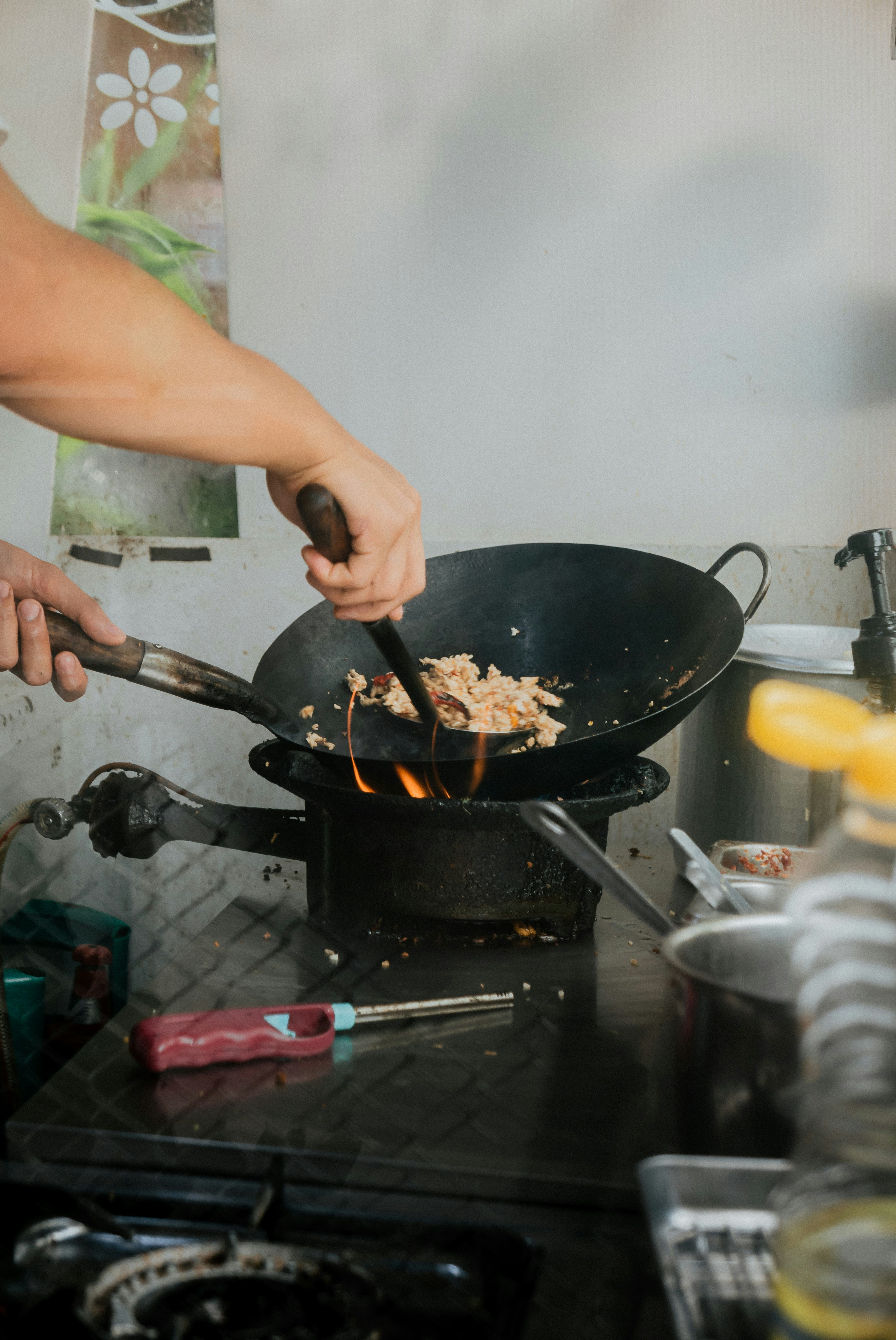
You bought a beautiful new carbon steel wok, brought it home, and cooked your first stir-fry… only to have everything stick in a disastrous, gummy mess. This is a common and frustrating experience. Based on our analysis, the problem isn’t your cooking; it’s your preparation. The single most important step in owning a wok is the first one: the initial seasoning. This guide on how to seasoning a wok is the definitive process to turn that raw steel into a slick, non-stick workhorse for life.
A common mistake is treating a new wok like a modern Teflon pan. You cannot just rinse it and start cooking. In fact, a new wok is shipped with an industrial oil or wax coating to prevent rust. You must chemically and physically transform this surface. Consequently, this wok seasoning process creates a “patina,” a layer of hardened, polymerized oil that is the true secret to non-stick Chinese cooking. This is your first step in mastering authentic Chinese food.
What is Wok Seasoning (Patina) and Why is it Essential?
Before you learn how to seasoning a wok, you must understand what you are building. “Seasoning” is not a layer of old food or a sticky oil coating. It is a new surface created by a chemical reaction called polymerization. When you heat a micro-thin layer of oil past its smoke point, the fat molecules break down and bond to the metal and to each other, forming a hard, plastic-like layer. This is your patina.
This patina does three critical things:
- It creates a non-stick surface. This is the original, natural non-stick, far superior to chemical coatings for high-heat cooking.
- It prevents rust. Carbon steel is reactive and will rust in hours if left bare. The patina seals the metal.
- It builds flavor. Over time, this layer contributes to the elusive “wok hei” or “breath of the wok,” a subtle, smoky flavor that only a well-seasoned wok can provide.
The 5 Steps for How to Seasoning a Wok Perfectly
This is the complete wok seasoning process from start to finish. Do not skip a step. You will need your new wok, steel wool, dish soap (just this once!), paper towels, tongs, and a high-smoke-point oil (like peanut, grapeseed, or canola).
Step 1: The Initial Scrub (Removing the Factory Seal)
This is the only time you will ever use soap on your wok. The goal is to remove the factory anti-rust coating. Put some dish soap on an abrasive scrubber or steel wool. Scrub the entire wok, inside and out, with hot water. Furthermore, you must be aggressive. Scrub until the water runs completely clear and the wok feels “squeaky” clean. A common mistake is being too gentle here. You must remove all of the industrial oil. Dry it completely.
Step 2: “Blueing” the Wok (Opening the Pores of the Steel)
This is the most visually dramatic and important step. Therefore, open your windows and turn on your exhaust fan; this will create smoke. Place the dry wok on your most powerful burner and turn the heat to high. The goal is to heat the raw, clean metal until it changes color. You will see the silver steel start to shimmer, then turn a vibrant, iridescent blue. This is a sign of oxidation, which means the “pores” of the metal are open and ready to accept the oil. Tilt and turn the wok over the flame until the *entire* surface, including the sides, has turned this blue-black color. This can take 10-20 minutes. Be patient.
Step 3: The First Oil Application (The Base Layer)
Turn off the heat and let the wok cool down for a minute or two until it is still very hot, but no longer glowing. Now, fold a paper towel into a thick pad, grab it with tongs, and dip it into your high-smoke-point oil. You want a micro-thin layer. This is a critical point in how to seasoning a wok. A common mistake is to pour oil into the wok. This is wrong. It creates a thick, sticky, and weak layer that will peel. You want a layer so thin you can barely see it. Wipe this thin layer of oil over the entire blued surface of the wok’s interior.
Step 4: Polymerization (Heating to the Smoke Point)
Turn the heat back on to medium-high. Heat the oiled wok until it starts to smoke heavily. This smoke is the sign that polymerization is happening. The oil is no longer a liquid; it is transforming into a hard, non-stick surface. Keep the wok on the heat, swirling it, until the smoke stops. This means the reaction for that layer is complete. The wok will look darker.
Step 5: Repeat, Repeat, Repeat
Let the wok cool slightly, then repeat Steps 3 and 4. Wipe on another micro-thin layer of oil, heat it until it smokes, and heat it *until the smoke stops*. The best practice is to do this at least 3 to 4 times. Each layer builds upon the last, creating a durable, multi-layered patina. Your wok will transform from silver to blue to a dark, semi-glossy bronze or black. This is the sign of success.
Common Mistakes When Seasoning a New Wok
This process is simple, but it’s easy to get wrong. Based on our analysis, these are the three most common failures in how to seasoning a wok.
Mistake 1: My Wok is Sticky and Gummy
The Cause: You used way too much oil. You cannot season a wok by “frying” a pool of oil. You must use micro-thin layers. A sticky surface is “half-polymerized” oil, which is useless and will trap food.
The Fix: You have to start over. Get out the steel wool and soap, scrub that sticky layer off back to the bare metal, and re-season from Step 1, this time using *less* oil.
Mistake 2: The Seasoning is Flaking Off
The Cause: You either didn’t scrub off the factory coating properly (so the seasoning stuck to the wax, not the metal), or you didn’t “blue” the wok. The blueing step is essential for opening the pores of the steel so the oil can form a strong chemical bond. Without it, the patina is just sitting on the surface.
The Fix: Scrub the wok clean and start over, paying special attention to Step 1 and Step 2.
Mistake 3: Using the Wrong Oil (e.g., Olive Oil)
The Cause: You used an oil with a low smoke point. Extra virgin olive oil, for example, will smoke and burn at a temperature too low for polymerization, creating a sooty, bitter-tasting mess instead of a hard patina. As culinary experts at Serious Eats confirm, you need an oil with a smoke point above 450°F (232°C).
The Fix: Stick to neutral, high-smoke-point oils: peanut, grapeseed, canola, corn, or sunflower oil.
How to Clean and Maintain Your Seasoned Wok
Once you have your patina, your goal is to protect it. Never use soap again.
- After Cooking: While the wok is still warm, rinse it with hot water. Use a soft sponge or a bamboo wok brush to gently scrub away any food particles. For stuck-on bits, you can use coarse salt as an abrasive.
- Drying: This is non-negotiable. Never air-dry your wok. After rinsing, place it back on the stove over low heat for 1-2 minutes until every drop of water has evaporated. This prevents rust.
- Re-oiling: Once dry, fold a clean paper towel, add a few drops of oil, and wipe one final, thin layer over the interior. This protects it in storage.
Building Your Patina: The Next Steps
Your wok is now seasoned, but the patina is young. The best thing you can do is use it. The first few things you cook should be high in fat. A stir-fry with fatty pork, for instance, will do wonders. In fact, making a batch of homemade chili oil is a perfect “first cook” as it bathes the wok in warm oil. The patina will get darker, slicker, and more non-stick with every use. This tool is now the foundation for countless dishes, from the perfect stir-fry to complex sauces. You have not just seasoned a pan; you have started a culinary journey, just as vital as seasoning a cast-iron skillet in Western cooking.
Frequently Asked Questions About Wok Seasoning
1. What is the best oil for seasoning a wok?
The best practice is to use an oil with a high smoke point (above 450°F / 232°C) and a neutral flavor. Our top recommendations are peanut oil, grapeseed oil, canola oil, or sunflower oil. Do not use olive oil or butter, as they will burn and turn bitter before they can polymerize.
2. Why is my wok sticky after seasoning?
This is the most common mistake. Your wok is sticky because you used too much oil. Seasoning must be done in micro-thin layers. A thick layer of oil heats unevenly and only half-polymerizes, resulting in a tacky, gummy resin instead of a hard, slick surface. You must scrub it off with steel wool and start again.
3. Do I really need to “blue” the wok?
Yes. This is arguably the most important step for a *new* carbon steel wok. The high-heat “blueing” opens the pores of the steel, burning off any residual industrial coatings and allowing the first layer of oil to create a deep, strong chemical bond. Skipping this step is the primary reason why seasoning flakes off later.
4. How do I season a non-stick or stainless steel wok?
You don’t. The process of “seasoning” is specific to reactive metals like carbon steel and cast iron. A non-stick wok has a chemical coating (like Teflon) that should not be overheated. A stainless steel wok is non-reactive and is not designed to build a patina; it is meant to be scrubbed clean to its bare metal surface after every use.
5. My seasoning has rust spots. Is it ruined?
No, it’s perfectly fine! This just means some moisture got to the bare metal. Simply take some steel wool or an abrasive sponge and scrub the rust spot off. Once the rust is gone, rinse the wok, dry it completely on the stove, and do a quick “touch-up” seasoning (wipe a thin layer of oil, heat to smoking) on that spot to patch the patina.