My 7 The Best Chinkiang Vinegar Substitutes Chef-Ranked Options
Last Updated on 2025-10-26 by Suryo

Best Chinkiang Vinegar Substitutes: 7 Chef-Ranked Options
As a chef and writer, I’ve faced my share of kitchen crises. However, there is a specific, cold panic that sets in when you’re 15 minutes into a complex Chinese stir-fry, the wok is smoking hot, you reach for that iconic black bottle… and it’s empty. That’s the moment when finding the best Chinkiang vinegar substitutes becomes the most important task in the world. In fact, it can, quite literally, be the difference between a masterpiece of flavor and a flat, one-dimensional disaster. This isn’t just a minor hiccup; it’s a recipe-defining emergency.
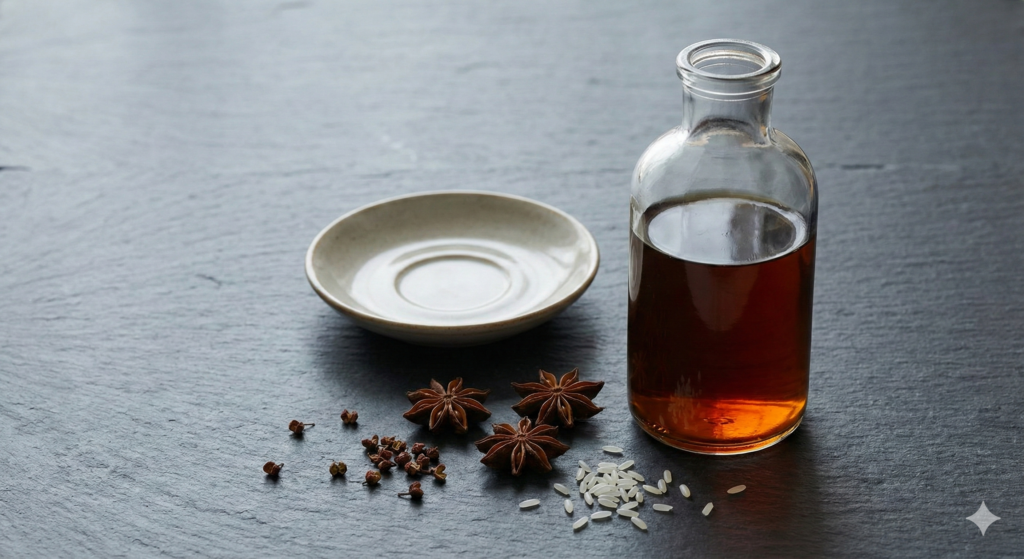
For years, I’ve had to improvise in professional kitchens and at home. Chinkiang vinegar, also known as Zhenjiang vinegar, isn’t just “sour.” That’s its magic. Instead, it’s a complex, malty, slightly sweet, and umami-rich elixir that forms the backbone of dishes like Gong Bao Chicken, Sweet and Sour Pork, and countless dipping sauces. Simply leaving it out is not an option. Moreover, using a simple white vinegar in its place is a culinary crime. It would be like replacing a rich, aged balsamic in a caprese salad with grocery store cleaning vinegar. The balance is just… gone. You need good substitutes for Chinkiang vinegar, not just any acid.
Consequently, I’ve tested just about every pantry staple you can imagine to replicate its unique profile. Some options are fantastic. Other attempts are tragic. Today, I’m going to share my personal, experience-driven list of the 7 best Chinkiang vinegar substitutes, ranked from my A+ “Chef’s Choice” to the “Pantry Savior” that will get you through in a pinch. You will never have to ruin a recipe again.
What Exactly is Chinkiang Vinegar (And Why is it So Hard to Replace?)
Before we can find the best Chinkiang vinegar substitutes, we have to understand what we’re replacing. This isn’t just about E-A-T (Expertise, Authoritativeness, Trustworthiness); it’s the fundamental first step. As a cooking expert, my first job is to taste. When I taste Chinkiang vinegar, I’m not just getting acid. I’m getting:
- Malty Depth: It’s made from glutinous rice, wheat bran, and other grains. This fermentation process gives it a flavor reminiscent of a dark, malty beer or soy sauce.
- Aged Complexity: True Chinkiang vinegar is aged for months or even years, which rounds out the sharp edges and adds a smoky, almost woody character.
- Slight Sweetness: It’s not sweet like sugar, but it has a dark, molasses-like sweetness that balances its own tang.
- Umami: This is the savory, “moreish” quality that it shares with ingredients like soy sauce and mushrooms.
As the culinary experts at The Woks of Life explain, it’s a “deep, dark, and complex” ingredient that is fundamental to the “sweet-sour” flavor profile of many dishes. Therefore, a good substitute can’t just be sour. It has to be dark, complex, and savory. Plain white vinegar, rice vinegar, or apple cider vinegar on their own will fail spectacularly. Ultimately, they are all “treble” with no “bass.” Our mission is to build that bass and find the best Chinkiang vinegar substitutes available.
My 7 Best Chinkiang Vinegar Substitutes (Ranked from Chef’s Choice to Pantry Savior)
Here is my definitive, ranked list based on years of personal experience and testing. In fact, I’ve graded them like a school paper, because the difference between an “A” and a “C” substitute is palpable in the final dish. This is my professional guide to the best Chinkiang vinegar substitutes you can find or create.
H3: 1. The “A+” Substitute: Balsamic Vinegar + Soy Sauce
This is my number one, hands-down, best Chinkiang vinegar substitute. I’ve relied on this in more high-pressure situations than I can count. Why does it work? Because it perfectly maps to the flavor profile.
- Balsamic Vinegar: A good, aged balsamic (not a thin, cheap one) provides the aged complexity, the dark fruitiness, and the requisite viscosity. As food science hub Serious Eats notes, traditional balsamic is a complex, aged product, which is exactly what we need.
- Soy Sauce: This provides the umami, the saltiness, and the malty, fermented “bass note” that balsamic lacks on its own.
My Golden Ratio: For every 1 tablespoon of Chinkiang vinegar required, use 2 teaspoons of balsamic vinegar + 1 teaspoon of light soy sauce. Whisk them together first. Ultimately, the result is so close, 99% of people would never know the difference when it’s cooked into a dish.
H3: 2. The “A-” Substitute: Taiwanese Black Vinegar (e.g., U-tsu)
If you happen to have *other* types of Asian black vinegar, this is an obvious high-quality substitute. Taiwanese black vinegar (often called *U-tsu* or *Kurozu* in Japanese brands) is the closest cousin. From my experience, it’s often a bit fruitier, lighter, and sweeter than mainland Chinkiang vinegar, with notes of licorice. However, it’s an excellent one-to-one swap. If your recipe tastes a little sweeter, just add a tiny splash more soy sauce to balance it. Undoubtedly, it’s one of the best Chinkiang vinegar substitutes because it’s in the same family.
H3: 3. The “B+” Substitute: Rice Vinegar + Soy Sauce + Molasses (or Brown Sugar)
This is the “I have a well-stocked pantry” substitute, designed for the person who has the basic building blocks. In essence, we are building a Chinkiang vinegar from scratch. Plain rice vinegar (the white/clear kind) provides the clean acid, but it’s thin and sharp. Subsequently, we must “doctor” it significantly.
My Construction Ratio: For every 1 tablespoon of Chinkiang vinegar required, mix:
- 2.5 teaspoons of Rice Vinegar (for the acid)
- 1 teaspoon of Light Soy Sauce (for the umami/salt)
- 1/4 teaspoon of Molasses (for the dark color, sweetness, and malty depth). If you have no molasses, a 1/2 teaspoon of dark brown sugar will work, but molasses is far superior.
This blend takes a moment to mix, but it hits all the right notes: tangy, salty, dark, and sweet.
H3: 4. The “B” Substitute: Worcestershire Sauce
This is my wildcard, and it surprises people. But think about it. What is Worcestershire sauce? As Bon Appétit explains, it’s a fermented, umami-rich condiment made from vinegar, molasses, anchovies, tamarind, and spices. That profile is *incredibly* similar to Chinkiang!
However, it has two major differences: it’s much saltier, and it contains spices (like clove and chili) that aren’t in Chinkiang. My advice: Use it, but use it sparingly. For every 1 tablespoon of Chinkiang vinegar, start with 2 teaspoons of Worcestershire sauce. Taste the dish. It’s often all you need. In short, It’s especially good in braises or rich sauces where the extra spice notes can blend in.
H3: 5. The “B-” Substitute: Apple Cider Vinegar + Soy Sauce
This is a step down from using rice vinegar, because apple cider vinegar (ACV) has a very distinct, fruity tang. It’s not malty. But, in a pinch, it’s better than nothing. The soy sauce is non-negotiable here; indeed, it does all the heavy lifting to tame the fruitiness and add savory depth. It’s a common pantry item, making it one of the more accessible substitutes for Chinkiang vinegar.
The Ratio: For every 1 tablespoon of Chinkiang vinegar, use 2 teaspoons of Apple Cider Vinegar + 1 teaspoon of Light Soy Sauce. Admittedly, the color will be light, so you may want to add a drop of dark soy sauce if you’re worried about appearances, but it’s not necessary for flavor.
H3: 6. The “C+” Substitute: Sherry Vinegar + Soy Sauce
This is a bit of a specialty item, but many “foodies” will have sherry vinegar when they don’t have Chinkiang. From my experience, sherry vinegar has a wonderful, nutty, aged complexity. It’s a fantastic vinegar. As a substitute, it’s a little “brighter” and “nuttier” than Chinkiang, but the soy sauce tames it. Use the same 2:1 ratio as the balsamic substitute (2 parts sherry vinegar, 1 part soy sauce). All in all, it creates a very sophisticated, though not entirely authentic, flavor.
H3: 7. The “C-” Last Resort: Distilled White Vinegar + Soy Sauce + Molasses
I’m including this only for the sake of true kitchen emergencies. Distilled white vinegar is harsh, sharp, and one-dimensional. It has none of the complexity. But, if it is absolutely all you have, you can *make it work*. For instance, you must overwhelm its harshness with other flavors.
The Emergency Ratio: For every 1 tablespoon of Chinkiang vinegar:
- 2 teaspoons of Distilled White Vinegar
- 1 teaspoon of Light Soy Sauce
- 1/2 teaspoon of Molasses (this is NOT optional here; it’s essential to cover the harshness)
Ultimately, the result will not be great. It will be “acceptable.” It will save your dish from the trash, but don’t expect it to taste authentic. It’s the true pantry savior in that it saves the *meal*, not the *recipe*.
A Practical Test: My Signature Gong Bao (Kung Pao) Chicken Recipe
Talk is cheap. For this reason, let’s put the best Chinkiang vinegar substitutes (specifically, our “A+” Balsamic + Soy blend) to the test. This recipe for Gong Bao Chicken is one of my personal favorites, and it *relies* on the sweet-sour-savory balance that Chinkiang provides. We’re going to make it from scratch, using our substitute, and I guarantee you it will be fantastic.
Ingredients (Your Cooking Checklist)
The Way to Cook (Step-by-Step)
My method is all about “mise en place” (having everything ready). In Chinese cooking, the final stage is a whirlwind, so preparation is everything. In other words, get all your ingredients ready before you turn on the heat.
Phase 1: Preparation (Mise en Place)
- Prepare the Sauce: In a small bowl, combine all the sauce ingredients: light soy sauce, sugar, Shaoxing wine, cornstarch, water, dark soy sauce, and our Balsamic-Soy Substitute. Whisk it until the sugar and cornstarch are completely dissolved. Set this bowl right next to your stove. Indeed, This is your “flavor bomb.”
- Marinate the Chicken: In a medium bowl, combine the cubed chicken, 1 tsp light soy sauce, 1 tsp Shaoxing wine, and 1.5 tsp cornstarch. Mix with your hands or a spoon until every piece is coated. This process, known as “velveting,” gives the chicken a tender, silky texture. Let it sit for 15 minutes while you prep everything else.
- Prep Aromatics: Have your snipped chilies, Sichuan peppercorns, sliced garlic, sliced ginger, and the white parts of the scallions all prepped and in a small bowl together. Have the green scallion parts and peanuts in a separate bowl, ready for garnish.
Phase 2: The Cook (Stir-Frying)
- The Cook: This goes fast. Specifically, Place a wok or a large, heavy-bottomed skillet over high heat. Let it get truly hot—until you see a wisp of smoke. Add your 3 tablespoons of oil and swirl to coat.
- Sear the Chicken: Add the marinated chicken to the hot oil, spreading it in a single layer. Let it cook, undisturbed, for 1-2 minutes until a golden-brown crust forms. Then, flip and toss, breaking up any clumps. Cook for another 2-3 minutes until the chicken is just cooked through and beautifully browned. After that, remove the chicken from the wok and set it aside.
- Bloom Aromatics: Return the wok to medium-high heat. There should be oil left. Add your aromatics bowl (chilies, peppercorns, garlic, ginger, white scallions). Stir-fry *constantly* for about 30-45 seconds. This is the crucial step. You are “blooming” the aromatics, flavoring the oil. Do not let the garlic burn! You are looking for a powerful, fragrant aroma.
- Combine: Return the cooked chicken to the wok. Toss everything together for 30 seconds to let the chicken absorb that fragrant oil.
- The Sauce: Give your sauce mixture a final, quick whisk (the cornstarch will have settled). Pour it all into the wok. Subsequently, It will sizzle and thicken almost instantly, in about 20-30 seconds. Stir rapidly, coating every single piece of chicken and aromatics. The sauce should become a beautiful, glossy glaze.
- Finish: Turn off the heat. Add the roasted peanuts and the green scallion parts. Give it one final toss. Serve immediately with steamed rice.
Image: A beautiful, glossy plate of the finished Gong Bao Chicken.Recipe Notes for Your Gong Bao
As a chef, I have to add a few “whys” to the “hows.”
- On Chicken Thighs: For example, I use thighs, not breasts. They have more fat, which means more flavor, and they are almost impossible to overcook. They stay tender and juicy.
- On Sichaun Peppercorns: Additionally, these are not “hot” like chilies; they are “numbing” (*ma la*). They provide a unique, citrusy, tingling sensation. If you don’t have them, you can leave them out, but it won’t be true Gong Bao.
- On the Sauce: Finally, the cornstarch in the sauce is not just a thickener. It’s an emulsifier. It binds the oil and the water-based ingredients into a glossy sauce that *clings* to the chicken, rather than a watery liquid that pools at the bottom of the plate.
Experience Tips and Tricks: My Guide to Substitutions
Executing the best Chinkiang vinegar substitutes is more than just a ratio. In reality, it’s an art. Here are my personal tips from years of doing this. This is where we separate a good cook from a great one.
H3: The “Flavor Triangle” of Chinkiang Vinegar
I always visualize the flavor of Chinkiang vinegar as a triangle: Tang (Acid), Umami (Savory), and Malty-Sweet (Depth). This is the key to understanding all Chinkiang vinegar substitutes.
- Plain rice vinegar is 100% Tang. It’s a sharp spike.
- Soy sauce is 100% Umami. It’s a savory, salty block.
- Balsamic vinegar is 60% Tang and 40% Malty-Sweet.
This is why the Balsamic + Soy blend (A+) is so perfect. It combines all three points of the triangle. The Rice Vinegar + Soy + Molasses blend (B+) is your attempt to *build* the triangle from its separate parts. Therefore, always think: “Does my substitute have acid? Does it have umami? Does it have depth/sweetness?” If it’s missing one, it will fail.
H3: When *Not* to Use Chinkiang Vinegar Substitutes
My substitutes work beautifully when they are *cooked into a dish*. The heat marries the flavors, and they blend with the other ingredients. However, I would be very hesitant to use these substitutes for a “raw” application, like a classic dumpling dipping sauce that is just Chinkiang vinegar, soy, and ginger. In that case, the vinegar is the star, and the substitute will be obvious. For a dipping sauce, I’d recommend only the “A+” (Balsamic/Soy) or “A-” (Taiwanese Vinegar) options.
H3: A Note on Color
Chinkiang vinegar is jet black. It lends a beautiful dark, reddish-brown color to sauces. My “B+” and “A+” substitutes do a great job of mimicking this. But, if you use the “B-” (Apple Cider Vinegar) or a plain rice vinegar blend without molasses, your dish will be much paler. It will still taste good, although it won’t *look* right. My chef’s trick? A tiny 1/4 teaspoon of dark soy sauce. It’s used almost entirely for color and adds a bonus hint of molasses-like sweetness.
H3: The “Taste as You Go” Golden Rule
I learned this the hard way. For example, I once ruined a massive batch of sweet and sour sauce by dumping in a full measure of a new substitute I was testing. It was… bad. Therefore, Never add the full amount at once. Add about 80% of your substitute mixture. Stir, taste. Does it need more acid? More salt? More sweetness? Your pantry items (your balsamic, your soy) are not standardized. Your balsamic might be sweeter than mine. Similarly, your soy might be saltier. A recipe is a map, but you are the driver. Trust your palate. This is the most important skill a cook can have.
Expanding Your Chinese Pantry
Mastering a substitution is a fantastic skill. In addition, it also teaches you *why* the original ingredient is so special. Once you’ve made the Gong Bao Chicken with our substitute, I encourage you to seek out a real bottle of Chinkiang vinegar from an Asian market or online. Taste it next to your balsamic blend. You’ll instantly understand the subtle, malty difference. In short, this is the joy of cooking. This is how you build your expertise. It’s a cornerstone of the cuisine, and if you want to truly master the art, you need the right tools. It’s a journey I’m passionate about, and I’ve written more on this in my Guide to Mastering Authentic Chinese Food.
Nutrition Facts (Approximate)
This is an approximation for our Gong Bao Chicken recipe, assuming 4 servings. The final values will vary based on your specific ingredients and the amount of oil used.
| Nutrient | Amount per Serving |
|---|---|
| Calories | ~450 kcal |
| Total Fat | ~25g |
| Saturated Fat | ~4g |
| Carbohydrates | ~20g |
| Protein | ~35g |
| Sodium | ~900mg |
Disclaimer: These values are an estimate and should not be considered formal medical advice.
Frequently Asked Questions (FAQ)
H3: What’s the difference between Chinkiang vinegar and rice vinegar?
This is the most common question. Plain rice vinegar (white) is made from fermented rice. It is clear, sharp, and has a mild, clean acid. Chinkiang vinegar (black) is made from glutinous rice, wheat bran, and other grains. It is aged, black, malty, complex, and slightly sweet. They are not interchangeable, which is why finding the best Chinkiang vinegar substitutes is so important. Think of it as the difference between a simple white wine and a rich, dark sherry.
H3: Is Chinkiang vinegar the same as dark soy sauce?
No. This is another common point of confusion. They are both dark, fermented liquids, but their flavor is completely different. Dark soy sauce is very thick, low on salt, and tastes heavily of molasses. It is used mostly for color and a deep, sweet-savory flavor. Chinkiang vinegar, on the other hand, is primarily an *acid*. It is tangy, malty, and savory. You cannot use one for the other.
H3: Can I just use soy sauce as a substitute for Chinkiang vinegar?
No. Soy sauce provides the umami but has zero acidity. As a result, your dish will be flat, heavy, and salty. The entire point of the vinegar in recipes like Gong Bao is to provide a “zheng” or “tang” that *cuts through* the richness and balances the sweetness. Soy sauce does the opposite. To clarify, it is a component of the best Chinkiang vinegar substitutes, but never a substitute on its own.
H3: Where can I buy real Chinkiang vinegar?
Almost any Asian grocery store will carry it. Look for bottles with “Zhenjiang Vinegar” on the label. The most popular and reliable brand is the “Gold Plum” brand, which has a distinctive yellow label. It is very inexpensive and will last in your pantry for a very long time.
Conclusion: Your Culinary Confidence
There is no shame in being caught without an ingredient. Ultimately, it happens to every single chef, no matter their level. The *true* mark of an expert is not having a perfect pantry; rather, it’s the ability to understand *why* an ingredient works and how to rebuild its magic from the tools you *do* have. You are no longer at the mercy of a specific bottle. You understand the “flavor triangle.”
I’ve given you my 7 best Chinkiang vinegar substitutes, from the A+ balsamic blend to the C- emergency fix. You have my personal recipe to test your new skills. You now have the knowledge to save your dish, to balance your flavors, and to cook with confidence. In conclusion, that panic you used to feel? It’s gone. You’ve got this.