7 Secrets to the Ultimate French Onion Soup Recipe That Sell
Last Updated on 2025-12-29 by Suryo
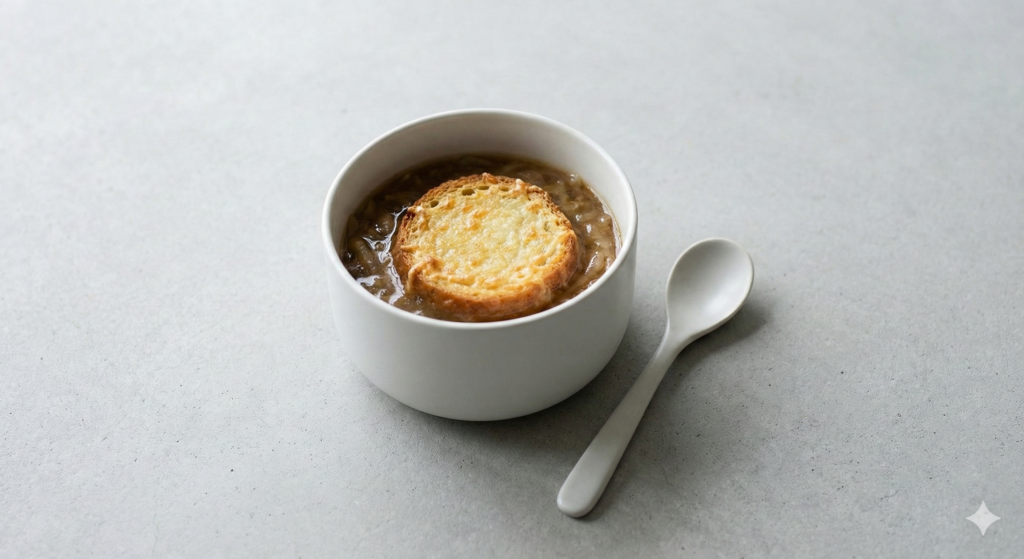
A truly great French onion soup recipe isn’t about the onions themselves; it is about the “marriage” between the fond (the sticky brown bits on the pan) and a collagen-rich broth. To achieve bistro quality without waiting three days for a veal stock, you must “engineer” the mouthfeel by adding gelatin and umami boosters like soy sauce to standard beef broth.
I have tasted enough “dishwater” soup in my 15 years consulting for cafés and home kitchens to know exactly where you are struggling. You buy the expensive Gruyère, you cry over five pounds of onions, and yet, the result is thin, overly sweet, and lacks that deep, dark soul-satisfying richness you get at a French bistro. Why? Because you are likely following recipes that lie to you about time. They tell you onions caramelize in 15 minutes (they don’t) and that a carton of broth is “good enough” (it isn’t).
In this guide, I am going to teach you how to fix these two fatal flaws. We aren’t just making soup; we are building a flavor profile that will make your customers—or your family—wonder if you hired a French chef.
The Science of Patience Why 15 Minute Onions Are a Lie
Let’s get one thing straight immediately: if you are trying to rush this, you have already failed. In my early days working the line, I once tried to crank up the heat to high to get a 20-gallon pot of onions done before the dinner rush. The result? Burnt, bitter flakes floating in a sea of white, raw onions. I had to throw out $50 worth of product and start over.
To get the deep mahogany color required for a legitimate French onion soup recipe, you need low, consistent heat. You are looking for a chemical transformation, not just cooking.
Can I speed up caramelization with baking soda
You might have seen a viral “hack” suggesting that adding a pinch of baking soda raises the pH and speeds up browning. While technically true, I strongly advise against it.
In my experience testing this for a high-volume lunch spot, the baking soda breaks down the pectin in the onion cell walls too aggressively. Yes, the onions turn brown faster, but they turn into an unappetizing, greyish sludge that feels slimy in the mouth. We want distinct, tender ribbons of onion that hold their shape against the broth, not onion jam. Save the baking soda for your cleaning supplies, not your soup pot.
The Maillard Reaction vs Caramelization Understanding the chemistry of flavor
Most people use these terms interchangeably, but they are different beasts. Caramelization is just the oxidation of sugar. But the Maillard reaction—that savory, meaty depth we are chasing—happens when amino acids react with sugars.
Why does this matter to you? Because to trigger the Maillard reaction efficiently, the pot shouldn’t be too crowded initially. If you dump five pounds of onions into a cold Dutch oven, they steam instead of sauté.
- Field Tip: I always tell my clients to start with the lid on for the first 10 minutes to sweat the water out, then take the lid off to evaporate that water so the real browning can begin. If the pan is wet, the temperature stays at 212°F (100°C). You need to hit north of 300°F (150°C) for the magic to happen.
⚠️ Important! Never clean the brown crust (fond) off the bottom of your pot while the onions cook. That crust is concentrated flavor. We will scrape it up later with wine. If you scrub it off now, you are literally throwing away the flavor.
The Broth Problem Transforming Boxed to Bistro
This is the “secret weapon” section. If you take nothing else from this article, listen to this. A traditional French bistro uses veal stock made from roasted bones simmered for 12 to 24 hours. It is thick with natural gelatin. When you buy a carton of “Beef Broth” from the grocery store, it is essentially flavored water. It has zero body.
If you serve a French onion soup recipe using plain boxed broth, the liquid runs off the spoon like water. It feels cheap. We need to fix that texture.
Why does my homemade onion soup taste watery
The missing ingredient is gelatin. Real stock is sticky when reduced; boxed stock is not. To replicate that sticky, lip-smacking quality of a slow-simmered bone broth, we have to cheat a little.
In my kitchen, I use unflavored powdered gelatin. It sounds strange, but blooming a packet of gelatin and whisking it into your store-bought broth gives it that luxurious, velvety mouthfeel that coats the tongue. This single trick changes the perception of quality more than any expensive wine ever could.
The Umami Bomb Trinity Gelatin Soy Sauce and Worcestershire
To deepen the flavor, we need to add “glutamates”—the compounds that our tongues register as “savory.” Boxed broth is usually high in salt but low in depth.
I recommend a specific ratio I call the “Umami Trinity” for every quart of broth:
- 1 tsp Soy Sauce: It provides dark color and earthy saltiness (you won’t taste “Asian” food, I promise).
- 1 tsp Worcestershire Sauce: This brings the fermented complexity of anchovies and tamarind, cutting through the sweetness of the onions.
- 1 tsp Fish Sauce (Optional but recommended): Just a few drops. It acts like a flavor magnifier.
I once saved a catering gig where the main stock pot was accidentally diluted. We used this trinity to punch the flavor back up, and the guests raved about the “beefiness” of the soup, never knowing it was 50% water just an hour before.
You can check general food safety and nutrition guidelines on usda.gov to ensure your broth handling meets health standards.
Selecting the right wine Dry Sherry vs Vermouth vs White Wine
The wine is there to deglaze the pan—to lift that fond we talked about earlier.
- White Wine (Pinot Grigio/Sauvignon Blanc): The classic choice. It adds acidity.
- Dry Sherry: My personal recommendation. It adds a nutty, oxidized flavor that pairs incredibly well with the sweetness of the onions.
- Vermouth: A good backup, but can be too herbal depending on the brand.
My Verdict: Use Dry Sherry if you can find it. If not, a dry white wine is perfectly fine. Avoid “Cooking Wine” loaded with salt; it will ruin your seasoning control.
The Architecture of the Perfect Gratiné Cheese & Bread
You can have the most incredible broth in the world, but if the bread turns to mush and sinks to the bottom, you have failed. In the restaurant business, we eat with our eyes first. A proper French onion soup recipe requires a “raft”—a sturdy crouton that supports the weight of the cheese without dissolving immediately.
What is the best cheese for French onion soup to get that cheese pull
Many beginners try to cut costs here by using cheap mozzarella. Please, don’t do this. Mozzarella is oily and lacks flavor. While it stretches well, it releases a grease pool on top of your beautiful soup.
Classically, we use Gruyère. It has a nutty, slightly sweet profile that melts seamlessly.
- The Budget Blend: If Gruyère is breaking your food cost budget (it is expensive!), I recommend a 50/50 blend of Swiss Cheese (for the melt) and Parmesan (for the sharp saltiness).
- The Texture Secret: Grate your cheese fresh. Pre-shredded cheese is coated in cellulose (wood pulp) to prevent clumping, which stops it from melting into that smooth, bubbling sheet you see on Instagram.
Structural Integrity Why you must dry the bread not just toast it
Here is a scenario I see constantly: A cook toasts a fresh slice of baguette for 2 minutes and throws it on the soup. Two minutes later, it’s a soggy sponge.
To build a raft that lasts, you need to remove moisture, not just add color.
- Field Tip: In my kitchen, we use day-old baguettes (great for reducing waste!). We slice them and put them in a low oven (250°F/120°C) for about 15-20 minutes until they are rock hard, like a cracker. This dryness allows the bread to soak up the French onion soup recipe broth like a sponge while retaining its shape.
⚠️ Important! Cut your bread slices thick—at least 1 inch. Thin slices will not survive the broiler.
Step by Step Umami Engineered French Onion Soup Recipe
This is the method I use to replicate that 24-hour stock flavor in under two hours. This yields about 4 generous servings.
- The Cut: Slice 4 large yellow onions (about 2-3 lbs) pole-to-pole. Don’t slice them paper-thin; you want 1/8 inch thickness so they don’t dissolve.
- The Sweat: Melt 4 tablespoons of butter in a heavy-bottomed pot (Dutch oven is best) over medium heat. Add the onions and—this is crucial—cover the pot. Let them steam for 10 minutes. This softens the cell walls.
- The Maillard Phase: Remove the lid. Add a pinch of salt. Turn heat to medium-low. Now, you wait. Stir every 5-10 minutes. They will go from watery -> sticky -> blonde -> golden -> brown. This takes 45-60 minutes. Do not rush.
- The Deglaze: When the onions are a deep walnut brown and there is a sticky film (fond) on the bottom of the pot, pour in 1/2 cup of dry sherry (or white wine). Scrape the bottom vigorously with a wooden spoon to dissolve that flavor crust.
- The Broth Build: Sprinkle 1 packet (approx. 2 tsp) of unflavored gelatin over 1/2 cup of cold water and let it sit for 5 minutes (bloom).
- The Simmer: Add 4 cups of beef broth (preferably low sodium), your “Umami Trinity” (1 tsp soy sauce, 1 tsp Worcestershire, splash of fish sauce), and the bloomed gelatin mixture to the pot. Throw in 2 sprigs of fresh thyme and a bay leaf. Simmer gently for 20 minutes to marry the flavors.
- The Seasoning Check: Taste it. Does it need salt? Black pepper? If it tastes “flat,” add a splash of apple cider vinegar to wake it up.
- The Broil: Ladle the soup into oven-safe crocks. Place your dried baguette slice on top. Mound the cheese generously over the bread, letting some hang over the edge (this creates those crispy, delicious burnt bits on the side of the bowl). Broil on high for 3-5 minutes until bubbly and spotted brown.
Troubleshooting Your Soup The Save It Guide
Even with the best French onion soup recipe, things can go wrong. I have burned onions before during a busy rush; it happens. Here is how to handle common disasters.
How do I fix bitter French onion soup
If your soup tastes bitter, you likely pushed the onions too far, or the fond burned before you deglazed.
- The Fix: You cannot remove the burnt taste, but you can mask it. Add a teaspoon of honey or maple syrup. The sugar counteracts the bitterness.
- The Dilution: Add a splash of water or more unseasoned broth to dilute the concentration of the bitter compounds.
Balancing acidity and salt levels after cooking
Sometimes the reduction makes the soup too salty.
- The Fix: Potato trick. Peel a raw potato and simmer it in the soup for 15 minutes, then remove it. The potato absorbs some of the excess salt.
- Too Sweet? If your onions were naturally very sweet, add a tiny splash of cider vinegar or lemon juice. Acid cuts through sugar and heaviness.
The Art of Slow Food
Creating a restaurant-quality French onion soup recipe is not difficult, but it is demanding. It demands your attention and, most importantly, your patience. In a world of “instant pots” and “30-minute meals,” this dish is a reminder that good things truly take time.
For you shop owners, this is a high-margin item. Onions are cheap; water is free. If you master the technique of the broth and the quality of the crouton, you can charge a premium for a bowl of soup that costs pennies to make. That is the beauty of this classic dish—it transforms humble ingredients into luxury.
Put this on your menu, follow the rules of the “Umami Trinity,” and watch your customers scrape the bottom of the bowl every single time.
FAQ Frequently Asked Questions
1. Can I freeze this French onion soup recipe? Yes, absolutely. In fact, the flavor often improves after sitting for a day. Freeze the soup base (broth and onions) without the bread and cheese. It will last up to 3 months. When ready to serve, reheat the soup, then add fresh bread and cheese and broil.
2. Which onions are best for caramelizing? I recommend standard Yellow Onions or Spanish Onions. They have the best balance of sulfur (savory) and sugar. Sweet onions (like Vidalia) can make the soup cloyingly sweet, and Red onions turn an unappetizing grey color when cooked for that long.
3. Can I make this vegetarian? You can, but you need to work harder for the flavor. Substitute the beef broth with a high-quality mushroom broth (rich in natural umami). Double the soy sauce quantity and definitely use the caramelized onions to their full potential. The texture will be lighter, but still delicious.