7 Secrets to Cook Perfect Steak Frites: The Synchronization Guide
Last Updated on 2025-12-29 by Suryo
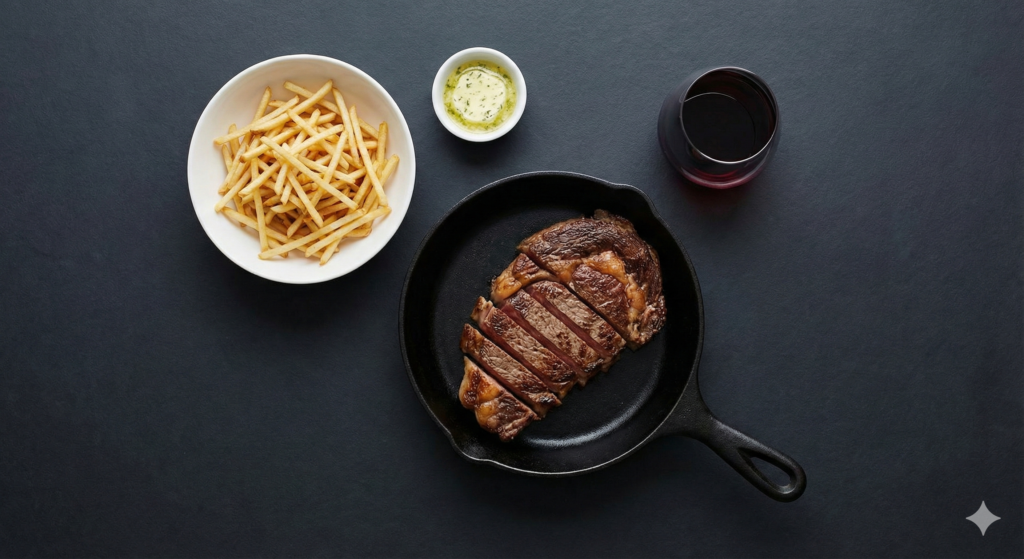
The Secret to Perfect Steak Frites The secret isn’t just in the recipe; it is in the synchronization. To learn how to cook perfect steak frites, you must master the “Double-Bath” method for potatoes (frying at 325°F then 375°F) and the “Cold Sear” technique for the beef. This ensures your fries hit peak crispness exactly 10 minutes after your steak comes off the heat, allowing the meat to rest while the potatoes finish.
Stop Resting Your Steak at Room Temperature (And Other Lies)
Let’s be honest for a second. You have likely tried this before. You bought the expensive ribeye, you cut the potatoes by hand, and you had high hopes. But the result? By the time your steak was rested and sliced, your fries were limp and soggy. Or worse, you focused so hard on the fries that you overcooked the steak into a grey, chewy puck.
In my 15 years in professional kitchens and food blogging, this is the number one complaint I hear from home cooks. They treat the steak and the fries as two separate dishes. They are not. They are a single ecosystem that relies entirely on timing.
The biggest mistake? Following outdated advice. You do not need to let your steak sit on the counter for an hour before cooking (science has proven this does almost nothing to the internal temperature). In fact, doing so might actually hinder your crust.
In this guide, I am going to deconstruct the timing logistics used by top Parisian bistros and adapt them for your home kitchen. We will cover the “Cold Sear” method that changed my life and the exact starch science required for glass-like crispy fries.
If you are looking for data on beef consumption or food safety standards, you can often find general agricultural statistics at Ministry of Agriculture. However, right now, we are focusing on the art of the bistro dinner.
The Bistro Trinity of Meat, Potato, and Heat
To master how to cook perfect steak frites, you have to stop thinking like a cook and start thinking like a project manager. The dish consists of three pillars that must be managed simultaneously:
- The Starch Structure (The Fries): Needs two distinct heat cycles.
- The Protein Gradient (The Steak): Needs slow internal heating and rapid external crusting.
- The Emulsion (The Sauce): Needs to be held at a lukewarm temperature without breaking.
If one of these pillars collapses, the experience is ruined. I once consulted for a small bistro owner who couldn’t figure out why his lunch rush was a disaster. The culprit? He was frying his potatoes to order from raw. By the time the fries were crisp, the steaks were cold. We switched him to the “Par-Fry” system (which I will teach you below), and his table turnover speed doubled overnight.
Why Your Fries Get Soggy (The Double Bath Fix)
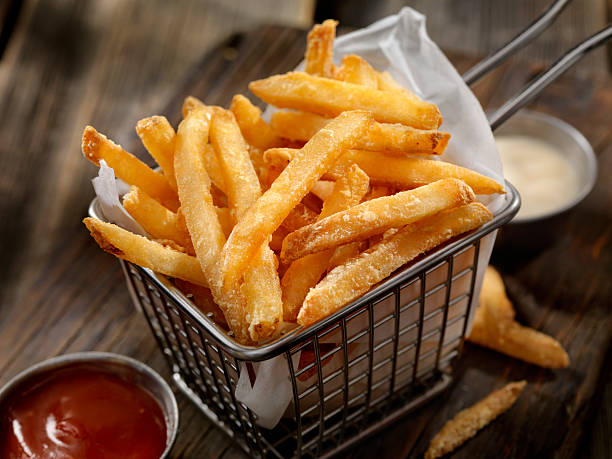
Most home cooks throw raw potatoes into hot oil and hope for the best. This guarantees a soggy, greasy mess. Here is why: a potato needs two different things to happen, and they cannot happen at the same temperature.
First, the potato interior needs to gelatinize. This makes the inside fluffy. Second, the exterior needs to dehydrate to form a crust.
- Step 1: The Blanch (325°F / 160°C): This low-temperature bath cooks the potato through without burning it. It breaks down the starch granules.
- Step 2: The Crisp (375°F / 190°C): This high-temperature shock evaporates surface moisture instantly, creating that glass-like crunch.
Field Context: The “One-Fry” Failure
I’ve encountered a case where a client insisted on single-frying to save oil. The result was always the same: a dark brown fry that was raw in the middle, or a cooked fry that was limp as a noodle. You cannot cheat physics. If you want the bistro crunch, you must commit to the double bath.
The Potato Selection (Russet vs. Yukon)
Do not get creative here. In the world of how to cook perfect steak frites, moisture is the enemy of crispness.
Therefore, I strongly recommend using Russet Potatoes (often called Idaho potatoes). They have a high starch content and low water content.
- Russet: High starch = Fluffy interior, glass-like exterior. (The Winner)
- Yukon Gold: Medium starch = Creamy interior, but tends to get soft quickly.
- Red/Waxy Potatoes: Low starch = Do not use. They will never get crispy.
The Steak: Cut Selection and The Cold Sear
While the fries are the time-consumer, the steak is the star. Traditionally, French bistros use Onglet (Hanger Steak) or Bavette (Flank Steak). These cuts have incredible beefy flavor but can be tough if overcooked.
However, for the most consistent result at home, I recommend a thick-cut Ribeye. It has enough fat to be forgiving if you miscalculate timing by a minute or two.
The “Cold Sear” Technique
This is going to sound controversial, but stick with me. Instead of searing your steak in a smoking hot pan (which creates a grey band of overcooked meat around the edges), try the Cold Sear method.
- Place your seasoned steak in a cold non-stick or carbon steel skillet.
- Turn the heat to high.
- Flip the steak every 2 minutes.
Why this works: The fat renders slowly as the pan heats up, frying the steak in its own tallow. This creates a wall-to-wall medium-rare interior with a crust that rivals a steakhouse, all without smoking out your kitchen.
The Secret is in the Sauce (It is Not Just Butter)
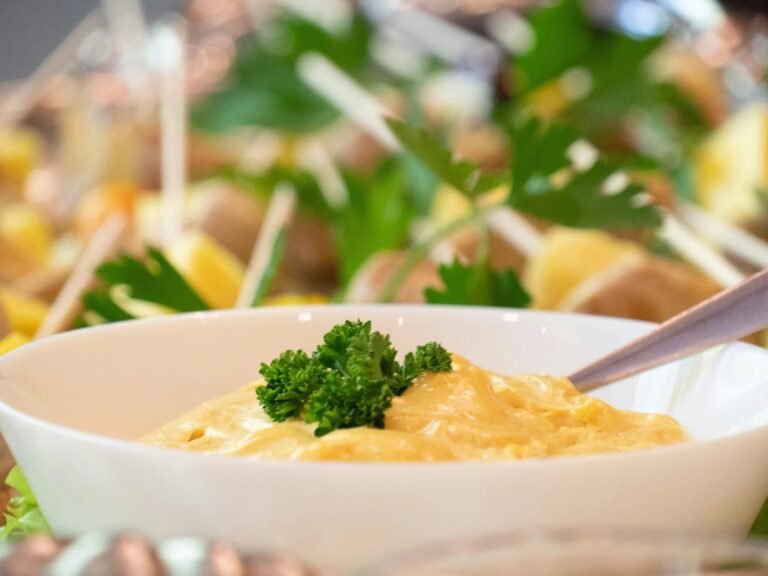
You might think the green sauce at places like Le Relais de l’Entrecôte is just herb butter. In fact, it is a complex emulsion.
I spent years trying to replicate this flavor, mixing tarragon and butter, but it always lacked that deep, savory “punch.” Then, a chef friend dropped the bomb: Anchovies.
You do not taste the fish. The anchovies dissolve completely into the hot butter, providing a massive dose of umami (savory richness) that salt alone cannot achieve. If you leave this out, you are just making herb bread spread, not Entrecôte sauce.
⚠️ Important! Never add fresh herbs to boiling hot butter. The heat will burn the delicate oils in the tarragon and basil, turning your sauce bitter and brown. Always whisk your herbs into the sauce after you have pulled it off the heat.
Here is the second half of the article, focusing on the critical execution, timing, and troubleshooting to ensure your steak and fries hit the plate perfectly hot.
The 45-Minute Synchronization Timeline
This is the part that cookbooks rarely tell you. Knowing how to cook perfect steak frites is 20% cooking and 80% timing. If you just start cooking everything at once, you will fail.
I have developed a “countdown” system that I use for dinner parties. It ensures that the moment the steak is ready to be sliced, the fries are coming out of the oil.
- T-Minus 60 Minutes: Cut potatoes and soak them in cold water to remove excess starch.
- T-Minus 30 Minutes: Drain potatoes dry. Heat oil to 325°F (160°C). Start the “First Fry” (Blanching).
- T-Minus 20 Minutes: Remove fries (they should be pale and soft). Crank oil heat to 375°F (190°C). Start your Cold Sear Steak.
- T-Minus 10 Minutes: Steak hits target temp. Remove steak to a warm plate to rest. Drop fries for the “Second Fry.”
- T-Minus 0 Minutes: Fries are golden. Steak is rested. Plate, pour sauce, and serve immediately.
Step-by-Step Execution Guide
Here is the technical breakdown. Follow these steps exactly, and do not skip the resting period.
- The Preparation Phase Peel and cut your Russet potatoes into 1/4-inch batons. This is the classic allumette (matchstick) size. Rinse them under cold water until the water runs clear. This removes surface starch that causes them to stick together. Dry them thoroughly with paper towels. Water is dangerous in hot oil.
- The First Fry (The Blanch) Fill a heavy pot (Dutch oven is best) halfway with peanut oil or beef tallow. Heat to 325°F. Fry the potatoes in batches for about 5-6 minutes. They should be soft enough to squash between your fingers, but pale white in color. Remove and drain on a wire rack.
- The Protein Cook While the oil heats up for the second round, place your salted Ribeye in a cold carbon steel pan. Turn heat to high. Flip every 2 minutes. For a 1.5-inch steak, this usually takes about 8-10 minutes to reach 125°F (medium-rare). Remove and tent loosely with foil.
- The Second Fry (The Crisp) While the steak rests (this is mandatory), check that your oil is now at 375°F. Drop the pale fries back in. Fry for 2-3 minutes until they are a deep golden brown.
- The Finish Toss the hot fries immediately with fine sea salt (and rosemary if you like). Slice the steak against the grain. Drizzle the warm anchovy-butter sauce over the meat. Serve.
⚠️ Important! Never cover your hot fries with a bowl or foil to “keep them warm.” This traps steam and will turn your crispy masterpieces into soggy mash within 60 seconds. Leave them open to the air on a wire rack if waiting is absolutely necessary.
Common Mistakes That Ruin the Experience
In my years of teaching how to cook perfect steak frites to beginners, I see the same three errors repeated constantly. Avoid these, and you are already ahead of 90% of home cooks.
1. Overcrowding the Fry Pot
I know you want to finish cooking faster, but adding too many potatoes at once drops the oil temperature drastically. Instead of frying at 375°F, your oil drops to 300°F, and the potatoes start to absorb the oil like a sponge. The Fix: Fry in small handfuls. The oil should bubble aggressively the entire time.
2. Slicing the Steak Immediately
There is a temptation to cut into that beautiful crust the second it leaves the pan. Do not do it. The juices are currently boiling near the surface. If you cut now, they will spill out onto the board, leaving your meat dry. Resting for 10 minutes allows the juices to redistribute back into the muscle fibers.
3. Under-Salting the Fries
Salt only sticks to potatoes when there is surface oil. If you wait 2 minutes after frying to add salt, the oil will have dried, and the salt will just bounce off. The Fix: Salt your fries the literal second they hit the mixing bowl.
Bring the Bistro Atmosphere Home
You do not need a plane ticket to Paris or a $100 bill at a fancy brasserie to enjoy this meal. By mastering the synchronization of the “First Fry” and the steak rest, you unlock a skill level that most home cooks never achieve.
The beauty of learning how to cook perfect steak frites is that it scales. Once you understand the timing, you can cook this for a romantic date or a dinner party of six with the same consistent, crispy, juicy results. The next time you crave that savory steak and salty crunch, skip the takeout and trust the process.
Frequently Asked Questions (FAQ)
Q: Can I use an Air Fryer for the fries to save calories? A: You can, but the texture will be different. To get close to the authentic result, toss the raw potato sticks in oil and cornstarch before air frying. However, for the true “glassy” crunch described in this guide on how to cook perfect steak frites, the deep-fry method is superior.
Q: What is the best oil to use for frying? A: Authentic bistros often use Beef Tallow (rendered fat) for flavor. However, for home cooking, Peanut Oil is the best choice because it has a high smoke point and a neutral flavor. Canola is a decent backup, but avoid Olive Oil as it will burn.
Q: My fries turned soft 5 minutes after cooking. What happened? A: This usually means you didn’t fry them long enough during the “First Fry” (Blanching) stage to remove the internal moisture, or your oil wasn’t hot enough during the “Second Fry.” Ensure your oil hits 375°F before the final dip.