5 Expert Tips to Heat a Pink Salt Block Without Cracking
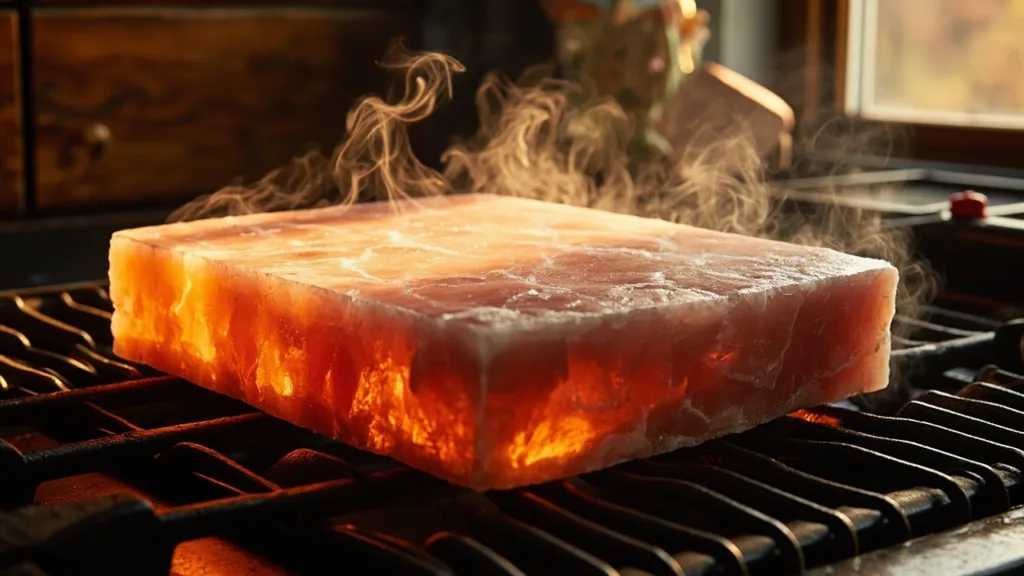
The sound of a sharp crack is the nightmare of every Himalayan salt block owner. You’ve invested in a beautiful, heavy piece of pink salt, envisioning the perfect sear on scallops or a delicately cured fish, only to have it split in two on its very first use. The truth is, learning how to heat a pink salt block without cracking it is the single most important skill you must master. Based on our extensive culinary experience, this failure is almost always preventable. The problem isn’t a defective block; it’s a flawed technique.
A salt block is not like a cast-iron pan or a steel griddle. It is an ancient, dense mineral crystal with unique thermal properties. Consequently, you must treat it with patience and respect. This guide will provide the definitive, expert-led process for safely heating your block every single time, ensuring it lasts for years of flavorful cooking. We will focus on the science of *why* it cracks and the step-by-step methods to prevent it.
Understanding the Enemy: Why Pink Salt Blocks Crack
Before we learn the “how,” we must understand the “why.” The primary culprit, in almost all cases, is thermal shock. This is a common phenomenon in brittle, dense materials like ceramic, glass, and, in this case, crystalline salt. Thermal shock occurs when one part of the block heats up or cools down much faster than another part, creating immense internal stress. Eventually, that stress is released in the only way it can: a sudden, catastrophic crack.
But what causes this uneven heating? There are two main factors:
- Trapped Moisture: A Himalayan salt block is hygroscopic, meaning it naturally attracts and holds onto tiny, microscopic molecules of water from the air. When you heat the block too quickly, this trapped moisture turns to steam, expands rapidly, and literally explodes the salt crystal from the inside out. This is the most common reason for a block cracking on its first use.
- Uneven Heat Source: Placing a cold block directly over a powerful, concentrated flame (like a gas burner) or on a pre-heated grill grate creates a “hot spot.” The bottom of the block expands rapidly while the top and sides remain cold. This differential is a recipe for disaster.
Therefore, our entire strategy for safely heating a pink salt block is built around two core principles: eliminating moisture and ensuring a slow, gradual, and even temperature increase. Patience is not just a virtue here; it’s a requirement.
The 3 Golden Rules: Core Principles for Safely Heating a Salt Block
Before you even think about turning on a dial, memorize these three rules. From our analysis, adhering to these principles will prevent over 90% of all cracking incidents.
Rule 1: The Block Must Be 100% Bone-Dry
We cannot stress this enough. If you have recently cleaned your block, do not heat it for at least 24 hours. A common mistake is to wash the block and then try to “dry it off” with a towel. This only removes surface moisture. The block will have absorbed water, and that water must be allowed to evaporate naturally in a dry, room-temperature environment. Heating a damp block is a guarantee of failure.
Rule 2: Always Start With a Cold Block on a Cold Surface
This is the best practice for preventing thermal shock. Never, ever place a cold salt block into a pre-heated oven, on a hot grill, or over a lit burner. You must allow the block and the heating appliance to heat up together, slowly and gradually. This ensures the entire block passes through the lower temperature ranges as a single unit, minimizing internal stress.
Rule 3: Patience is Your Most Important Tool
Heating a salt block is not a quick process. A full heat-up to searing temperature (500°F / 260°C) can take over an hour. Rushing this process by turning the heat up too fast is the most common temptation and the most frequent mistake. Set aside the time. Your patience will be rewarded with a safe, stable, and perfectly heated cooking surface.
Expert Takeaway: The “Ramp-Up” Method
The single best technique for heating a pink salt block is the “ramp-up” method. Our professional recommendation is to never increase the temperature by more than 150-200°F (approx. 70-90°C) every 20-30 minutes. This slow, staged heating is the safest way to prevent your salt block from cracking.
How to Heat a Pink Salt Block Without Cracking: Step-by-Step Methods
Here are the two safest, most reliable methods for heating your block. We will also cover the stovetop method, though we strongly advise against it for most users.
Method 1: Heating a Salt Block in the Oven (Safest)
This is, without question, the most reliable and hands-off method. The oven’s enclosed environment provides the most even, gentle heat possible.
- Start Cold: Place your completely dry salt block on a metal rack in the center of a completely cold oven. Do not place it on a sheet pan, as this can trap heat and create uneven spots.
- First Stage: Turn the oven on and set it to 200°F (93°C). Let the block heat at this temperature for 30 minutes.
- Second Stage: Increase the oven temperature to 350°F (177°C). Let the block heat for another 30 minutes.
- Final Stage (for Searing): Increase the temperature to 500°F (260°C). Allow the block to heat for a final 30 minutes.
After this 90-minute process, your block will be stable, fully heated, and ready for cooking. You can either cook directly in the oven or, using high-heat oven mitts, carefully transfer it to a heat-proof trivet on your table for presentation.
Method 2: Heating a Salt Block on a Gas Grill (Best for Searing)
This method is our preference for high-temperature searing (like for steaks or scallops) because it gets the block incredibly hot and keeps the smoke out of your kitchen. The key here is indirect heat.
- Start Cold and Indirect: Place your cold, dry salt block on the grate of a cold gas grill. If you have a two-burner grill, place it on one side. If you have three or more burners, place it in the middle.
- First Stage (Indirect Heat): Turn on the burner(s) not directly under the block to their lowest setting. Close the grill lid. Let the block heat using only this indirect heat for 30 minutes. This gently warms the entire block.
- Second Stage (Low Direct Heat): Turn the burner directly under the block to its absolute lowest setting. Keep the other burners on low. Close the lid and wait another 30 minutes.
- Final Stage (High Heat): Gradually increase the heat on all burners to medium, and then to high, in 15-minute intervals. Your goal is to reach a surface temperature of 500-600°F.
Method 3: The Stovetop (Highest Risk)
We must be clear: we do not recommend this method for electric coil or glass-top stoves. These surfaces create intense, uneven hot spots and are notorious for cracking blocks. If you have a gas stovetop, you *must* use a flame tamer or a diffuser ring. This metal piece sits between the flame and the block to help distribute the heat.
Even with a diffuser, you must follow the ramp-up method: start on the lowest possible flame for 30 minutes, then slowly increase to medium for 30 minutes, and finally to high. This method requires constant monitoring and is, in our professional opinion, an unnecessary risk compared to the oven or grill.
How to Know When Your Salt Block is Perfectly Heated
So, you’ve been patient for over an hour. How do you know it’s ready? Guessing is a common mistake. There are two simple, professional tests:
- The Water Test: This is the classic chef’s trick. Flick a few drops of water onto the block’s surface. If they sizzle aggressively and evaporate instantly, your block is at least 450°F and ready for searing. If the water beads up and “dances” before evaporating, it’s hot, but not quite at searing temperature.
- The Infrared Thermometer: For the most accurate, data-driven approach, use an infrared thermometer. Aim it at the center of the block. For general cooking, 350-400°F is sufficient. For a hard sear on a steak, you want the surface to read 500-600°F.
A properly heated block is a joy to cook on. It’s fantastic for mastering European classics like seared scallops or for adding a final, flavorful crust to a piece of fish. The heat retention is incredible, and it imparts that unique, mineral salinity.
Furthermore, a hot block is perfect for flash-cooking vegetables. Imagine tossing some asparagus in a tiny bit of homemade chili oil and then searing them for 60 seconds on the block. The result is spectacular. This versatility is why knowing other Himalayan pink salt cooking tricks is so rewarding.
Common Mistakes That Will Guarantee a Cracked Block
We’ve covered the “how-to,” but just as important is the “how-not-to.” Here are the fatal errors our culinary team has seen time and time again. Avoid these at all costs.
- The “Pre-Heated Oven” Sin: This is the #1 most common mistake. Putting a room-temperature block into a 450°F oven is the very definition of thermal shock. Always start cold.
- The “Electric Stovetop” Gamble: As mentioned, electric coil and glass-top stoves are the primary destroyers of salt blocks. The coils create small, incredibly intense hot spots that will crack the block. Do not attempt it.
- The “Wet Block” Rush: You just cleaned it and want to use it. You wipe it with a towel. It feels dry. It is not. Based on our analysis, a block needs a full 24 hours to air-dry. Heating a wet block *will* crack it.
- The “Broiler” Shortcut: Trying to heat the block from the top down using your oven’s broiler is a terrible idea. It sends all the heat to one surface, creating a massive temperature imbalance.
- The “Charcoal Grill” Misplacement: When using charcoal, do not place the block directly over the raging-hot coals. You must use indirect heat, placing the block on the opposite side of the grill and letting it heat slowly from the ambient air inside the closed grill.
Heating a block is a science. It’s not as complex as mastering authentic Chinese food, but it shares a core principle: technique is everything. Just as you wouldn’t make a delicate stir-fry sauce by boiling it, you don’t heat a salt block by blasting it. The entire process is about gentle, even heat, a principle that, as noted by culinary experts like America’s Test Kitchen, is fundamental to its use. This respect for the tool is what separates an amateur from a professional, much like mastering stocks and sauces is a foundation of culinary skill.
Expert Answers to Your Heating Questions
How long does it take to heat a pink salt block?
You should plan for at least 60 to 90 minutes for a full, safe heating process. This typically involves 20-30 minutes at three different temperature stages (e.g., Low, Medium, High). Rushing this is the primary cause of cracking.
Can I really not put my salt block in a preheated oven?
You absolutely cannot. Placing a cold, dense block into a hot environment is the classic definition of thermal shock. This is the single most common mistake and will almost certainly crack your block. You must place the cold block in a cold oven and let them heat up together.
My salt block made a popping or crackling noise. Is it about to crack?
Small, faint popping or crackling sounds are normal. This is just the sound of the ancient salt crystals expanding and any microscopic traces of moisture turning to steam. However, if you hear a loud “pop” or a sharp “crack” sound, it’s a warning sign that you are heating it too quickly. If this happens, immediately turn off the heat and let it cool down completely on its own.
Can I heat a salt block on an electric glass-top stove?
We strongly advise against it. Glass-top stoves transfer heat very inefficiently and create intense, concentrated hot spots that are a notorious cause of cracking. The same applies to electric coil stoves. The only “safe” stovetop method is on a gas range with a heat diffuser, and even that is high-risk. The oven or grill methods are far superior.
Ultimately, learning how to heat a pink salt block without cracking it comes down to one word: patience. This is not a tool for a “quick” 10-minute meal. It is a tool for deliberate, flavorful cooking. By respecting the science of thermal shock and following these gradual, step-by-step heating methods, you will protect your investment and ensure your salt block provides you with years of exceptional culinary performance.