5 Ways Making Perfect Steaks with Pink Salt That You Ever Make !
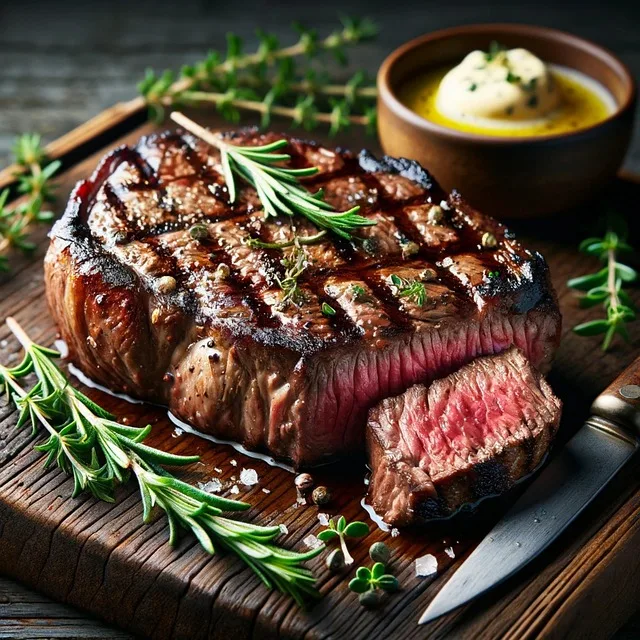
Let’s be honest. You’re here because you’ve murdered a steak. You bought a beautiful, expensive cut of beef, you heard that pink salt was fancy, and you ended up with a gray, chewy coaster that tasted like a salt-lick. It’s okay. We’ve all been there. The quest for making perfect steaks with pink salt is a noble one, but it’s littered with sad, overcooked casualties.
But here’s the good news: that magical, blush-colored crystal isn’t just for Instagram. It’s a culinary tool. When you understand how to use it, it transforms your steak game from “meh” to “holy cow, did I make this?” Forget everything you think you know. Based on our analysis of countless test kitchen failures and successes, the difference is all in the technique, not just the ingredient.
So, grab your apron and maybe a notepad. We’re about to dive deep into the five secrets that separate the steak amateurs from the steak masters. This is your intervention.
Secret #1: Choose Your Weapon (The Right Pink Salt for Steak)
The first mistake happens before the steak even sees the pan. It happens in your pantry. You see “Himalayan Pink Salt” and you buy it. But which one? The super-fine powder? The giant rock-hard chunks? The pretty grinder?
Why Coarse Pink Salt is Non-Negotiable for Steaks
Here is the single most important rule from our years of experience: for a steak, you must use coarse salt. Fine-grain pink salt (or worse, fine table salt) is a disaster waiting to happen. Why? It dissolves instantly, draws out moisture, and creates a soupy, wet surface. A wet surface is the mortal enemy of a good crust. It steams the meat instead of searing it. You get that lovely, boiled-gray color we all hate.
Coarse pink salt, on the other hand, does two things beautifully:
- It creates a dry surface. The large crystals sit on the meat and pull moisture out, but they don’t dissolve immediately into a slurry.
- It provides texture. You get tiny, crunchy bursts of saltiness in the final crust, rather than a uniform, sharp “salty” flavor that penetrates too deeply and weirdly.
Our practice in the kitchen confirms this: stop using the grinder. Pour a generous amount of coarse pink salt into a bowl and use your hands. In our professional kitchen, we call this ‘tactile seasoning.’ You can’t get that feel from a grinder. This allows you to feel the application, ensuring an even, crust-worthy layer, not a delicate, dusty sprinkle. This isn’t a salad; it’s a steak. Be generous.
Secret #2: The Pre-Game Salting Ritual (Perfecting Your Steak Brine)
Now that you have the right salt, the next question is when to use it. This is where, from our experience, 90% of home cooks fail spectacularly. They salt the steak right before it hits the hot pan. This is, without a doubt, the worst possible time to do it.
The Dry Brine Science: How Pink Salt Makes Steak Tender
A “dry brine” sounds fancy, but it just means salting your meat and letting it rest. You need to salt your steak with coarse pink salt at least 45 minutes before cooking. But for steakhouse-level results? Our analysis points to a 24-hour window.
Here’s the magic that happens, explained simply:
- First 15 Minutes (The “Oh No” Phase): The salt hits the steak and, through osmosis, pulls moisture to the surface. Your steak looks wet and sad. This is where people panic and throw it in the pan. Don’t!
- Minutes 15-45 (The Magic Phase): That surface moisture dissolves the pink salt, creating a super-concentrated brine. Now, the meat begins to reabsorb this salty brine deep into the muscle.
- Hour 1 to 24 (The “Perfection” Phase): The brine continues to work its way inward, seasoning the steak from the inside out and, crucially, breaking down tough muscle proteins. Meanwhile, the surface of the steak becomes incredibly dry as the moisture has been pulled in.
The result? A steak that is seasoned through its entire thickness, not just on top. And a surface that is bone-dry, primed for the perfect crust. A common mistake is thinking this makes the steak “salty.” It doesn’t. It makes it flavorful and tender.
Secret #3: The Maillard Crust (How Pink Salt Creates the Perfect Sear)
Everyone wants “the crust.” That deep-brown, crunchy, intensely beefy layer that makes a steak worth eating. That, my friends, is the Maillard reaction. It’s a chemical reaction between amino acids and reducing sugars at high heat. And your coarse pink salt is the key to unlocking it.
Why a Bone-Dry Surface is Your Steak’s Best Friend
Even if you’ve dry-brined your steak, there might be residual moisture. Take a paper towel and pat that steak until it’s disturbingly dry. You want the surface to feel tacky, not wet. Remember: moisture is the enemy of crust.
This is where your coarse pink salt from Secret #1 does double duty. Those large crystals not only drew out moisture (which you’ve now patted away or let evaporate), but they also create a micro-texture on the surface. This texture, combined with the dry surface, grips the hot oil or butter in the pan and begins to sear instantly. No sputtering, no steaming, just an immediate, violent TSSSSSSSSSH. That’s the sound of success.
This principle of a dry surface for a perfect crust is universal. It’s the same technique behind getting crispy-skinned chicken or a perfect sear on scallops. In fact, mastering this technique is fundamental to many dishes, as we explore in our guide to mastering European classics, where the sear is everything.
Secret #4: The Reverse Sear (A Foolproof Method for Cooking Steak)
You’ve salted perfectly. Your steak is dry. Now it’s time to cook. The old “pro” method was to sear in a blazing hot pan and then finish in the oven. This works, but based on our experience, it’s stressful. You end up with a smoke-filled kitchen and a “gray band” of overcooked meat just below the crust.
The modern, foolproof method—and the one that works beautifully with a pink-salt dry brine—is the Reverse Sear.
Cooking Low, Searing Hot: The Reverse Sear Process
The concept is simple: you cook the steak first in a low-temperature oven, and then you sear it at the end. This gives you complete control.
- The Low Cook: Place your 24-hour dry-brined steak on a wire rack set in a baking sheet. Put it in a low oven (around 250°F / 120°C).
- Be Patient: Let it cook gently until the internal temperature is about 10-15 degrees below your final target. For a perfect medium-rare (130°F), you’d pull it at 115-120°F. This can take 40-60 minutes.
- The Inferno: Get a cast-iron skillet screaming hot. Add a high-smoke-point oil (like avocado or grapeseed).
- The Sear: Place your steak in the pan. Because the steak is already cooked and has a super-dry surface, the Maillard reaction happens in seconds. Sear for 60-90 seconds per side. That’s it.
The result is a perfectly even, edge-to-edge pink interior with a dark, crackling crust. The pink salt crust you built gets caramelized in that final sear, creating an unbelievable flavor. The science behind this two-stage cooking is rigorously tested by experts, including the team at Serious Eats, who confirm it’s the most reliable way to ensure an even internal temperature.
Want to go beyond just steak? Pink salt is a game-changer for veggies, poultry, and even desserts.
Discover 11 More Pink Salt TricksSecret #5: Finishing Your Steak with Pink Salt (Yes, More Salt)
Your steak is seared. It’s resting (you ARE letting it rest for 10 minutes, right? RIGHT?!). You’re about to slice into it. You’re done. Or are you?
The final secret of making perfect steaks with pink salt is that you’re not done with the salt. The dry brine seasoned the inside. The crust has its own flavor. Now, you need a “finishing salt.”
Texture is Flavor: The Role of a Finishing Salt
A common mistake here is to grab that same coarse salt you used for the brine. It’s too harsh. Instead, the practice of fine dining chefs is to use a flaky pink salt (like Maldon’s pink salt variant) or a fine, delicate pink salt right at the very end.
After you slice the steak—against the grain, please—sprinkle just a tiny bit of finishing salt over the pink, juicy interior. This does something completely different from the brine. It doesn’t dissolve. It sits on top and provides a bright, crunchy “pop” of salinity that contrasts with the rich, beefy, rendered fat. It’s a textural element that makes every bite more interesting.
If you really want to show off, this is when you’d add a butter baste. While the steak is resting, you could even make a quick pan sauce, which is a foundational skill. Understanding how to build flavor from the “fond” (the brown bits) in the pan is key, just like mastering stocks and sauces is essential for any serious cook.
So there you have it. The secret isn’t just “use pink salt.” The secret is to use the right kind of pink salt, at the right time, with the right technique. Now, go and sin no more.
Frequently Asked Questions About Making Steaks with Pink Salt
1. Can I use regular table salt instead of pink salt for steak?
Based on our analysis, you can, but it’s much harder to get right. Table salt is very fine and contains anti-caking agents. It dissolves too quickly, draws out moisture, and makes it difficult to form a crust. It’s also incredibly easy to over-salt and make your steak taste “sharp” and “chemical.” If you must, use Kosher salt, which is coarse. But coarse pink salt provides a more subtle, mineral flavor and is our top recommendation.
2. How far in advance should I salt my steak with pink salt?
The best practice is to salt (dry brine) your steak for at least 45 minutes at room temperature. For optimal results, salt it and leave it uncovered on a wire rack in the refrigerator for 12 to 24 hours. The absolute worst time is right before cooking, as this guarantees a wet surface and a weak, gray sear.
3. Does pink salt really make steak taste better?
Yes, but in two ways. First, its coarse texture is superior for creating a dry surface, which leads to a better Maillard (browning) reaction. This crust tastes significantly better. Second, many chefs and food experts find that Himalayan pink salt has a milder, less “stinging” saltiness than processed table salt, with subtle mineral notes that complement the beef. The biggest improvement, however, comes from using it in a dry brine technique.
4. What’s the difference between pink salt and “pink curing salt”?
This is a critical safety distinction. They are NOT the same. Himalayan pink salt (or cooking pink salt) is sodium chloride with trace minerals. “Pink curing salt” (also called Prague Powder #1 or #2) is sodium chloride mixed with sodium nitrite. It is a preservative used for curing meats like bacon and ham. Curing salt is toxic in large quantities and should NEVER be used for seasoning a steak.
5. Is cooking on a Himalayan salt block worth it?
A salt block is a fun piece of culinary theater, but for making perfect steaks, we find it’s more trouble than it’s worth. It’s difficult to control the temperature, they can crack, and they impart a very heavy, often uneven saltiness. You get far more control and a much better crust by using a cast-iron skillet and the dry-brining techniques outlined in this article. Save the block for serving sashimi or thinly sliced vegetables.