5 Critical Facts Himalayan Pink Salt vs Curing Salt
As a food expert and chef, I handle critical food safety questions every day. None, however, is more dangerous than the confusion surrounding Himalayan pink salt vs curing salt. Let me be unequivocally clear from the start: they are not the same. They are not interchangeable. Using Himalayan pink salt to cure meat is not a “natural” alternative; it is a potentially fatal mistake that can lead to botulism.
The wellness trend has elevated Himalayan salt to a miracle ingredient, while the food industry has long used a product *also* called “pink salt” for curing. This has created a deadly point of confusion. Based on our analysis, this is not a simple culinary mistake; it’s a critical safety failure. The common mistake is to see two pink-colored salts and assume they are related. They are not.
This comprehensive guide, from a professional chef’s perspective, will dismantle this myth. We will explore the non-negotiable science of curing, the deadly risk of botulism, and the precise, chemical difference between these two products. This isn’t just about flavor; it’s about understanding the science that keeps food safe. Knowing the difference between Himalayan pink salt vs curing salt is essential for anyone interested in making bacon, ham, or any cured meat at home.
CRITICAL SAFETY WARNING: DO NOT CURE MEAT WITH HIMALAYAN SALT
- Himalayan Pink Salt (Culinary Salt): This is Sodium Chloride (NaCl) with trace minerals. It has ZERO nitrites. It CANNOT prevent the growth of deadly botulism spores.
- Pink Curing Salt (Prague Powder #1): This is ~94% Sodium Chloride and ~6% Sodium Nitrite (NaNO₂). It is dyed pink *specifically to prevent you from mistaking it for table salt*.
- Using Himalayan pink salt to cure meat (like bacon or ham) creates the perfect anaerobic environment for *Clostridium botulinum* (botulism) to thrive. This is a lethal gamble.
Himalayan Pink Salt vs Curing Salt: The Core Chemical Breakdown
The entire argument boils down to one, single chemical: sodium nitrite. To understand the safety issue, you must first understand what these two products actually are at a chemical level. As a chef, my job is to understand my ingredients. This is the most important ingredient analysis you will ever read.
H3: What is Himalayan Pink Salt (The “Wellness” Salt)?
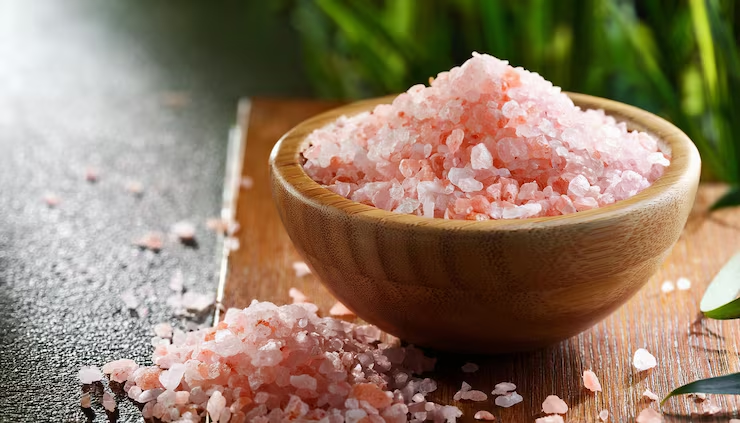
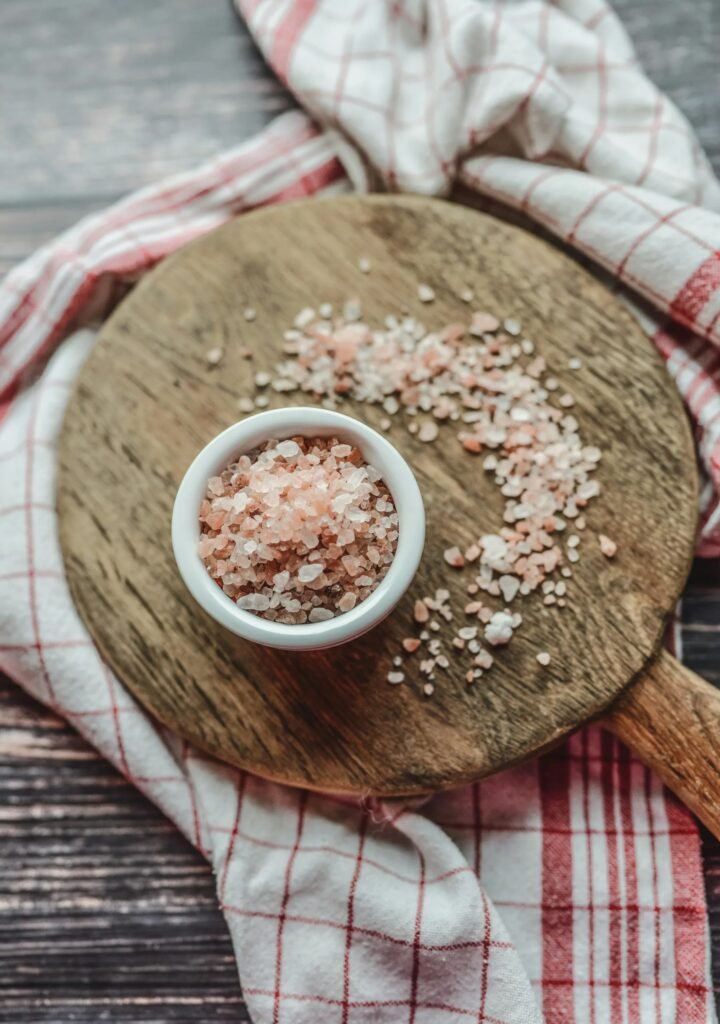
This is the salt you buy in a grinder or a shaker at the grocery store. It has become famous for its beautiful color and “natural” origins.
- Chemical Composition: It is approximately 98% Sodium Chloride (NaCl). This is the same chemical as regular table salt.
- Why is it Pink? The color comes from trace minerals, primarily iron oxide (rust), along with small amounts of magnesium, potassium, and calcium.
- Primary Use: It is a SEASONING SALT or FINISHING SALT. We use it in cooking to add flavor and a crunchy texture to finished dishes. Its health benefits are minimal and related to the trace minerals, but its primary function is flavor.
- Curing Power: NONE. It has no sodium nitrite. It cannot and does not prevent the growth of *Clostridium botulinum*. It is, for all preservation purposes, identical to regular table salt.
H3: What is Pink Curing Salt (The “Preservation” Salt)?
This is a highly specialized, industrial, and non-culinary ingredient. You cannot and will not find this in the spice aisle. It is sold by butcher suppliers or online under specific names.
- Common Names: Prague Powder #1, Instacure #1, Pink Curing Salt #1.
- Chemical Composition: It is 93.75% Sodium Chloride (NaCl) and 6.25% Sodium Nitrite (NaNO₂).
- Why is it Pink? It is INTENTIONALLY DYED a bright, artificial, bubblegum pink. This is a critical safety feature mandated by the FDA. It is dyed so that a chef or butcher could *never* mistake it for regular salt and accidentally oversalt—or poison—a dish. A single teaspoon of pure sodium nitrite can be lethal. The pink dye is a visual “STOP” sign.
- Primary Use: Its ONLY use is for PRESERVATION. It is used in curing meats that will be cooked before eating, like bacon, ham, or corned beef.
- Curing Power: This is its entire purpose. The sodium nitrite is the active ingredient that blocks deadly bacteria.
The confusion of Himalayan pink salt vs curing salt is a simple, tragic case of identical names for two vastly different products. One is a natural rock; the other is a manufactured safety tool.
The Science of Curing: Why Nitrite Is Non-Negotiable
When you cure meat, you are not just “adding flavor.” You are performing a delicate and dangerous chemical process. You are trying to preserve raw meat in a low-temperature environment for days or weeks. This is a formal invitation for one of the world’s deadliest killers: botulism.
H3: The Enemy: *Clostridium botulinum* (Botulism)
This is the “why” behind curing salt. *C. botulinum* is an anaerobic bacteria, meaning it thrives in low-oxygen environments. Its spores are present in soil, water, and on raw meat.
What is the environment of a home cure?
- You rub a pork belly with salt and spices.
- You seal it in a vacuum bag or a zip-top bag, removing the oxygen (anaerobic).
- You place it in a cool, dark refrigerator (low-acid, moist) for 7 days.
Based on our analysis, you have just created a five-star hotel for botulism spores. It is the perfect environment for them to germinate and produce botulinum toxin, the most potent neurotoxin known to science. It is odorless, tasteless, and invisible. A microscopic amount can cause paralysis and death.
H3: The Hero: How Sodium Nitrite (in Curing Salt) Protects You
This is where the 6.25% of Prague Powder #1 becomes the most important ingredient of all. The sodium nitrite performs several critical functions that Himalayan pink salt cannot.
- It Prevents Botulism. This is its primary job. The nitrite chemical specifically inhibits the germination and growth of *C. botulinum* spores. This is not negotiable. This is the entire reason it is used.
- It Creates the “Cured” Flavor and Color. That signature sharp, tangy flavor of bacon or ham? That is the taste of nitrite. The beautiful, rosy-pink color of a ham (that stays pink even after cooking)? That is the nitrite reacting with the myoglobin in the meat to “fix” the color.
- It Acts as an Antioxidant. The nitrite also prevents the fats in the meat (the best part!) from oxidizing and going rancid during the long curing process.
If you use Himalayan salt, you get none of these benefits. Your “bacon” will not be bacon. It will be salty, gray-colored, rancid-tasting, raw pork that is a ticking time bomb for botulism.
The authority on this is clear. The United States Department of Agriculture (USDA) is explicit that nitrites are essential for preventing botulism in cured meats. This is not a “wellness” opinion; it is a hard, scientific fact.
The Himalayan Pink Salt vs Curing Salt Debate: When to Use Each
As a food expert, I want you to use *both* of these products—but in their correct, non-overlapping lanes. The practice of choosing the right salt is what separates a good cook from a great one.
H3: Use HIMALAYAN PINK SALT For:
- Seasoning: Use it to salt your pasta water, season a soup, or make a stock. It is a fundamental part of mastering stocks and sauces.
- Finishing: This is its best use. Sprinkle its coarse, crunchy crystals over a finished steak, a salad, or a piece of fish. This is one of the top 11 Himalayan pink salt cooking tricks.
- Quick Brines: It’s perfectly safe to use in a 2-4 hour brine for a chicken you are going to roast immediately. Why? Because the *heat* from cooking is what will kill the bacteria. Curing is preservation *without* heat.
- Baking: Use it in salt crusts for fish or prime rib, a classic part of mastering European classics. Again, this is safe because of the high cooking heat.
H3: Use PINK CURING SALT (Prague Powder #1) For:
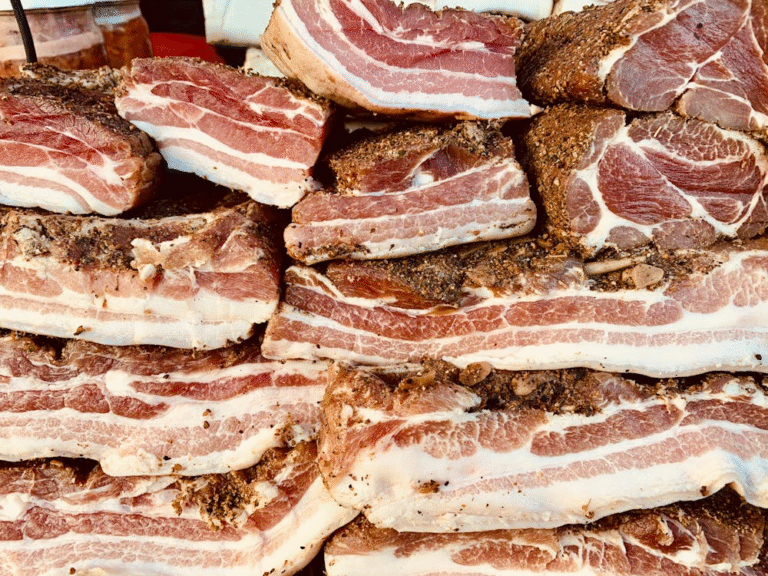
- Curing Bacon: The 5-7 day cure in a low-oxygen bag.
- Curing Ham: The multi-week brine in a cool environment.
- Curing Corned Beef / Pastrami: The 7-10 day brine that gives it its classic flavor and red color.
- Making Cured Sausages (e.g., Frankfurters, Kielbasa): Any ground meat product that is cured, smoked, and/or cooked.
The practice is to use a very precise amount: 1 level teaspoon of Prague Powder #1, mixed with your other seasonings (like kosher salt and sugar), for every 5 pounds of meat. You do not use it to “salt to taste.” It is a chemical, used in chemical measurements.
The “Natural” Curing Myth: What About Celery Powder?
The “Himalayan pink salt vs curing salt” debate is often fueled by the “natural” wellness movement. You’ll see “uncured” bacon at the store that boasts “no nitrites added.” This is often misleading.
Based on our analysis, these products are almost always cured using celery powder or celery juice. Celery is naturally extremely high in nitrates. Harmless bacteria are then added to the cure, which “eat” the nitrates and convert them into… you guessed it… nitrites.
It is the *exact same chemical* (sodium nitrite) that does the curing. It’s just derived from a vegetable instead of a pure, manufactured source. From a food-science perspective, this “natural” method is actually *less* safe for a home cook, as the amount of nitrite is variable and hard to control. The safest, most reliable, and most responsible way to cure at home is to use the precise, measured 6.25% blend found in Pink Curing Salt #1.
If you want to play with safe, “natural” preservation and flavor-building, focus your energy on projects like a homemade chili oil, where the oil and heat create a safe environment, or a complex stir-fry sauce. Even in mastering authentic Chinese food, where cured sausages are a staple, those recipes rely on a deep, historical understanding of nitrites and safety.
Do not let a wellness trend in your Instagram feed lead you to a hospital. Respect the science. Respect the ingredient.
Frequently Asked Questions (FAQ)
1. Is Himalayan pink salt the same as pink curing salt?
Absolutely NOT. They are 100% different. Himalayan salt is a seasoning (sodium chloride with trace minerals). Pink curing salt is a preservative (sodium chloride *plus* 6.25% sodium nitrite) that is dyed pink as a safety warning.
2. Can I use Himalayan pink salt to cure bacon or ham?
No. This is extremely dangerous. Himalayan salt contains no sodium nitrite, which is the only ingredient that prevents the growth of *Clostridium botulinum* (botulism) spores in a curing environment. Using it is a potentially fatal risk.
3. Why is curing salt (Prague Powder #1) dyed pink?
It is dyed pink as a critical safety measure. This is to ensure that no one in a kitchen can ever mistake it for regular table salt or seasoning. A small amount of pure sodium nitrite can be lethal, so the pink dye acts as a visual “STOP” sign.
4. What happens if I use Himalayan salt instead of curing salt for my charcuterie?
You will fail to protect your meat from botulism. You are creating the perfect low-oxygen, low-acid environment for this deadly toxin to grow. Additionally, your cured meat will not have the characteristic pink color (it will be a dull gray) or the tangy “cured” flavor.
5. Where can I buy the *real* pink salt that is safe for curing meat?
You must search for “Prague Powder #1,” “Instacure #1,” or “Pink Curing Salt #1.” It is sold by specialty butcher supply companies, some sporting goods stores (for curing game), and online. It is *not* sold in the spice aisle of a regular grocery store.