Understanding the Flavor Foundations: Soffritto vs. Mirepoix Explained by a Chef Instructor
Last Updated on 2025-11-01 by Suryo
Introduction to Flavor Bases
Flavor bases are essential components in culinary arts, serving as the foundation for a myriad of dishes across various cuisines. They are integral to enhancing the taste and depth of preparations, acting as the aromatic heart of many recipes. The concept of a flavor base is not merely an artistic choice; it is a fundamental technique that is integral to cooking. Among these bases, two notable examples are soffritto and mirepoix, which are utilized widely in Mediterranean and French cooking, respectively.
The importance of flavor bases lies in their ability to develop and layer flavors. When cooked gently, the ingredients in these mixtures release their essential oils and flavors, creating a robust aromatic foundation. A well-prepared flavor base can elevate a dish, making it more complex and inviting. Both soffritto and mirepoix typically consist of aromatic vegetables, but their variations in ingredient selection and preparation techniques yield distinctive outcomes. Such variations not only embody the cultural identity of different cuisines but also support chefs in developing their own unique flavor profiles.
What is Mirepoix?
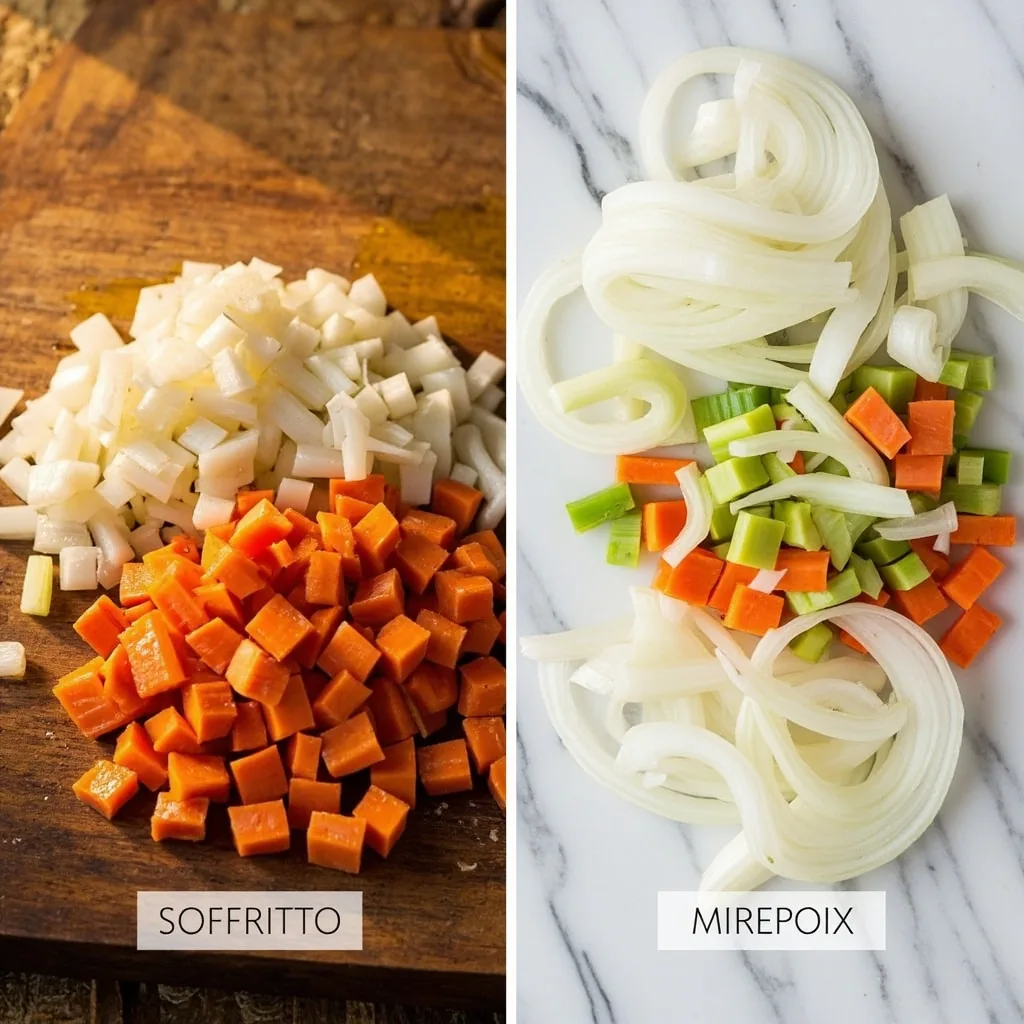
Mirepoix is a foundational element in French cuisine, serving as a flavor base for countless dishes. Traditionally composed of three main ingredients—onions, celery, and carrots—this aromatic mixture plays a crucial role in developing depth and richness in various recipes. The classical mirepoix ratio is 2:1:1, meaning for every two parts of onions, there is one part each of celery and carrots. This specific ratio not only contributes to a balanced flavor profile but also ensures that the sweetness of the carrots complements the savory characteristics of the onions and the subtle earthiness of the celery.
The preparation of mirepoix typically involves finely chopping the vegetables and gently cooking them in butter. The choice of butter is significant as it adds a luxurious mouthfeel and a rich flavor to the base. As the mirepoix cooks, the heat helps to soften the vegetables while releasing their natural sugars, allowing for caramelization that enhances the overall taste. The cooking process usually occurs over low to medium heat, aiming to achieve a tender consistency without browning the mixture. This gentle cooking techniques allows the flavors to meld harmoniously, creating a delightful foundation for soups, stews, sauces, and braises.
Beyond its fundamental role in French cuisine, mirepoix is also a versatile component that can be adapted across various culinary traditions. Chefs around the world have embraced the concept, often altering the proportions or introducing other aromatics to suit specific regional flavors. Despite these variations, the classic mirepoix remains a time-honored technique, cherished for its ability to enhance the complexity and balance of countless dishes.
What is Soffritto?
Soffritto is a foundational mixture in Italian cuisine, often compared to the French mirepoix, but distinct in its composition and flavor profile. This aromatic base typically consists of three key ingredients: onions, celery, and carrots. The conventional ratio of these ingredients is 1:1:1, providing a balanced flavor that is essential for various Italian dishes. The preparation generally begins with finely chopping the vegetables, allowing for an even distribution of flavors when cooked.
Olive oil is the preferred fat used to sauté the soffritto, contributing not only to the richness of the mixture but also enhancing the overall taste of the dish. The use of high-quality extra virgin olive oil is particularly recommended, as it imparts a robust flavor that elevates the soffritto. When heated, the oil provides the necessary medium for the vegetables to release their natural sugars, resulting in a sweet and savory aroma that forms the backbone of many Italian recipes.
To further enhance the complexity of the soffritto, optional ingredients such as garlic and pancetta can be incorporated. Garlic adds a pungent flavor that complements the natural sweetness of the onions, while pancetta introduces a savory, smoky element. These additional components allow cooks to customize their soffritto to better align with specific dishes or personal preferences, thereby broadening its versatility in the kitchen.
As a crucial building block in numerous recipes, soffritto serves as the flavor foundation for sauces, soups, and stews, contributing to the depth and richness that characterize traditional Italian cooking. Understanding its composition and preparation methods is essential for anyone looking to master Italian culinary techniques.
Comparing Soffritto and Mirepoix
Soffritto and mirepoix serve as foundational flavor bases in various culinary traditions, playing crucial roles in the preparation of numerous dishes. While both serve similar functions as aromatic foundations for soups, stews, and sauces, they differ significantly in their composition, ratios, cooking methods, and flavor profiles.
Mirepoix, a staple of French cuisine, typically comprises two parts onion to one part each of carrot and celery. This trifecta of vegetables creates a sweet and savory array of flavors, providing depth to dishes without overpowering them. The cooking method for mirepoix generally involves sweating the vegetables in fat, usually butter or oil, over low heat to soften and release their natural flavors while maintaining a light color. The traditional ratio is purposeful, ensuring that the sweetness of the carrots and the earthiness of the celery complement the foundational onion.
In contrast, soffritto originates from Italian cuisine and often features a base of onion, garlic, and sometimes carrots or herbs such as parsley. The ratio of ingredients may vary, with onion typically dominating the mix, depending on the recipe and regional variations. Soffritto is usually cooked more vigorously than mirepoix, often with olive oil, to produce a richer, more robust flavor. The garlic lends a distinctive pungency that can enhance the overall complexity of many Italian dishes.
Both soffritto and mirepoix are indispensable in their respective cuisines, influencing the overall flavor profiles of the meals they underpin. While mirepoix tends to yield a milder profile suited for French dishes, soffritto’s boldness aligns more closely with the vibrant, hearty nature of Italian cooking. Understanding these differences allows chefs to utilize these foundational bases effectively, tailoring flavors to suit diverse culinary creations.
The Purpose and Importance of Flavor Bases
Flavor bases, specifically soffritto and mirepoix, serve as essential building blocks in the culinary world. These aromatic mixtures provide the foundation for developing depth and complexity in a wide range of dishes, from soups and stews to sauces and braises. Understanding their purpose helps chefs enhance the overall taste profile of their creations. While both soffritto and mirepoix are composed of diced vegetables, their preparation and regional characteristics differ, giving each flavor base its unique essence.
At the heart of both mixtures is the idea of layering flavors. When onions, carrots, and celery come together in mirepoix or when onions, carrots, and bell peppers are utilized in soffritto, they create a nuanced initial layer that forms the basis for subsequent ingredients. The slow cooking process allows the natural sugars present in these vegetables to caramelize, releasing rich flavors that contribute to the overall taste experience. This transformation is crucial, as it adds an aromatic quality to the dish and creates a savory foundation that enhances the final outcome.
Moreover, the importance of these flavor bases transcends mere taste; they also provide a vital textural component. As these vegetables soften, they disperse their flavors into the surrounding liquid, enriching soups and stews while ensuring all elements harmonize. This is particularly important in cuisines that emphasize the harmony of flavors and textures. Consequently, understanding how to effectively use soffritto and mirepoix can elevate any dish and support the chef’s goal of delivering a well-balanced meal.
By mastering the creation and application of these foundational mixtures, aspiring chefs can significantly enhance their culinary repertoire, ensuring that each dish is layered with the complexity, depth, and richness that only carefully crafted flavor bases can achieve.
Common Dishes Featuring Mirepoix and Soffritto
Mirepoix and soffritto serve as fundamental flavor bases in various culinary traditions, enhancing a diverse array of dishes. In French cuisine, one of the most iconic examples utilizing mirepoix is the classic French onion soup. This beloved dish begins with finely chopped onions, often mixed with carrots and celery, sautéed until caramelized, imparting a rich, complex flavor that is essential to its distinctive profile. The subtle sweetness from the caramelized onions combined with beef broth highlights the importance of mirepoix in French cooking.
Additionally, ratatouille, a vibrant vegetable dish from Provence, prominently features a variation of mirepoix. While the traditional mirepoix consists of onions, carrots, and celery, ratatouille utilizes a mixture of onions, peppers, zucchini, and eggplant, which are sautéed in olive oil. This preparation brings forth the natural sweetness of the vegetables and forms a hearty base for this rustic and celebrated dish.
In Italian cuisine, soffritto is indispensable, particularly in dishes such as ragù. This rich meat sauce begins with finely diced onions, celery, and carrots, which are slowly cooked in olive oil or butter until softened. These elements add depth and richness, resulting in a sauce that is essential for pasta dishes like lasagna or spaghetti. Furthermore, the layer of flavor created by soffritto enhances other dishes including risotto and minestrone, showcasing its versatility.
Other examples include jambalaya in Creole cuisine, which uses a potent soffritto base of onions, bell peppers, and celery to build flavor. Similarly, in many Latin American recipes, a soffritto-like base known as “sofrito” is used, combining garlic, onions, and tomatoes. This highlights the cross-cultural significance of these foundational mixtures in enhancing flavor across global cuisines.
Tips for Preparing Mirepoix and Soffritto
When preparing mirepoix and soffritto, selecting the right ingredients and employing effective chopping techniques are crucial for achieving the desired flavors and textures. Mirepoix, the French combination of onions, carrots, and celery, typically comprises a ratio of 2:1:1, while soffritto may involve a mix of onions, garlic, carrots, and sometimes herbs like parsley. Opt for fresh, high-quality vegetables to ensure that the foundational flavors are vibrant and rich.
Chopping techniques play a vital role in flavor development. For mirepoix, it’s essential to cut the vegetables into uniform pieces to allow even cooking. A fine dice can help release the natural sugars and flavors of the vegetables, contributing to a deeper flavor profile as they caramelize. In contrast, soffritto requires a slightly different approach; the vegetables are often sautéed at a low temperature, allowing them to soften and meld their flavors slowly. Thus, a coarser chop can be beneficial when preparing this Italian base.
Building flavor is an art in itself. Start by sweating the chopped vegetables in a combination of oil and butter, as this creates a rich base. Seasoning with salt early on will help draw out moisture from the vegetables, enhancing their natural sweetness. Be mindful of the cooking time; mirepoix is typically cooked until it is translucent, which may take around 10 minutes, while soffritto should be managed over low heat for approximately 20 to 30 minutes to develop that characteristic aromatic profile.
Finally, always remember that both mirepoix and soffritto can be prepared in advance, allowing for convenience in meal preparation. By batch cooking and storing them in airtight containers, you can easily elevate a variety of dishes, ensuring that these foundational flavors are always at your fingertips for enhancing your culinary creations.
FAQs: Common Questions about Mirepoix, Soffritto, and More
Mirepoix and soffritto are foundational elements in various culinary traditions, prompting numerous questions from home cooks and culinary enthusiasts. One common query is about the ‘holy trinity’ in Cajun cooking. This flavor base consists of three components: onion, celery, and bell pepper, which serve a similar purpose to mirepoix but utilizes different vegetables to create a distinctive regional flavor profile. This blend is particularly prevalent in dishes such as gumbo and jambalaya, showcasing how local ingredients can influence cooking techniques and flavor. Therefore, understanding the ingredients that form these foundational bases can enrich one’s culinary repertoire.
Another frequent question revolves around the necessity of finely dicing the ingredients in mirepoix or soffritto. While smaller dice can facilitate even cooking and allow for quicker flavor integration, it is not strictly necessary to slice them into tiny pieces. The size should align with the intended application; for example, in a slower-cooking dish, larger pieces might need more time to soften. Ultimately, adaptation to personal preference and the specific dish plays a crucial role in determining the ideal size for your mirepoix or soffritto.
Additionally, many home cooks wonder about the availability of pre-cut mirepoix in grocery stores. These pre-packaged options can be a convenient way to save time in meal preparation. However, it is essential to evaluate the quality and freshness of these products, as pre-cut vegetables may not always retain the desired flavor or texture compared to freshly prepared mirepoix. When opting for convenience, ensuring that quality is not compromised will greatly enhance your cooking experience and lead to more satisfying results.
Conclusion: Mastering the Basics of Flavor Building
In the realm of culinary arts, understanding flavor foundations is paramount for any aspiring chef or home cook. This article has delved into the intricacies of two essential flavor bases: soffritto and mirepoix. Both preparations serve as the backbone for a plethora of dishes, influencing not only taste but also the overall aroma and texture of the meals we create. By mastering these foundational elements, cooks can significantly elevate their culinary prowess.
Mirepoix, characterized by its blend of onions, carrots, and celery, is a classic French technique that imparts a subtle sweetness and depth to stocks, soups, and sauces. Conversely, soffritto, with its Italian roots, offers a robust flavor profile through the use of onions, garlic, and various aromatic herbs. Both preparations require skill and attention but reward cooks with complex and satisfying dishes when used effectively.
Integrating these flavor bases into your dishes invites exploration and creativity within your cooking practice. They are not merely recipes but foundational techniques that inform a cook’s palate and methodology. Experimenting with different proportions and additional ingredients can yield unique results while adhering to tradition. Moreover, utilizing seasonal vegetables and fresh herbs can enhance these mixtures, bringing personal flair to classic dishes.
As you continue your culinary journey, prioritize the development of these foundational techniques. Whether you’re simmering a comforting soup or preparing a hearty ragu, the potency of soffritto and mirepoix cannot be overstated. Mastery of these elements is a longstanding tradition among great chefs and a worthwhile goal for anyone passionate about cooking. By embracing and experimenting with these flavor bases, you can take significant strides toward becoming a more proficient and imaginative cook.