5 Failproof Steps How to Make a Classic French Baguette
Last Updated on 2025-11-07 by Suryo
Alright, let’s talk. You want to how to make a classic French baguette. I love your ambition. I truly do. As a food expert, let me be the first to tell you: this is the Mount Everest of home baking. It’s a journey. It’s a quest. It’s a four-ingredient monster (flour, water, salt, yeast) that has humbled more bakers than any other loaf. It will make you question your sanity. It will make you want to throw your dough out the window.
But… when you pull it off? When you hear that “crackle” as it cools, and you slice it open to see a creamy, open crumb? It’s a feeling of triumph like no other. A common mistake is thinking it’s just another bread recipe. It is not. It’s a technique. This is not a “30-minute” recipe. This is a 2-day relationship. But I’m here to be your guide, your therapist, and your biggest cheerleader. We’re going to do this. This is the traditional French baguette recipe, demystified.
What Are We Even Chasing? The “Baguette Holy Trinity”
Before we mix anything, we need to define success. A “classic” baguette isn’t just a long, skinny loaf of bread. It’s defined by three very specific qualities. This is what we’re fighting for.
1. The Crust (The “Crackle”)
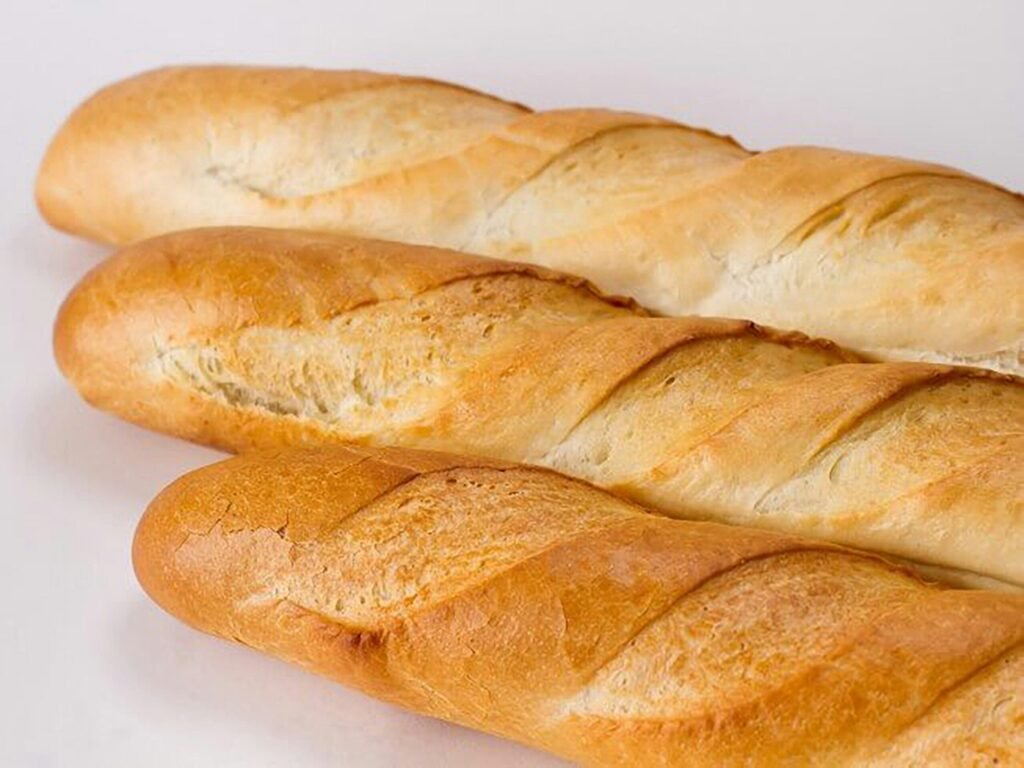
This is the most obvious part. A traditional French baguette recipe demands a crust that is thin, shatteringly crisp, and deeply caramelized to a golden-brown. When you squeeze it, it should “sing” or crackle. It should NOT be thick, tough, or pale. This all comes down to one magic ingredient: steam.
2. The Crumb (The “Air”)
This is the inside. The crumb of a perfect baguette is not dense and sandwich-like. It should be creamy-white, chewy, and full of irregular, glossy-looking holes. This isn’t just about air; it’s a sign of a long, slow, cold fermentation and a high-hydration dough that has been handled *very* gently.
3. The “Ears” (The *Grigne*)
This is the baker’s signature. The “ears” (*la grigne*) are the sharp, raised ledges created by the slashes on top of the loaf. They show that the loaf had a powerful “oven spring” (the final burst of rising in the oven). Getting good ears is the secret handshake of making a classic French baguette. It’s all about how you score the dough.
The Quest: Your Not-So-Simple Shopping List
Okay, it’s only four ingredients. But, as with all simple things, the *quality* of those four ingredients is everything. This is where how to make a classic French baguette begins.
The Flour: The T-65 vs. Bread Flour Debate
This is where food nerds like me really geek out. A common mistake is just grabbing any old all-purpose flour.
- True French T65 Flour: This is the *actual* flour used in France. It’s a hard wheat flour with a medium-low protein content (around 10-11%) and a specific “ash content” (which just means it has more of the wheat bran/germ). It gives a classic “creamy” color and a slightly nutty, complex flavor.
- American Bread Flour: This is our best substitute. It has a higher protein content (12-14%), which can make the crumb a bit *chewier* than a classic Paris baguette, but it provides great structure for the high-hydration dough.
- All-Purpose Flour: You *can* use it, but your dough will be much weaker and stickier, and you’ll struggle to get a good, chewy crumb.
The “Secret” Weapon: A Pre-Ferment (Poolish)
You can’t get that deep, complex, slightly tangy baguette flavor in 3 hours. It’s impossible. The secret is a *poolish*. This is just a super-wet starter you make the night before. It’s equal parts flour and water (by weight) with a tiny, tiny pinch of yeast. You let it sit on your counter for 12-16 hours. This little bowl of goo is where all the flavor is born. This is not optional.
The 5 Failproof Steps: How to Make a Classic French Baguette
Okay. Deep breath. Here is the process. We are doing this. This is your traditional French baguette recipe workflow.
Step 1: The Night Before (Make the Poolish)
In a small bowl, mix:
- 150g (1 cup) Bread Flour
- 150g (2/3 cup) Warm Water (about 85°F/29°C)
- A tiny, itty-bitty pinch of Active Dry Yeast (like, 1/8th of a teaspoon)
Step 2: The Main Dough & The “Fold” (No Kneading!)
In a large bowl, combine your bubbly poolish with the rest of the ingredients:
- 350g (2 1/3 cups) Bread Flour
- 200g (3/4 cup + 1 tbsp) Water (a bit warmer this time, 90°F/32°C)
- 10g (1 3/4 tsp) Coarse Salt (using a nice Himalayan pink salt is great for flavor)
- 2g (1/2 tsp) Active Dry Yeast
Mix this with your hands until it’s a sticky, shaggy mess. Don’t knead it! Cover the bowl and let it rest for 30 minutes. Now, instead of kneading, we “fold.” Wet your hands. Grab one side of the dough, stretch it up, and fold it over the center. Turn the bowl 90 degrees. Stretch and fold. Repeat twice more (4 folds total). Cover and wait 30 minutes. Repeat this “stretch and fold” process 3 more times over the next 1.5 hours. This is how you build strength without destroying the airy structure.
After the last fold, let the dough rise (ferment) in a warm place for 1-2 hours, or until it’s puffy and about doubled.
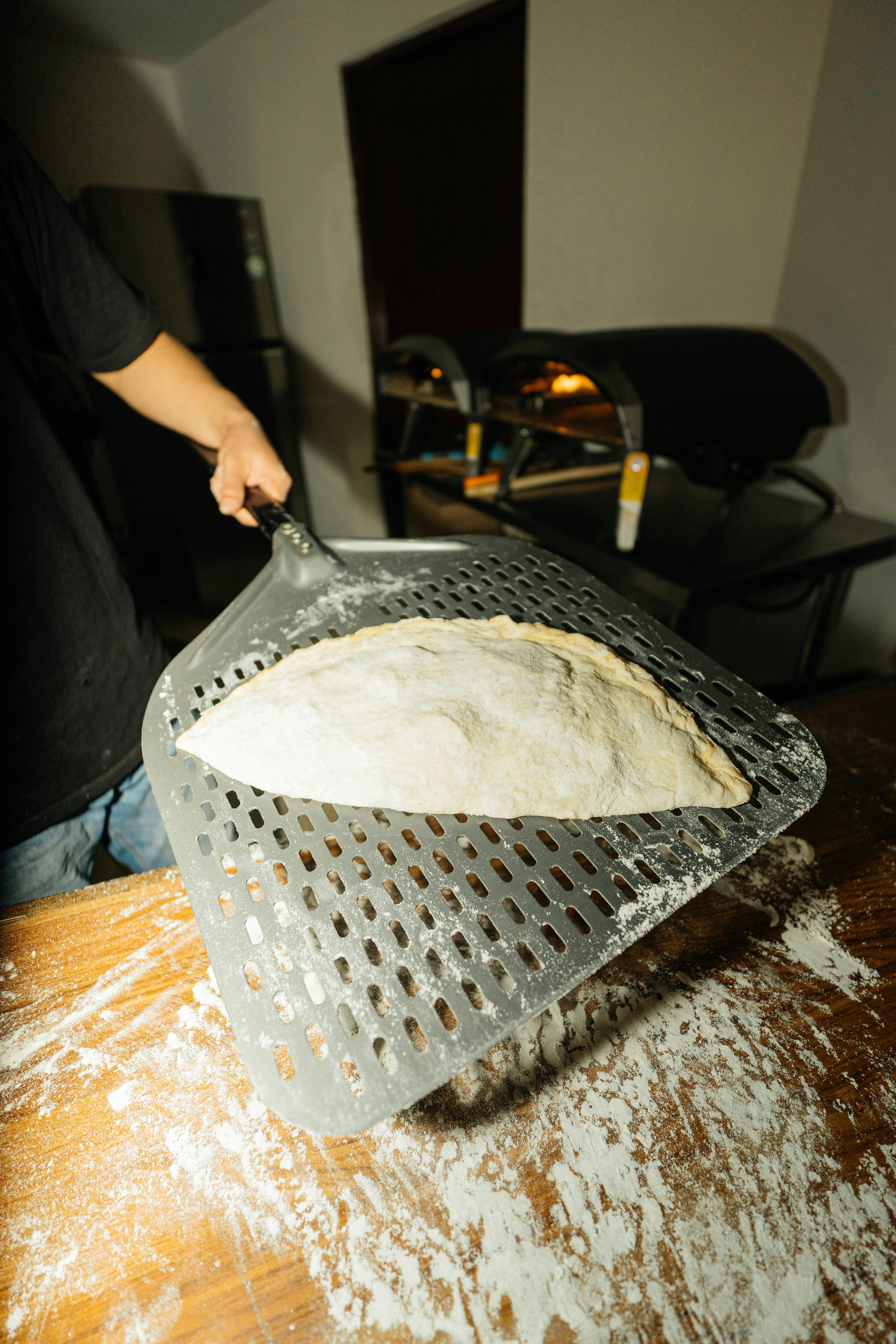
Step 3: The Shaping (A.K.A. The Part You’ll Mess Up)
I’m kidding. Mostly. The baguette shaping technique is where the magic lies.
- Gently, *gently* turn your bubbly dough out onto a well-floured surface. Don’t punch it down! You’re a gentle dough-whisperer now.
- Divide the dough into 3 equal pieces (a kitchen scale is your best friend).
- Pre-shape: Gently pat one piece into a small rectangle. Fold the top third down, and the bottom third up (like a letter). Let it rest for 15-20 minutes, seam-side down, covered.
- Final Shape: Flip the rested dough over (seam-side up). Pat it into a rectangle again. Now, fold the top edge down just a little and press it to seal with the heel of your hand. Fold it again, press to seal. Repeat this “roll and seal” motion until you have a tight log. Gently roll it out with your palms (from the center, moving out) until it’s 15-16 inches long.
This is the hardest part. The best practice is to watch a video, but the goal is to create surface tension. The outside of the loaf should feel tight, while the inside stays airy. This is the real secret of making a classic French baguette.
Step 4: The Final Proof (Patience, Young Baker)
You need a “couche,” which is a fancy, floured baker’s linen. A (clean, non-fuzzy) kitchen towel dusted *heavily* with flour works perfectly.
Place your shaped baguettes on the floured towel, seam-side down. Create a little “hammock” for each one by bunching up the cloth between them. This forces them to rise *up*, not *out*. Cover and let them proof for 30-45 minutes. They should look puffy, but not doubled. A gentle poke should leave an indent that slowly springs back.
Step 5: The “Scoring” and The “Bake” (It’s All About STEAM)
This is it. The main event. While your loaves are proofing, preheat your oven to 475°F (245°C) with a baking stone or steel on the middle rack.
Now, we need to talk about the baguette recipe with steam. This is non-negotiable for how to get a crispy baguette crust.
The Steam Setup: Place a cast-iron skillet or an old baking pan on the very bottom rack of your oven. Let it preheat with the oven. Just before baking, boil 2 cups of water.
The Scoring: Gently transfer your loaves to a piece of parchment paper. Now, how to score a baguette: You need a *lame* (a razor blade on a stick) or the sharpest razor blade you have. You want to make 3-5 long, decisive slashes. The key is the angle: hold the blade at a 30-degree angle (almost parallel to the dough), not straight down. Overlap each cut by about 30%. This is what creates the “ears.”
The Bake: Slide the parchment with your loaves onto the hot baking stone. Carefully, pour the boiling water into the hot skillet on the bottom rack. Shut the oven door *immediately* to trap the steam. Bake for 15 minutes. Then, remove the steam pan and rotate the loaves. Bake for another 10-15 minutes, or until deeply golden brown and hollow-sounding.
Common Baguette Disasters (And How to Fix Them)
Your first batch will probably be weird. That’s okay. Based on our analysis, here are the common mistakes making paella—I mean, baguettes! (See, my brain is full of food).
Baguette 911: Troubleshooting
- “My baguette is flat and sad!”
The Problem: Under-proofed (it didn’t have time to rise) OR, more likely, you failed the baguette shaping technique. You didn’t create enough surface tension, so it spread out like a pancake.
The Fix: Practice, practice, practice. - “My crust is soft and pale!”
The Problem: Not enough steam. Your oven wasn’t hot enough.
The Fix: More boiling water. A hotter oven. And make sure you’re not opening the door for the first 15 minutes. - “I have no ‘ears’!”
The Problem: You failed the how to score a baguette step. You probably cut straight down (90-degree angle) instead of at a shallow 30-degree angle.
The Fix: Be brave. Hold that blade almost flat.
What to Do With Your (Probably Imperfect) Masterpiece
You did it. You made bread. It might look like a goblin’s club, but it’s *your* goblin’s club. The best part? Even ugly baguettes are delicious.
The *only* way to eat your first baguette is to tear off the end while it’s still warm, slather it in good butter, and marvel at your creation.
Once you’re done admiring it, this is the perfect vessel for sopping up the last bits of a classic French dish. It’s an essential part of mastering European classics. Or, use it to sop up some amazing homemade stock. The possibilities are endless.
For a deep, technical dive into the science of the poolish and hydration, the bakers at King Arthur Baking have a fantastic (and famously reliable) recipe that reinforces all these core techniques.
Frequently Asked Questions (FAQ) about Making Baguettes
1. Why isn’t my baguette crust crispy?
The #1 reason is a lack of steam. You must create a steamy environment in your oven for the first 15 minutes of baking. This is the how to get a crispy baguette crust secret. The steam keeps the crust soft at first, allowing the loaf to expand (oven spring), and then caramelizes the sugars into that perfect, shiny, crisp shell.
2. Can I use all-purpose flour for this baguette recipe?
You *can*, but it will be harder. All-purpose flour has less protein, making your dough weaker and stickier. This makes the baguette shaping technique much more difficult. The best practice is to use bread flour, which provides the structure needed for a chewy crumb and good oven spring.
3. How do I get those big, airy holes in my baguette?
Big holes (an “open crumb”) come from three things: 1) High hydration (a wet dough), 2) A long, slow fermentation (like our 12-hour poolish), and 3) Gentle handling. Do not punch down or knead this dough. Use the “stretch and fold” method to preserve the air bubbles you worked so hard to create.
4. Why did my slashes (scores) just spread open instead of creating “ears”?
This is a classic how to score a baguette problem! You cut at the wrong angle. If you cut straight down (90 degrees), the loaf just spreads open. You must hold your blade at a very shallow 30-degree angle (almost parallel to the dough) and make a quick, confident slash. This creates a “flap” that gets lifted by the oven spring to form a beautiful “ear.”
5. Can I make this a sourdough baguette?
Absolutely! That’s the next level. You can substitute the *poolish* (the pre-ferment) with about 150g of active, bubbly sourdough starter. The process will be very similar, but the fermentation times will be longer and the flavor even more complex. That’s a traditional French baguette recipe at its finest.