What To Serve With Beef Rendang Vegetarian 7 Pro Ideas
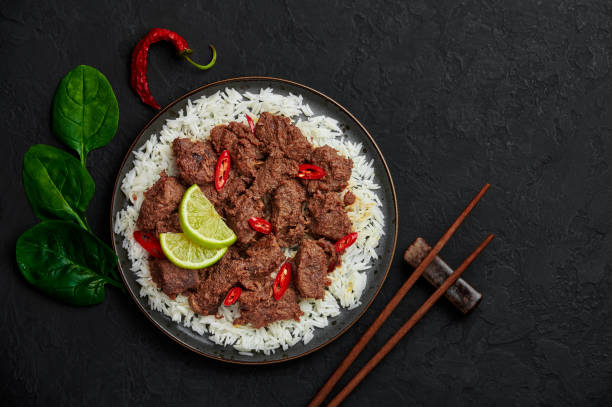
Alright, let’s talk about this. You’ve typed in “what to serve with beef rendang vegetarian”. This query sets off alarm bells in my head. It’s a wonderful, chaotic, and beautifully ambiguous question. It tells me you have one of two very different, very specific problems, and you’re not quite sure how to phrase it.
Are you:
- The “Accommodating Host,” who is making a glorious, authentic beef rendang and has just realized, with chilling horror, that their new brother-in-law is vegetarian? You’re looking for vegetarian side dishes for beef rendang that are substantial enough to be a “main” for one person.
- The “Modern Feaster,” who is making a full-on vegetarian rendang (with jackfruit, mushroom, or tofu) and is now wondering what traditional (or non-traditional) sides go with this new-age creation?
This is a critical distinction. The pairings for a rich, fatty, beef-collagen-based rendang are philosophically different from those for a coconut-and-spice-based vegetable rendang. But here’s the good news: I’m a professional. I’m going to solve both problems for you, right now, with the authority and detail you need.
Expert Analysis: The Vegetarian Rendang Itself
Before we even discuss what to serve with vegetarian rendang, let’s look at the main event. The video I’ve embedded below is a fantastic example of a “Rendang Sayur,” or Vegetable Rendang. This is critical. Based on our analysis, the side dishes for a veggie rendang are entirely dependent on the main’s flavor base.
Pay close attention to the technique. Notice how the flavor is built without the beef fat. They rely on blooming the bumbu (spice paste) and, crucially, adding kerisik (toasted coconut paste). This tells us the final dish will be intensely aromatic, nutty, and rich from the coconut milk, but it will lack the deep, savory umami and collagen-based mouthfeel of beef. Our side dishes, therefore, have a new job: they must provide texture, freshness (to cut the coconut), and, if possible, a little extra umami. This video is your blueprint for the main course; my guide will be the blueprint for the rest of the feast.
Source: Video Guide for Vegetable Rendang on YouTube
Scenario 1: The “Accommodating Host” (Veggie Sides for Beef Rendang)
So, you’re making the real deal. The beef. The smell is filling the house. Your vegetarian guest is arriving in one hour. You cannot, under any circumstances, just hand them a bowl of rice and some pickles. That’s amateur. You need a vegetarian side dish for beef rendang that feels like a “main.”
Your goal here is not to match the rendang, but to complement the feast. The guest should feel included in the “Indonesian” flavor profile. Here are your lifesavers.
H3: The Gold Standard: Gado-Gado (or Karedok)
This is your single best option. Gado-Gado is a magnificent Indonesian salad of lightly blanched vegetables (long beans, spinach, bean sprouts), boiled potato, fried tofu, and a hard-boiled egg (ask if they eat eggs!), all drenched in a rich, spectacular peanut sauce. It’s warm, it’s substantial, it’s savory, and it’s a world-class dish in its own right.
Pro-Tip: The “practice terbaik” is to make the best peanut sauce recipe from scratch. This allows you to control the spice and sweetness, and it’s the heart of the dish. It shares the same “Indonesian” DNA as the rendang, so it feels perfectly at home on the same table.
H3: The Quick & Easy: Tempeh or Tofu Bacem
Bacem is a Javanese method of braising tempeh or tofu in a mix of coconut water, palm sugar, soy sauce, tamarind, and spices. The result is a deeply flavorful, sweet, savory, and aromatic “block” of protein. You can make this hours (or a day) ahead. It’s a fantastic, high-protein main that requires very little last-minute fuss. It’s a perfect companion to the shared rice and Acar.
H3: The “Shared” Items That Save You
Remember, the guest can eat (and will love) all the other “universal” sides you’re serving with the beef. Your job is to make sure these are on the table.
- Nasi Uduk (Coconut Rice): Elevate your rice game. Cooking it with coconut milk and pandan makes it a special treat for everyone.
- Acar Timun (Quick Pickles): Non-negotiable. Everyone needs this to cut the richness.
- Emping Crackers: This is CRUCIAL. Krupuk (prawn crackers) are not vegetarian. A common mistake. Emping (from melinjo nuts) are 100% vegetarian and have a delicious, bitter crunch.
Scenario 2: The “Modern Feaster” (What to Serve with Vegetarian Rendang)
Okay, this is the main event. You’ve made a beautiful jackfruit, mushroom, or tofu rendang (like the one in the video). You’ve successfully mimicked the bumbu. But as we established, the dish is different. It lacks the beefy collagen. It’s a “coconut-spice-nutty” bomb. Our sides must be chosen accordingly.
The philosophy here is BALANCE. We need to cut the coconut fat while adding texture and any umami that might be missing. Here are the 7 pro ideas for what to serve with your vegetarian rendang.
This is the most kesalahan umum yang sering terjadi (common mistake I see). You make a beautiful vegetarian feast and serve it with Krupuk Udang (Prawn Crackers). You have just served fish to your vegetarian friends. This is a culinary foul.
The “practice terbaik” is to serve Emping. These are crackers made from the melinjo nut. They are crunchy, slightly bitter, and 100% vegetarian. Do not fail at the finish line.
H3: 1. The Non-Negotiable: Acar (Indonesian Quick Pickle)
I don’t care what kind of rendang you make, you need this. It is the acidic, sharp, crunchy counterpoint that “resets” your palate from the rich santan (coconut milk). A simple mix of cucumber, carrot, shallots, and chili in a quick vinegar-sugar-salt brine. It’s not a suggestion; it’s a requirement.
H3: 2. The Fresh Green: Urap Sayur (Spiced Coconut Salad)
This is my #1 vegetable pairing. Urap (or Urap-Urap) is a Javanese salad of blanched, assorted vegetables (long beans, spinach, cabbage, bean sprouts) tossed with a “dressing” of fresh, spiced, grated coconut. This is not milky coconut; it’s zesty coconut, seasoned with kaffir lime, chili, and galangal. It’s served at room temperature and provides a burst of “green,” “fresh,” and “zesty” flavor that is the perfect contrast to the “stewed,” “dark,” and “rich” rendang.
H3: 3. The Savory Bulk: Perkedel Kentang (Potato Fritters)
Vegetarian rendang, especially jackfruit, can sometimes feel less “heavy” than its beefy cousin. Perkedel are the answer. They are savory Indonesian potato fritters, often mixed with fried shallots and a hint of nutmeg or white pepper. They are soft on the inside, crispy on the outside, and provide a wonderful, carb-based “heft” to the plate. They are magnificent for mopping up any extra sauce.
H3: 4. The “Other” Green: Tumis Kangkung (Stir-Fried Water Spinach)
While Urap is a complex, room-temp salad, Tumis Kangkung is a hot, fast, and fiery side. It’s a simple stir-fry of water spinach with garlic, chili, and (for a vegetarian version) mushroom oyster sauce or tauco (fermented soy paste) for umami. This provides a “sharp” garlic-and-chili heat that is different from the “deep” spice of the rendang. It’s a fantastic contrast. You can use a good stir-fry sauce base here.
H3: 5. The Umami Bomb: Sambal (The Right Kind)
Another common mistake! You serve Sambal Terasi, which is made with terasi (shrimp paste). That’s not vegetarian. You need a vegan sambal.
- Sambal Hijau (Green Chili Sambal): A classic Padang pairing. It’s bright, sharp, and often “accidentally” vegan (just check for shrimp paste).
- Sambal Bawang (Shallot Sambal): Simple, fiery, and vegan. Just shallots, chilis, and hot oil.
- Mushroom-Based Sambal: You can make a “vegan terasi” by blending shiitake mushrooms and soy sauce to add that umami kick. Or just make a fantastic homemade chili oil.
H3: 6. The “Unexpected” Texture: Serundeng (Spiced Coconut Flakes)
This is a brilliant pro-move. Serundeng is grated coconut, fried with spices (like turmeric and coriander) and peanuts until it’s golden-brown, crispy, and nutty. You sprinkle this on top of the vegetarian rendang. It adds a sandy, crispy, nutty texture that is absolutely divine and mimics the dedak (burnt paste) of a super-dry beef rendang.
H3: 7. The Foundation: The Right Rice
We’ve talked about this before, but for a vegetarian rendang, it’s even more important. The richness comes only from the coconut. Pairing it with Nasi Uduk (Coconut Rice) creates an almost overwhelmingly rich (and delicious) experience. For a “lighter” meal, a perfectly steamed, fluffy long-grain Jasmine Rice is the practice terbaik. Either way, plain, clumpy rice is not an option.
There you have it. The question of “what to serve with beef rendang vegetarian” is not one question, but two. By addressing both the “Accommodating Host” and the “Modern Feaster,” you’ve not only solved your immediate problem, but you’ve also mastered the entire philosophy of the Indonesian table. This is how you go from a cook to a chef.
Master the Foundations: A Chef’s Guide to FlavorFrequently Asked Questions (FAQ)
1. Are prawn crackers (krupuk) vegetarian?
No! This is the most common mistake. Krupuk Udang (prawn crackers) are made with real prawns and tapioca starch. For a 100% vegetarian feast, you must serve Emping (crackers made from the melinjo nut).
2. What is the best “main” for a vegetarian guest if I’m serving beef rendang?
Based on our analysis, the best standalone vegetarian main is Gado-Gado. It’s substantial, has a fantastic peanut sauce, and feels like a complete meal. A close second is Tempeh Bacem (sweet soy tempeh) for its rich, savory flavor.
3. What is the best base for a vegetarian rendang?
Young (green) jackfruit is the most popular because it shreds and mimics the texture of pulled beef. However, for the best flavor, a mix is ideal: young jackfruit for texture and mixed mushrooms (like shiitake or king oyster) for a deep, savory umami.
4. What’s the difference between Urap and Gado-Gado?
They are both Indonesian vegetable salads, but the “dressing” is completely different. Gado-Gado is served with a rich, creamy peanut sauce. Urap Sayur is tossed with a zesty, fresh, spiced grated coconut dressing. Urap is a lighter, fresher pairing for the already-rich rendang.
5. Is Sambal Terasi vegetarian?
No. “Terasi” is shrimp paste, which is a fundamental ingredient. When serving vegetarians, you must use a sambal that is explicitly vegan, such as Sambal Bawang (shallot), Sambal Hijau (green chili, checking for no terasi), or a custom sambal using mushrooms for umami.