Is Rendang Indonesian Or Malaysian Food? This Is 7 Shocking Truths
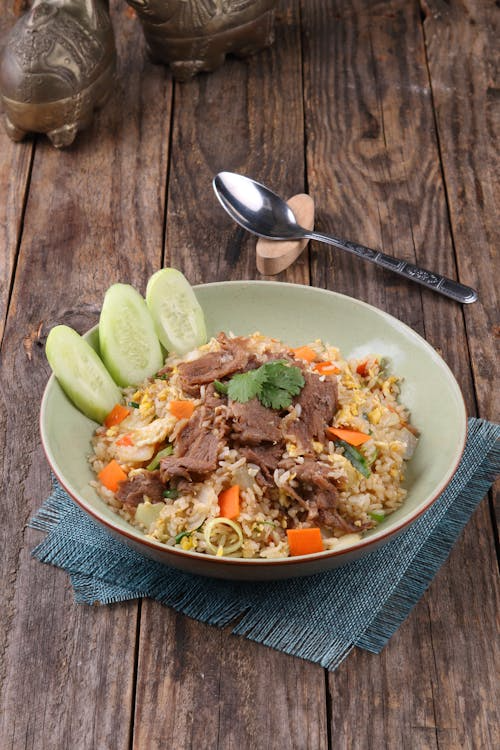
Ah, the big one. Asking “is rendang Indonesian or Malaysian” in a room full of food lovers is like tossing a grenade. It’s the culinary equivalent of The Beatles vs. The Rolling Stones, except this debate comes with deep-seated national pride, complex migration histories, and a whole lot of coconut milk. As a culinary expert who has navigated this delicious minefield for years, let me be your guide. The short answer is explosive, but the long answer… the long answer is where the real flavor is.
Here’s the thing: this isn’t a simple “yes” or “no.” This isn’t a quiz where you get a point for guessing correctly. The origin of rendang is a fascinating story about culture, migration, and the pure genius of preservation. To even begin, you have to understand that modern borders are lines on a map, but flavor… flavor travels.
So, let’s put on our culinary historian hats, set aside the nationalism for a moment, and dive into the real, verifiable facts. And to kick us off, it’s essential to understand the cultural passion this dish ignites.
Analisis Ahli (Expert Curation)
Before we break down the facts, watch this clip from CNA Insider. It perfectly captures the cultural significance of the rendang debate. As a chef, what I find fascinating isn’t just the argument; it’s the *passion*. Notice how both sides describe rendang with reverence—they talk about the hours, the technique, the “right” way. This video isn’t just about “who owns rendang”; it’s a testament to how profoundly important this single dish is to the shared identity of the Malay Archipelago.
Video via CNA Insider on YouTube
The Short Answer (If You’re in a Hurry)
Let’s get this out of the way so we can move on to the fascinating “why.”
Rendang originates from the Minangkabau people of West Sumatra, Indonesia.
This is not an opinion. This is a widely accepted historical and culinary fact, acknowledged by food historians and culinary anthropologists. The Minangkabau highlands are the undisputed cradle of this dish. However, this is where the story begins, not where it ends. The reason Malaysia has such a strong, legitimate claim to rendang as a cultural dish is *because* of the Minangkabau people themselves. And that’s where the 7 truths come in.
The 7 Shocking Truths About the Rendang Origin Debate
This is where we go from a simple answer to a deep understanding. To truly settle the is rendang Indonesian or Malaysian question, you need to understand these seven key facts.
1. Truth 1: Rendang is a Philosophy of Preservation
The number one mistake people make is thinking rendang is just “beef curry.” It is not. Rendang is a cooking method and a preservation technique. The word “merendang” refers to the process of slow-cooking in coconut milk and spices until all the liquid evaporates.
This process was a work of pure genius. By cooking the beef for 6-8 hours, all the moisture is removed, and the coconut milk and spices (which have natural antimicrobial properties) infuse and “seal” the meat. A perfectly cooked “dry” rendang could last at room temperature for weeks, even months. It was the original, all-natural canned food. This is fundamental to its origin.
Key Culinary Stages
To understand rendang, you must know its three life stages. A common error is calling the middle stage “rendang.”
- Stage 1: Gulai (Wet)
- Cook Level: Easy.
- Time: < 1 hour.
- Description: A wet, soupy, golden curry. The coconut milk is fresh and thin.
- Stage 2: Kalio (Oily)
- Cook Level: Medium.
- Time: 2-4 hours.
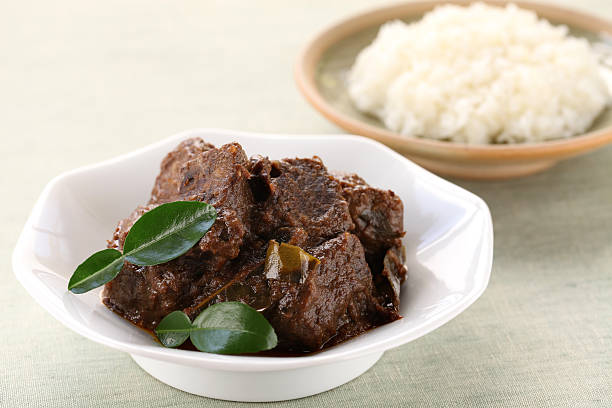
- Description: The coconut milk has thickened, darkened to brown, and the oils have “split” (pecah minyak). This is what most restaurants outside of Indonesia/Malaysia serve as “rendang.”
- Stage 3: Rendang (Dry)
- Cook Level: Sulit (Difficult).
- Time: 6-8+ hours.
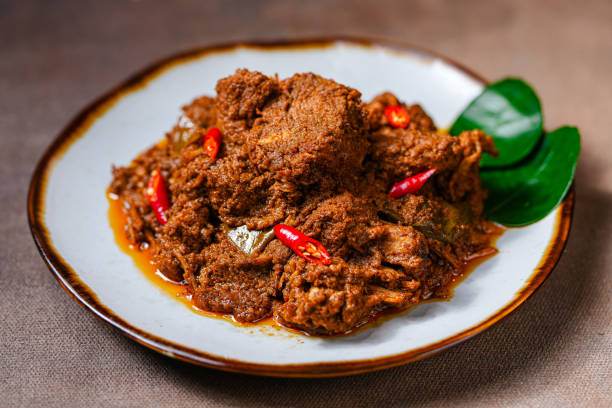
- Description: All liquid is gone. The coconut oil and solids (kerisik) have caramelized onto the beef, turning it dark brown. The flavor is intense, complex, and not “saucy.” This is the true, original preservative form.
2. Truth 2: The Minangkabau “Merantau” Culture is Key
So why invent a food that lasts for months? Because the Minangkabau are a matrilineal society with a famous cultural tradition of “merantau” (journeying).
Historically, young Minangkabau men would leave their homeland to seek knowledge, trade, or fortune. They needed to pack a lunch. And that lunch was rendang. It was the perfect, calorie-dense, and safe-to-eat food to sustain them on their long journeys. And where did they journey? All over the archipelago, including, most notably, the Malay peninsula.
3. Truth 3: How Rendang Became Malaysian (The Negeri Sembilan Connection)
This directly answers the who invented rendang question from the Malaysian side. Rendang wasn’t “invented” in Malaysia, it was imported—by its original inventors.
Extensive migration from Minangkabau in the 15th century led to the establishment of a large Minang community in what is now the Malaysian state of Negeri Sembilan. These weren’t just visitors; they were settlers who became part of the land. They brought their entire culture with them, including their language, their architecture (the distinct horn-shaped roofs), and, of course, their food.
Therefore, Malaysian rendang, particularly “Rendang Nogori,” is not a “copy.” It is a direct, unbroken lineage of the original Minangkabau dish. It is just as authentic as the rendang in West Sumatra, because it was brought there by the same people.
4. Truth 4: Yes, There IS a Difference (The Chef’s Analysis)
While sharing a common ancestor, the dishes have evolved slightly, like cousins. A professional palate can spot the differences. While generalizations are tricky (every family has its own recipe), here are the common distinctions:
- Indonesian Rendang (Padang/Minang):
- Texture: Almost always cooked to the “dry” (Stage 3) form. It’s darker, rougher in texture, and the meat is intensely fibrous.
- Flavor: Tends to be spicier (more “pedas”), with a sharper, more complex spice profile. The “bumbu” (spice paste) is the absolute star.
- Key Ingredient: Uses a vast array of spices, often including turmeric leaves and asam kandis (dried sour fruit).
- Malaysian Rendang:
- Texture: Often served at the “Kalio” (Stage 2) stage, making it “wetter” or more “saucy” than its Indonesian counterpart.
- Flavor: Often slightly sweeter and creamier. The use of kerisik (toasted, pounded coconut paste) is almost mandatory and adds a distinct nutty, rich, and slightly sweet dimension.
- Key Ingredient: Often includes kerisik as a core component, which is less common (or used differently) in the driest Padang versions.
Comparative Nutrition Facts (Guideline)
This comparison is a general guide per 100g serving, focusing on a “wetter” Malaysian-style vs. a “drier” Indonesian-style. Actual values vary wildly by recipe.
| Nutrient | Malaysian-Style (Wetter, “Kalio”) | Indonesian-Style (Drier, “Padang”) |
|---|---|---|
| Calories | ~170-190 kcal | ~190-220 kcal |
| Fat | ~10-13g | ~12-15g (More concentrated) |
| Protein | ~12g | ~15g (More concentrated) |
| Why the difference? | The dry rendang is more “concentrated.” As the water evaporates, the beef, fat, and spices make up a larger percentage of the final weight. The wet version retains more water/coconut milk, diluting the per-100g values. | |
5. Truth 5: The “Crispy Rendang” Incident United Everyone
Nothing brings a family together like an outside threat. In 2018, on MasterChef UK, Malaysian-born contestant Zaleha Kadim-Idris was eliminated because her rendang chicken wasn’t “crispy.”
The backlash was immediate, glorious, and united. Indonesians and Malaysians—from the average citizen to the Malaysian Prime Minister—collectively flooded the internet to mock the judges. “Rendang isn’t crispy!” became a rallying cry. This single, absurd moment proved that despite the rendang Indonesian or Malaysian food debate, both nations share a fundamental, non-negotiable understanding of what rendang is. It was a beautiful moment of culinary solidarity.
6. Truth 6: Official Recognition Points One Way
When it comes to official designations, the needle points firmly to Indonesia. In 2011, a CNN online poll of 35,000 people voted Indonesian rendang as the #1 “World’s Most Delicious Food.” (It won again in 2017).
More formally, in 2018, the Indonesian Ministry of Education and Culture officially designated rendang (along with 4 other dishes) as one of Indonesia’s national dishes. While Malaysia regards it as a national treasure (which it is), Indonesia has been more formal in its “official” claim, based on the undisputable Minangkabau origin.
7. Truth 7: The Debate is a Modern Construct
Here’s the final, and most important, truth. The very idea of “Indonesian” vs. “Malaysian” is a 20th-century concept. The nations themselves are relatively new. The Minangkabau people, the Malay Sultanates, and the *merantau* trade routes have existed for centuries.
Based on our analysis, the “debate” only exists because modern borders were drawn *through* a shared cultural region (the “Malay Archipelago”). Arguing over “who invented rendang” is like two siblings arguing over who “invented” their grandmother’s cookie recipe. One sibling might live in the grandmother’s original house (Indonesia), while the other moved next door and has been baking them for just as long (Malaysia). Both have a 100% legitimate claim to the recipe as *their* heritage.
The Final Verdict: So… Is it Indonesian or Malaysian?
As a chef and culinary expert, here is the definitive, diplomatic, and 100% accurate conclusion:
Rendang is a culinary masterpiece from the Minangkabau people of West Sumatra, Indonesia. It was carried by them to Malaysia, where it was adopted, beloved, and became an inseparable part of Malaysia’s own national cuisine.
So, Indonesia “wins” on origin. But that’s almost a boring technicality. The real, beautiful truth is that this is a shared dish, a testament to a shared history in a region where culture and flavor have always ignored the lines on a map.
Now that you know the history, the next step is to master the plate. Whether you’re cooking the Indonesian or Malaysian version, the challenge of balancing its richness is real. Before you start your 8-hour cook, have you even thought about what to serve with it?
Learn What to Serve With Rendang (For All Diets)Frequently Asked Questions
1. So, is rendang officially Indonesian or Malaysian?
Officially, rendang’s origin is Indonesian. It comes from the Minangkabau people of West Sumatra, Indonesia. Indonesia has also formally declared it a national dish. However, it is also a beloved, traditional, and culturally significant dish in Malaysia due to centuries of migration.
2. What is the key difference between Indonesian and Malaysian rendang?
The most common difference is texture and taste. Authentic Indonesian (Padang) rendang is typically “dry,” dark, and intensely spicy. Malaysian rendang is often “wetter” (more like a thick sauce, or *kalio*) and can be slightly sweeter and creamier due to the prominent use of *kerisik* (toasted coconut paste).
3. What does “rendang” actually mean?
“Rendang” (or “merendang”) is a verb, not just a noun. It refers to the specific Minangkabau cooking technique of slow-cooking ingredients in coconut milk until all the liquid has evaporated, causing the spices and oils to caramelize and preserve the meat.
4. Why did the MasterChef UK “crispy rendang” comment cause an uproar?
It caused an uproar because “crispy” is the exact opposite of what rendang is. It’s a slow-braised, tender dish. Asking for it to be “crispy” showed a fundamental lack of understanding of the dish, and it united both Indonesians and Malaysians in their shared knowledge of how rendang is *supposed* to be made.
5. Is rendang always made with beef?
No! While beef is the most famous and traditional (as it preserved the best), you can find rendang made with chicken (Ayam Rendang), duck, water buffalo, or even vegetarian versions using jackfruit (Nangka) or potato. The “rendang” part refers to the cooking method and spice paste, not the protein.