7 Ways on How to Check Baking Powder Freshness Before You Bake
Last Updated on 2026-01-08 by Suryo
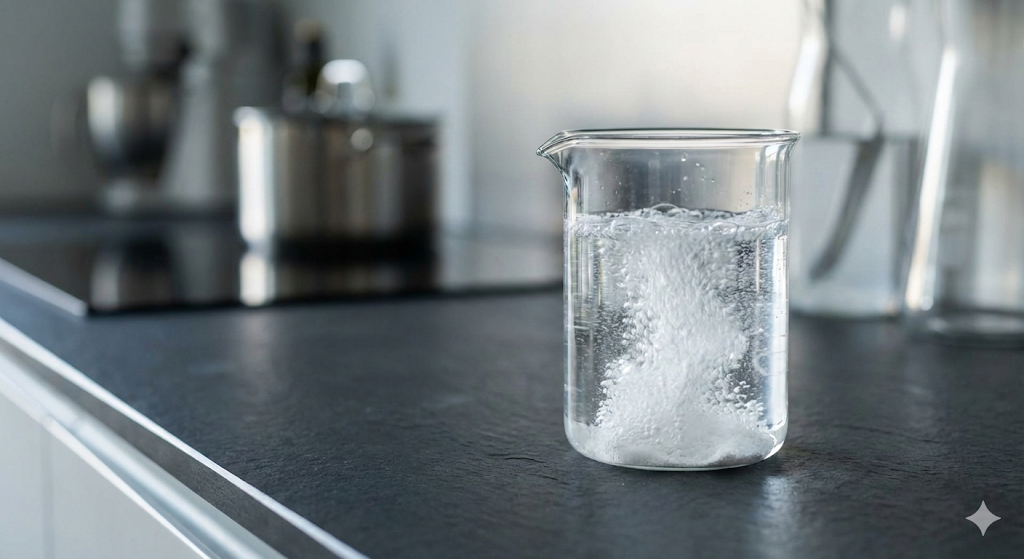
How to check baking powder freshness quickly involves adding a teaspoon of the powder to hot water. If it fizzes aggressively immediately, it is active. However, for professional results, you must also consider the “second action” activated by heat. Relying solely on the expiration date is risky, as humidity can deactivate the leavening agent within 3 months of opening.
There is nothing more heartbreaking in the culinary world than pulling a flat, dense sponge cake out of the oven. I have been there, and I know you have too. You blame the oven temperature, you question your mixing technique, or you wonder if you measured the flour correctly. But in my 15 years of consulting for startup bakeries and managing commercial kitchens, the culprit is almost always the silent killer sitting in the back of your pantry: expired chemical leaveners.
In the field, it often happens that a shop owner shows me a can of baking powder with an expiration date still a year away, yet their cakes are failing. Why? Because that date applies to a sealed factory environment, not the humid reality of a working kitchen. If you want to run a profitable food business, you cannot afford to guess. You need to know exactly how to check baking powder freshness with scientific certainty before you waste expensive butter and vanilla.
⚠️ Important!
Never rely on the “Best By” date once the seal is broken. In a commercial kitchen with high humidity (steam from dishwashers and ovens), baking powder can lose 50% of its potency in just 6 weeks if not stored correctly.
The Hot Water Test is Only Half the Battle
Most beginner guides will tell you to just drop some powder in water and look for bubbles. While this is a good start, it is fundamentally incomplete for modern baking.
In my experience advising bakery startups, I often see “false positives” with this method. To understand why, we have to get a little technical—but don’t worry, I’ll keep it simple. Modern commercial baking powder is “Double-Acting.” This means it has two distinct jobs:
- The First Action: It reacts to moisture (liquids in your batter) to create initial air bubbles.
- The Second Action: It reacts to heat (in the oven) to expand those bubbles further.
The standard hot water test only checks the first action. I’ve encountered a case where a client’s baking powder fizzed in water, but their muffins still didn’t rise properly. It turned out the heat-activated acid (usually Sodium Aluminum Sulfate) had degraded due to improper storage temperature. If you only know how to check baking powder freshness using tap water, you are effectively testing only half of the product’s capability.
Stop Trusting the Best By Date Here Is Why
Let’s debunk a massive myth right now: The expiration date is a freshness guarantee. It is not. It is a liability estimate from the manufacturer.
I once worked with a supplier who explained that those dates assume the can is stored at 70°F (21°C) with low humidity. Now, look at your kitchen. Is it 70°F? Probably not. It’s likely hotter and definitely more humid.
The Myth of the Unopened Can Why Factory Seals Fail
Even unopened cans are not bulletproof. If you buy your supplies from a warehouse that isn’t climate-controlled (common in wholesale), that can might have been sitting in 90-degree heat for months before it reached your shelf. Heat accelerates chemical degradation.
Therefore, knowing how to check baking powder freshness is a mandatory skill, regardless of what the stamp on the bottom says. I treat every new can as “suspect” until it passes my entry exam. This mindset has saved my clients thousands of dollars in wasted product. For more information on food safety standards and labeling, you can refer to authoritative sources like fda.gov to understand the regulatory side of expiration dates.
Step-by-Step The Ultimate Freshness Protocol
This is the exact protocol I teach in my workshops. We don’t just “guess” here; we verify. Follow this two-part stress test to ensure your leavening agent is 100% active.
1. The Hydrolysis Check (The Moisture Test)
This is the classic test, but we are going to do it with precision. We are looking for violence in the reaction, not just bubbles.
- Prep: Boil a kettle of water. It needs to be hot (above 175°F/80°C) to get the best visual read.
- Measure: Place 1 teaspoon of baking powder into a heat-proof glass or ceramic bowl.
- The Pour: Pour about 1/4 cup of the hot water over the powder.
- The Verdict:
- Pass: The mixture erupts immediately and aggressively. It should hiss loudly and look like a mini volcano.
- Fail: You see small, lazy bubbles floating to the surface like a fizzy drink. If it looks like champagne, toss it. We want an explosion, not a celebration toast.
2. The Thermal Check (The Oven Simulation)
This is the step most people skip, and it separates the amateurs from the pros. This tests that crucial “Second Action” I mentioned earlier.
- The Mix: Take a tiny amount of flour (1 tablespoon), a pinch of baking powder, and enough water to make a loose paste.
- The Heat: Pop this small sample into the microwave for 10-15 seconds.
- The Observation: Does it puff up significantly? Does it look like a tiny, ugly sponge cake?
- Pass: The paste has expanded and set with a porous structure. This confirms the heat-activated acids are working.
- Fail: The paste looks like a flat, gummy cracker.
By performing these steps, you truly master how to check baking powder freshness. It takes less than 2 minutes, but it guarantees your batter will perform exactly as your recipe intends.
Can I Use Old Baking Powder If I Just Add More?
This is the most common question I get from panic-stricken bakers 20 minutes before a delivery deadline. “Chef, the test failed. Can I just use double the amount?”
The short answer is no.
The “Double-Dose” Danger is real. You might think you are clever by compensating for weak potency with volume, but you are actually destroying the flavor profile of your product. Commercial baking powders often contain aluminum salts (Sodium Aluminum Sulfate). When you use too much, even if it’s old, you introduce an abundance of these metallic compounds into your batter.
In fact, I once tasted a Victoria Sponge from a student who tried this “hack.” The cake rose (barely), but it tasted distinctly like licking a battery. Furthermore, chemical leaveners affect the pH balance of your recipe. Adding too much powder makes the batter too alkaline, which can cause the crumb to turn a strange greyish color instead of golden brown. If you don’t know how to check baking powder freshness and just guess by adding more, you are risking both texture and taste.
The Chemistry of Storage: Glass vs. Metal vs. Plastic
If you buy your baking powder in those bulk plastic bags or cardboard tubs, listen closely. You need to move that product immediately.
Based on my experience managing inventory for high-volume cafes, packaging is the primary reason for premature spoilage.
- Plastic Bags: They are permeable. Moisture from the air will get in.
- Cardboard Tubs: Once the foil seal is pierced, the plastic lid is rarely airtight.
- Metal Tins: These are better, but humidity often rusts the rim, preventing a perfect seal.
My Professional Recommendation: The moment I open a bulk package, I transfer the powder into an airtight glass jar with a rubber gasket (like a Mason jar). Glass is non-permeable. I also place a small silica gel packet (food safe) inside the jar. This might seem excessive, but when you rely on how to check baking powder freshness less often because your storage is superior, you save time.
Emergency Substitutions That Actually Work
It’s Sunday night, the shops are closed, your baking powder is dead, and you have an order due tomorrow morning. Do not panic. You can create your own single-acting baking powder using chemistry.
Here is the “Golden Ratio” I use in emergencies:
- Baking Soda + Cream of Tartar: Mix 1/4 teaspoon of baking soda with 1/2 teaspoon of cream of tartar. This mixture equals 1 teaspoon of baking powder.
- Baking Soda + Acid (Lemon/Vinegar): If you don’t have cream of tartar, use 1/4 teaspoon of baking soda with the dry ingredients and add 1/2 teaspoon of lemon juice or white vinegar to the wet ingredients.
⚠️ Important!
These homemade substitutes are single-acting. They start reacting the moment they touch moisture. You cannot let the batter sit. You must get that cake into the oven immediately, or it will go flat.
Is Your Baking Powder Safe to Clean With?
So, you learned how to check baking powder freshness, and your can failed the test. Do you throw it in the trash? Absolutely not. That is throwing money away.
While it may not have enough “lift” for a soufflé, “dead” baking powder is still a mild abrasive salt. It is fantastic for scrubbing stainless steel sinks or removing coffee stains from ceramic mugs. I keep a “reject jar” under the sink specifically for cleaning. It cuts through grease better than many expensive chemical cleaners and is completely non-toxic.
Key Takeaways: The 3-Month Rule
If you take nothing else from this article, remember this: The date printed on the can is for the health inspector, not the baker.
To maintain a professional standard in your shop or home kitchen:
- The Sharpie Method: The second you peel off the foil seal, take a permanent marker and write the current date on the lid.
- The 3-Month Limit: Regardless of what the expiry date says, replace your baking powder 3 months after opening. It is a cheap ingredient; a ruined batch of batter is expensive.
- Test Before Big Batches: Always perform the hot water test before starting a high-stakes recipe (like a wedding cake).
Mastering Your Ingredients Means Mastering Your Business
Baking is not magic; it is chemistry that tastes good. Understanding the science behind your ingredients separates the hobbyist from the professional. By knowing how to check baking powder freshness accurately, you are insulating your business from inconsistency. You are ensuring that every muffin, scone, and cake that leaves your kitchen rises to the occasion—literally.
Don’t let a $3 ingredient cost you a loyal customer. Check your pantry today, run the stress test, and bake with confidence.
Frequently Asked Questions
1. Can I keep baking powder in the fridge or freezer to make it last longer? I strongly advise against this. While it seems logical, taking the container in and out of a cold environment causes condensation to form inside the tin. This moisture will deactivate the powder faster than if it were sitting on a warm shelf. Store it in a cool, dark cupboard away from the stove.
2. What is the difference between baking soda and baking powder? This is the most common confusion. Baking soda is pure sodium bicarbonate and needs an acid (like yogurt or lemon) to react. Baking powder contains baking soda plus a dry acid (like cream of tartar) and a stabilizer (cornstarch). They are not interchangeable one-for-one without adjusting the rest of the recipe.
3. Why did my baking powder clump up inside the can? Clumping is a definitive sign of moisture intrusion. If you see hard lumps, moisture has already entered the can and likely triggered a partial reaction. Even if you break the lumps up, the potency is compromised. In this case, you don’t even need to ask how to check baking powder freshness—the lumps are telling you it’s time to buy a new can.