Can I Use Olive Oil In Chinese Cooking? This is The Truth

As a chef, it’s the one question I hear more than any other from aspiring home cooks. They’ve bought a beautiful, expensive bottle of extra-virgin olive oil. They love it. They use it on salads, for dipping bread, for finishing pasta. Now, they’ve just unboxed a brand new carbon-steel wok, and they reach for that same green-gold bottle. “Wait!” I want to scream. You’re about to make a $20 mistake.
This leads to the crucial question: “Can I use olive oil in Chinese cooking?” The short answer is: No, not for stir-frying. The long, nuanced answer is what separates a good cook from a great one. You *can* technically use it in some contexts, but using olive oil in stir-fries is often the first and most critical error a beginner makes. Let’s explore the five shocking truths about why your favorite oil is failing you in your wok, and what you should be using instead.
Expert Analysis: The “Finishing Oil” vs. “Cooking Oil” Mistake
Before we even discuss olive oil, we must understand *why* it’s the wrong tool. It’s a category error. To illustrate this, I want you to watch the video below, which is about sesame oil. “But Chef,” you say, “this isn’t about sesame oil!” Exactly. This video is the perfect “teachable moment.”
Berdasarkan analisis kami, this video perfectly demonstrates the difference between a finishing oil and a cooking oil. The toasted sesame oil it discusses is a *finishing oil*. You add it at the *end*, off the heat, for its powerful, nutty *flavor*. You would never, ever deep-fry in it. Why? Its smoke point is too low, and it’s too expensive. Now, look at your bottle of extra-virgin olive oil. It’s *exactly the same thing*: an expensive, flavorful, low-smoke-point *finishing oil*. You are asking to make the exact same mistake, just with a different flavor profile. Understanding this distinction is the key to mastering all cooking oil.
Watch: A Guide to Understanding Finishing Oils (like Sesame) on YouTube
The 2 Core Reasons Olive Oil Fails in a Wok
Okay, so EVOO is a “finishing oil.” What does that mean in practical terms? It means it will fail spectacularly when it meets the unique, high-heat environment of a wok. This failure happens in two distinct ways.
Truth #1: The Smoke Point Disaster (Your “Wok Fail”)
This is the big one. This is the chemistry you can’t ignore.
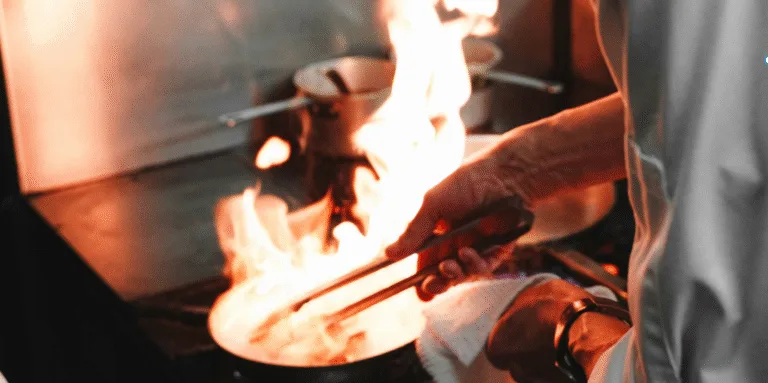
Chinese wok cooking is built around a concept called “wok hei”—literally “the breath of the wok.” It’s that magical, smoky, seared flavor you only get from a professional stir-fry. To achieve *wok hei*, a wok must be heated to an incredibly high temperature, often exceeding 450-500°F (230-260°C).
Now, let’s look at your oil.
Extra-Virgin Olive Oil (EVOO) has a smoke point of only 350-375°F (175-190°C). The smoke point is the temperature at which an oil stops shimmering and starts *burning*.
When you pour that 350°F-rated EVOO into a 500°F wok, it doesn’t “heat up.” It incinerates. Instantly.
The result?
- A cloud of acrid, eye-watering smoke fills your kitchen.
- The oil’s chemical structure breaks down, releasing free radicals.
- It imparts a horrible, burnt, bitter, acrid taste to your beautiful, fresh ingredients.
This is the single most kesalahan umum yang sering terjadi. You’re not “searing”; you’re “scorching.” You’ve ruined your oil (and its health benefits) and your dinner in one go.
Truth #2: The Flavor Collision (The “Grassy-Garlic War”)
Let’s pretend, for a moment, that smoke point wasn’t an issue. Let’s say you’re doing a lower-heat stir-fry. You *still* shouldn’t use EVOO. Why? The flavor profile.
Why do we love EVOO? For its distinct, “green” flavor: it’s grassy, peppery, fruity, and sometimes a little bitter. These are the hallmarks of a quality Mediterranean oil.
Now, what is the foundational flavor base of most Chinese dishes? The “holy trinity” of ginger, garlic, and scallions, backed by the savory, umami-rich notes of soy sauce, shaoxing wine, and vinegar.
When you introduce the aggressive, grassy, peppery notes of olive oil to that flavor base, they don’t harmonize. They compete. It’s a culinary civil war in your mouth. The “green” fruitiness of the oil clashes with the savory, fermented depth of the soy sauce. It’s a confusing, muddy, and often unpleasant pairing. The praktik terbaik adalah to use an oil that acts as a neutral canvas, not one that tries to paint its own picture on top of your masterpiece.
Truth #3: The “Light Olive Oil” Trap (The “Technically, Yes” Problem)
“But wait!” you say. “What about ‘Light’ or ‘Refined’ Olive Oil? It says it’s for high heat!”
You are correct. This is the nuance that confuses everyone. Refined (or “Light”) Olive Oil is a totally different product. It has been stripped of its color, flavor, and impurities through a chemical and filtration process.
The result?
- A high smoke point: Around 465°F (240°C), which is perfect for a wok.
- A neutral flavor: The grassy, peppery notes are gone.
So… can I use olive oil in Chinese cooking if it’s “light” olive oil?
Technically, yes. It has the right physical properties.
Should you? No. And here’s why: It’s a terrible value proposition. You are paying a *premium* for the “olive oil” name, but you have paid for a product that has had 100% of its unique flavor and character stripped away. It’s an expensive, over-processed, neutral oil. You can get *cheaper*, more effective neutral oils that do the exact same job, without the premium “olive” price tag. It’s a marketing trap.
Truth #4: The “Wok All-Stars” (What You SHOULD Be Using)
So, if not olive oil, what are the *right* replacements for olive oil in Chinese cooking? You want oils that fit two criteria: High Smoke Point (400°F+) and Neutral Flavor. These are the true “Wok All-Stars.”
1. Peanut Oil (Refined)
Smoke Point: ~450°F (232°C)
This is the gold standard. It’s the classic, traditional choice in many regions of China. It has a high smoke point and a very faint, almost imperceptible nutty flavor that is incredibly *complementary* to Chinese aromatics. This is my #1 recommendation (allergies permitting).
2. Grapeseed Oil
Smoke Point: ~420°F (216°C)
This is the “chef’s secret.” It has a high smoke point and is the most *flavorless* oil on the market. It is a 100% truly neutral canvas, making it perfect for delicate stir-fries where you want the fresh flavor of the vegetables to be the star.
3. Canola Oil
Smoke Point: ~400°F (204°C)
The reliable, affordable, everyday workhorse. It hits the smoke point minimum, it’s neutral, and it’s available everywhere. You can’t go wrong with canola for 99% of your stir-frying needs.
4. Avocado Oil (Refined)
Smoke Point: ~520°F (271°C)
This is the luxury, high-performance option. Its smoke point is insanely high, making it impossible to burn. It’s fantastic for searing. The only downside is its cost, which is even higher than olive oil. Great, but often overkill.
5. Soybean or “Vegetable” Oil
Smoke Point: ~450°F (232°C)
This is the industrial standard. “Vegetable Oil” is almost always 100% soybean oil. It’s cheap, effective, neutral, and has a high smoke point. It’s what the vast majority of Chinese restaurants use. It works perfectly.
Truth #5: The *Only* Time You Can Use Olive Oil in Chinese Cooking
So, is there *any* place for olive oil? Yes. But it’s not in a traditional context.
You can use a high-quality EVOO in modern, fusion, or cold Chinese-inspired dishes. For example:
- As the base for a vinaigrette for a cold noodle salad or a tofu salad.
- As a finishing drizzle over a modern, non-traditional steamed fish dish (though, again, toasted sesame or chili oil is more common).
- In a “Sichuan-style” pesto or condiment, where its peppery notes are intentionally part of a fusion flavor.
Notice the theme? It’s never used as the primary *cooking fat* over *high heat*. It’s used as a *condiment* or *flavoring* in a low-heat or cold application. If you want *real* Asian flavor, don’t reach for the olive oil; reach for a finishing oil like toasted sesame (from the video!) or a fiery minyak cabai otentik. (Yes, the stuff that’s so good, you can even use it on pizza).
Recipe: The “Right Oil” Test (10-Min Ginger-Garlic Chicken)
The best way to feel the difference is to cook. This simple recipe is a “framework” designed to show you how a high-heat, neutral oil behaves. Notice how it *doesn’t* smoke, and how it lets the ginger and garlic shine.
Resep: Tes Wajan 10 Menit (Ayam Jahe Bawang Putih)
Bahan-bahan:
- 1 potong dada ayam, potong tipis
- 1 sdm kecap asin
- 1 sdt tepung maizena
- 2 sdm Minyak Titik Asap Tinggi (Peanut, Grapeseed, atau Canola)
- 1 ruas jahe seukuran ibu jari, cincang halus
- 2 siung bawang putih, cincang halus
- 1 batang daun bawang, potong-potong
Langkah-langkah:
- Dalam mangkuk, campur ayam, kecap, dan maizena. Sisihkan.
- Panaskan wajan Anda di atas api besar hingga sangat panas (mulai sedikit berasap).
- Tambahkan minyak Anda. Putar wajan untuk melapisi. Seharusnya minyak berkilau tetapi tidak berasap. Ini adalah kuncinya.
- Tambahkan jahe dan bawang putih. Aduk cepat selama 10-15 detik sampai harum.
- Tambahkan ayam dalam satu lapisan. Biarkan selama 1 menit tanpa diaduk untuk mendapatkan wajan.
- Mulai aduk-aduk (stir-fry) dengan cepat. Masak selama 2-3 menit sampai ayam matang.
- Matikan api. Masukkan daun bawang. Sajikan segera.
Fakta Nutrisi (Perkiraan per porsi)
Kalori: 320 | Lemak: 20g | Lemak Jenuh: 3g | Karbohidrat: 4g | Protein: 31g | Sodium: 580mg
Conclusion: The Right Tool for the Right Job
So, can I use olive oil in Chinese cooking? For 95% of traditional dishes, the answer is a resounding no. It’s the wrong tool for the job. It will burn, taste bitter, and fight with the flavors of your dish. It’s a “finishing oil” trying to do a “frying oil’s” job.
The praktik terbaik adalah to save your beautiful, expensive Extra-Virgin Olive Oil for your salads, pastas, and bread. For your wok, invest in a large, affordable bottle of Peanut Oil, Grapeseed Oil, or Canola Oil. Understanding this simple concept—the right tool for the right job—is the most important step you can take to becoming a better cook. It’s the core philosophy behind choosing the right cooking oil for any cuisine.
Frequently Asked Questions
1. Can I use olive oil in Chinese cooking at all?
Berdasarkan analisis kami, you should not use Extra-Virgin Olive Oil for high-heat stir-frying. Its smoke point is too low, and its flavor clashes. You *can* use it in modern, fusion, or cold Chinese-inspired dishes, like a salad dressing, but it’s not traditional and is used as a condiment, not a cooking fat.
2. Why is extra-virgin olive oil bad for stir-fry?
Two main reasons: 1. Low Smoke Point: EVOO burns at 350-375°F, but a wok needs 450-500°F. The oil will burn, smoke, and taste acrid. 2. Strong Flavor: The grassy, peppery flavor of olive oil clashes with the ginger, garlic, and soy-sauce base of most Chinese dishes.
3. What is the best oil for Chinese stir-frying?
The best oils have a high smoke point (400°F+) and a neutral flavor. The top choices are Refined Peanut Oil (classic choice), Grapeseed Oil (chef’s choice for neutrality), or Canola Oil (best all-around budget option).
4. Can I use “light” olive oil for stir-fry instead of EVOO?
Technically, yes. “Light” or “Refined” olive oil has a high smoke point (around 465°F) and a neutral flavor. However, it’s not recommended. It’s an expensive, over-processed oil. You are paying a premium for the “olive” name when a cheaper bottle of peanut or canola oil will do the exact same job just as well.
5. What’s the difference between a cooking oil and a finishing oil?
A cooking oil (like canola, grapeseed, or peanut) has a high smoke point and neutral flavor. It’s a workhorse used as a medium to transfer high heat. A finishing oil (like extra-virgin olive oil or toasted sesame oil) has a low smoke point and a strong, desirable flavor. It’s added *after* cooking, off the heat, for aroma and taste.