7 Key Differences Between Rendang and Curry Unveiled

Let’s clear the air on a common culinary misconception: the idea that rendang is just another type of curry. If you’ve ever said, “Oh, rendang? Is that like a dry curry?” prepare for a chef’s gentle, yet firm, correction. Understanding the difference between rendang and curry is not just semantic pedantry; it’s crucial for appreciating the unique genius of this Indonesian masterpiece. While both are incredibly flavorful, aromatic dishes often featuring meat and spices, their fundamental cooking philosophy, texture, and end goal are worlds apart.
As a chef, I’ve spent years deconstructing flavor profiles and cooking techniques from around the globe. And based on our analysis, the distinctions between rendang and curry are clear, deliberate, and fascinating. Forget what you think you know, and let’s dive into the core principles that truly separate these two culinary titans. You’ll never mistake one for the other again.
AThe Visual Journey of Rendang’s Transformation
To truly grasp the difference between rendang and curry, you need to witness the cooking process. I’ve selected this video because it beautifully illustrates rendang’s unique transformation, which is its defining feature. Curries, by their very nature, are defined by their sauce. Rendang is defined by the disappearance of its sauce.
Pay close attention to the gradual reduction of the coconut milk and how the consistency changes over time. Notice how the ‘bumbu’ (spice paste) and meat are slowly coated, browned, and eventually fried in their own rendered oil. Specifically, observe around the 2:00 mark how the liquid is almost entirely gone, and the oil starts to separate. This is the critical juncture where rendang distinguishes itself. The visual cues in this video clearly show the shift from a wet, stew-like consistency (which could be mistaken for a curry) to the dry, intensely caramelized state that is authentic rendang. This entire process is absent in traditional curry making.
Source: Rendang cooking process on YouTube
1. The Fundamental Goal: Sauce vs. Dryness
This is the most critical distinction. A curry’s primary goal is to produce a flavorful sauce that coats the meat and can be served with rice or bread. The sauce is integral to the dish. Whether it’s thin or thick, it’s always present.
Rendang’s fundamental goal is the opposite. The entire cooking process is a deliberate effort to evaporate all liquid from the coconut milk and spice paste. The meat is then fried and preserved in its own rendered, spiced coconut oil. The end product is a “dry” dish where the ‘bumbu’ (spice paste) clings to the meat, rather than swimming in a sauce. This alone defines the difference between rendang and curry.
2. Cooking Method: Stewing/Simmering vs. Reducing/Frying
The cooking techniques employed are vastly different.
Curry: Typically involves simmering meat and spices in a liquid (coconut milk, broth, cream, yogurt, or tomato-based sauce) until the meat is tender and the flavors meld. The focus is on developing and thickening the sauce.
Rendang: Starts with simmering (the ‘Kalio’ stage), but then crucially transitions to a long period of reduction and frying. The constant stirring and exposure to heat cause all water to evaporate, allowing the coconut milk to “break” (release its oil) and the meat and spices to fry and caramelize in that oil. This process is unique to rendang and differentiates its authentic beef rendang recipe.
3. Texture: Saucy vs. Dry & Flossy
The resulting textures are a dead giveaway.
Curry: Always saucy, ranging from thin and soupy (like some Thai curries) to thick and creamy (like a Massaman or Indian Butter Chicken). The meat is tender and coated in liquid.
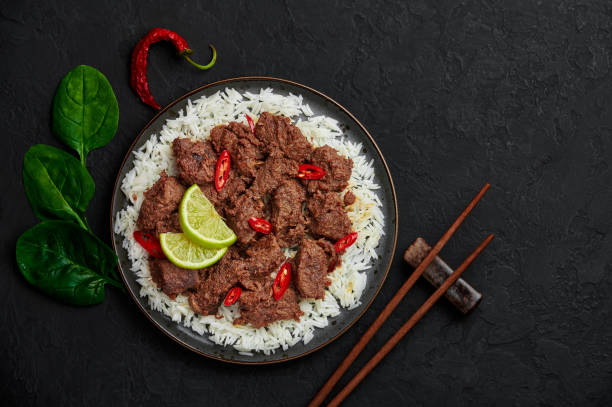
Rendang: Is a “dry” dish. The meat is incredibly tender but not falling apart, and it’s coated in a dark, rich, slightly gritty, caramelized “floss” or “dedak” of spices and toasted coconut. There should be very little to no free-flowing liquid. This unique texture is a hallmark of the rendang cooking method.
Expert Takeaway: The most significant difference between rendang and curry is the presence of sauce. Curries are defined by their sauce; rendang is defined by its absence, achieved through a unique frying and reduction process.
4. Flavor Profile: Bright & Distinct vs. Deep & Melded
While both are flavorful, the type of flavor they offer is distinct.
Curry: Often features brighter, more distinct spice notes. You can often pick out individual flavors like turmeric, cumin, or coriander. Depending on the type, curries can be tangy (from tamarind or tomato), very sweet, or very spicy, with distinct layers that remain somewhat separate.
Rendang: The flavors are deeply melded and caramelized. The long cooking process transforms the individual spices, creating a profound, complex, and intensely savory (umami) taste that is nutty, subtly sweet, and aromatically spicy. The flavors are so integrated that they become one harmonious, dark, and rich experience. This is what truly highlights the rendang flavor vs curry.
5. Purpose & Preservation: Fresh Consumption vs. Extended Shelf-Life
Historically, their original purposes diverged.
Curry: Primarily cooked for immediate consumption, meant to be eaten fresh with its accompanying sauce.
Rendang: Historically, rendang was developed as a method of preserving meat in tropical climates before refrigeration. The removal of water and cooking in oil acts as a natural preservative, allowing rendang to last for weeks at room temperature. This is a critical aspect of its culinary ingenuity, much like the preservation techniques in mastering stocks and sauces.
6. Key Aromatic Ingredients & Their Transformation
While some ingredients overlap, their roles and transformations are different.
Curry: Often uses a wider array of spices, sometimes relying heavily on pre-made curry powders or pastes. Ingredients like fenugreek, mustard seeds, and various acids (yogurt, tomato, vinegar) are common.
Rendang: Relies on a specific blend of fresh aromatics (galangal, ginger, lemongrass, turmeric, kaffir lime leaves, shallots, chilies) and, crucially, kerisik (toasted coconut paste). The latter is a defining element of rendang’s flavor and texture and is almost never found in traditional curries.
7. The “Kalio” Stage: A Crossroads, Not a Destination for Rendang
This is where the confusion often arises. Rendang goes through a “curry-like” stage.
Kalio: This is the intermediate stage of rendang cooking, where the coconut milk has reduced to a thick, wet sauce, and the dish has a consistency similar to a very rich, unctuous curry. It’s delicious in its own right and is sometimes served as a “wet rendang.”
Rendang (The Final Form): The key is that true rendang continues past the Kalio stage. It’s the point where all the liquid evaporates, the coconut oil “breaks,” and the meat fries down to that dark, dry, caramelized perfection. A curry’s journey typically ends where rendang’s true transformation begins. This distinction is vital for understanding why it’s not a curry.
Final Verdict: Appreciating Culinary Diversity
The discussion around the difference between rendang and curry is a fantastic way to appreciate the incredible diversity and specificity within Asian cuisine. While they share some common ingredients and a general aromatic appeal, their fundamental culinary philosophies diverge significantly.
Curries offer the joy of a flavorful, saucy accompaniment, perfect for soaking up with rice or bread. Rendang, on the other hand, delivers an intense, dry, concentrated burst of flavor and a unique texture, a testament to its historical roots as a preserved dish and its masterful transformation through slow cooking. Both are culinary treasures, but understanding their differences allows us to savor each for its unique brilliance. So next time, when you taste that dark, rich, dry beef, you’ll know: this is rendang, and it’s in a league of its own.
Frequently Asked Questions About Rendang vs. Curry
1. Is rendang considered a type of curry?
No, rendang is fundamentally not a curry. While it shares some aromatic spices and coconut milk, its defining characteristic is the complete evaporation of all liquid, resulting in a dry, intensely caramelized dish where the meat is fried in its own spiced oil, unlike a saucy curry.
2. What is the main difference in cooking method between rendang and curry?
Curries typically involve simmering ingredients in a liquid to create a sauce. Rendang’s cooking method involves a much longer process of liquid reduction and evaporation, followed by a crucial frying stage where the meat and spices caramelize in rendered coconut oil until the dish is dry.
3. How does the texture of rendang compare to a curry?
Curries are always saucy, with meat coated in liquid. Rendang is a dry dish; the meat is tender but cloaked in a rich, dark, slightly gritty, caramelized spice floss with no free-flowing sauce. This dry texture is a key distinction.
4. Does rendang taste different from a curry?
Yes, significantly. Curries often have brighter, more distinct spice notes. Rendang’s flavor is much deeper, darker, and more concentrated due to intense caramelization and the integration of flavors from the long cooking process, creating a unique savory, nutty, and subtly sweet profile.
5. What is the ‘Kalio’ stage, and how does it relate to rendang and curry?
‘Kalio’ is the intermediate stage in rendang cooking where the coconut milk has reduced to a thick, wet, curry-like sauce. While delicious, true rendang continues cooking past this stage until all liquid is gone and the dish becomes dry. Some might mistake Kalio for a curry, but it’s only a stop on rendang’s longer journey.