7 Essential Rules for Mastering Authentic Chinese Food (Stop Faking It!)
Last Updated on 2025-12-11 by Suryo
Mastering Authentic Chinese Food: 7 Science-Backed Techniques
Mastering authentic Chinese food requires a fundamental shift in mindset. Many home cooks struggle with soggy stir-fries and bland sauces because they treat a wok like a standard Western skillet. This approach inevitably leads to disappointment.
Authentic Asian cuisine relies on engineering heat, manipulating texture, and timing chemical reactions precisely. You do not need a restaurant-grade burner to succeed. Instead, you need to understand the physics of cooking. Below are the seven non-negotiable pillars to elevating your dishes from “homemade” to “professional quality.”
1. Aromatics Engineering: The “Holy Trinity”
French cooking relies on Mirepoix; Chinese cooking relies on the “Holy Trinity” of Ginger, Garlic, and Scallions. However, dumping them into the pan simultaneously is a critical amateur error. Each aromatic has a distinct burning point.
The Rule of “The Bloom”
To extract maximum flavor without bitterness, you must sequence your ingredients based on their heat tolerance:
- Ginger First: Being fibrous and moist, ginger withstands high heat well. It needs time to release its spicy oils.
- Scallion Whites Second: These provide an oniony base and can handle moderate sautéing.
- Garlic Last: Garlic burns in seconds. Therefore, add it just moments before your meat or vegetables.
By following this sequence, you infuse the oil itself with flavor. Consequently, the aromatic profile permeates the entire dish, rather than just sitting on top of it.
2. Velveting: The Chemistry of Silky Meat
Have you ever wondered why takeout Beef and Broccoli features impossibly tender meat, while home versions often feel chewy? The answer is Velveting. This technique involves marinating meat in an alkaline mixture to break down tough fibers and seal in moisture.
Mastering authentic Chinese food is impossible without this step. Here is the professional formula for 500g of sliced meat (Chicken, Beef, or Pork):
- 1 Egg White: Acts as a protective protein barrier.
- 1 Tbsp Cornstarch: Creates the signature slippery mouthfeel.
- 1 Tsp Neutral Oil: Promotes separation during flash-frying.
- 1/2 Tsp Baking Soda: Crucially, this alkalizes the meat, ensuring tenderness even in leaner cuts.
Process: Marinate for 20 minutes, then briefly pass the meat through hot oil or boiling water (blanching) before stir-frying. This guarantees juicy results every time.
3. Wok Hei: Hacking the “Breath of the Wok”
Wok Hei is the elusive, smoky char flavor that defines great Cantonese cooking. It results from the vaporization of oil particles and the Maillard reaction at temperatures exceeding 300°C. While home stoves lack this raw power, you can mimic the effect with thermal management.
How to Cheat Wok Hei at Home
- Small Batches: Never crowd the pan. Crowding lowers the temperature and causes food to steam rather than sear.
- The Smoke Point: Wait until your oil is literally smoking before adding ingredients.
- Char First, Combine Later: Sear your protein and vegetables separately to achieve a char. Combine them only at the very end with the sauce.
Ultimately, temperature control is more important than the hardware you use.
4. The Soy Sauce Spectrum: Function Over Flavor
In the West, cooks often view soy sauce as a generic “salty liquid.” In a Chinese kitchen, it is a nuanced tool. Using the wrong type can ruin the visual appeal of a dish.
Refer to this comparison to understand exactly which bottle to grab:
| Feature | Light Soy Sauce (Sheng Chou) | Dark Soy Sauce (Lao Chou) |
| Viscosity | Thin and runny | Thick and syrupy |
| Taste Profile | Salty, rich in Umami | Slightly sweet, less salty |
| Primary Use | Seasoning and Flavoring | Coloring (Caramelization) |
| Best For | Stir-fries, clear soups, dipping | Braised pork, rich stews, noodles |
For example, adding Dark Soy Sauce to a clear soup turns it muddy. Conversely, a braised pork belly without it looks pale and unappetizing. Precision is key.
5. Shaoxing Wine: The Essential Solvent
You cannot replicate the depth of Chinese cuisine without Shaoxing Rice Wine. It serves a vital chemical purpose: it acts as a solvent for alcohol-soluble flavor compounds that water cannot dissolve.
Furthermore, it is the primary deodorizer. It neutralizes the “gamey” odors of raw meat and the “fishiness” of seafood. As the alcohol evaporates during the stir-fry, it leaves behind a complex, nutty sweetness.
⚠️ Chef’s Warning: Avoid supermarket “Cooking Wines” (labeled salted). They are low-quality and loaded with sodium. If you cannot find genuine Shaoxing, use Dry Sherry. Never use white vinegar or grape juice as a substitute.
6. The Science of the Slurry (Thickening)
Western sauces typically rely on reduction (boiling away water) or a roux (flour). Chinese sauces rely on a Slurry—a simple mixture of cornstarch and water. However, the application requires timing to avoid a gloopy mess.
Achieving the “Glassy” Finish
To get that shiny, restaurant-grade glaze that clings to your vegetables:
- The Ratio: Mix cornstarch and cold water (1:1).
- The Heat: Ensure the liquid in the wok is at a rolling boil.
- The Pour: Drizzle the slurry in slowly while stirring constantly.
Cornstarch activates instantly at high heat. Thus, if the sauce is not boiling, it will turn cloudy. If you pour it too fast, it will clump. The goal is a translucent gloss, not a heavy paste.
7. Knife Skills: Surface Area and Texture
Finally, Chinese culinary mastery is obsessed with texture. A dish is not just about taste; it is about “mouthfeel.” This begins on the cutting board.
Uniformity is King. Because stir-frying happens in minutes, ingredients must be cut to the exact same size to ensure even cooking.
- The Roll Cut (Oblique Cut): Ideal for cylindrical vegetables like carrots or Asian eggplant. Cut the vegetable, roll it 90 degrees, and cut again.
- The Benefit: This technique maximizes surface area, allowing more sauce to coat the vegetable while keeping the center crisp-tender.
Conclusion: The Path to Mastery
Mastering authentic Chinese food is a journey of discipline. It is about respecting the ingredients enough to prepare them correctly before the heat turns on.
Stop relying on store-bought bottled sauces to do the heavy lifting. Instead, focus on these technical pillars: control your heat, velvet your proteins, and distinguish your soy sauces. Once you understand the science behind the wok, you unlock a world of flavor that no recipe card can teach you.
5 Reasons Why Is My Bread Not Rising in the Oven & How to Fix It
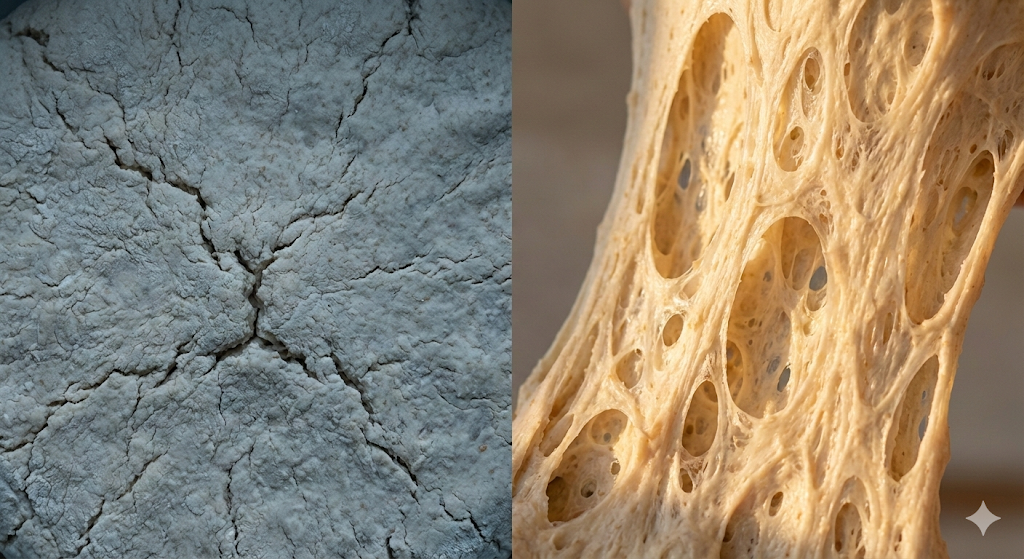
Why is my bread not rising in the oven?? The most common reason isn’t dead yeast, but over-proofing. When dough rises too long on the counter, the gluten network becomes “exhausted” and cannot hold the gas expansion when hit with…
9 Ways How to Rescue an Overbaked Cake Before Guests Arrive
How to rescue an overbaked cake effectively depends on the severity of the dryness. For slightly dry crumbs, use the “Poke and Soak” method by injecting a warm liquid like simple syrup or milk into the cooled cake. If the…
7 Ways How to Keep Muffins Moist While Baking Using The Overnight Protocol
To master how to keep muffins moist while baking, you must move beyond simple ingredients and focus on the “Overnight Protocol.” This involves resting your batter in the refrigerator for 12-24 hours before baking, which allows the flour starches to…
7 Ways on How to Check Baking Powder Freshness Before You Bake
Last Updated on 2026-01-08 by Suryo How to check baking powder freshness quickly involves adding a teaspoon of the powder to hot water. If it fizzes aggressively immediately, it is active. However, for professional results, you must also consider the…

7 Best Non Alcoholic White Wine Substitutes Cooking
Last Updated on 2026-01-07 by Suryo The Best Non Alcoholic White Wine Substitutes Cooking in most savory cooking applications is a strategic combination of chicken or vegetable broth and a small amount of white wine vinegar or lemon juice. The…