7 Expert Tips Cooking Using Coarse Himalayan Pink Salt
Last Updated on 2025-11-01 by Suryo
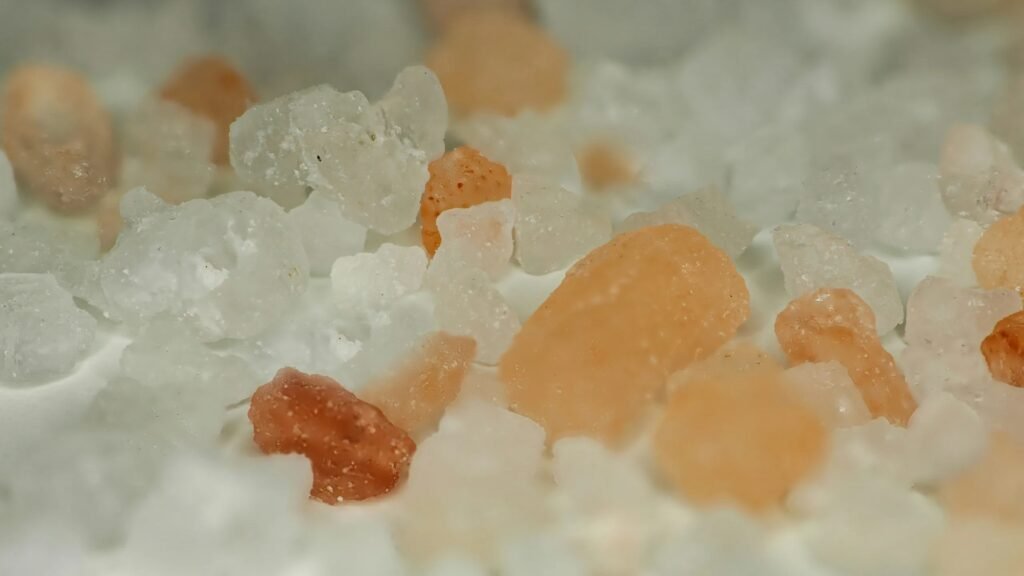
As a food expert, I’ve seen Himalayan pink salt explode from a niche health-food item to a global kitchen staple. Its beautiful rosy hue adorns everything from grinders to massive salt blocks. However, a common mistake is treating it as a magical ingredient. The real secret to cooking using coarse Himalayan pink salt isn’t its color or its trace minerals; it’s its texture. The “coarse” aspect of this salt is what makes it a powerful, versatile tool for chefs, allowing for precise control over seasoning, brining, and finishing in a way that fine-grained salt simply cannot match.
This article is not just another list of recipes. It’s a definitive guide on the technique of how to use coarse Himalayan pink salt. We will dive deep into the food science of why its large crystal structure is superior for brining, how it creates the perfect crust on a steak, and when you should (and shouldn’t) use it. Furthermore, we will clear up the dangerous confusion between this culinary salt and “pink curing salt.” By the end, you’ll understand that using coarse pink salt in cooking is less about its origin and more about its function.
The “Pink Salt” Dilemma: A Critical Expert Clarification
Before we discuss any cooking techniques, we must address a critical point of confusion that is essential for your safety and culinary success. Based on our analysis, “pink salt” is a dangerously ambiguous term. Using the wrong one is the most significant mistake a home cook can make.
1. Himalayan Pink Salt (The “Kitchen Salt” We ARE Using)
This is the natural, edible rock salt mined from the Punjab region of Pakistan.
- What It Is: Almost pure sodium chloride (~98%), just like table salt.
- Why It’s Pink: Its color is from trace minerals, primarily iron oxide.
- Use: This is a culinary salt. It is used for seasoning, brining, and finishing. The “coarse” version is the subject of this entire article. It contains NO nitrites and is perfectly safe for all-purpose cooking.
2. Pink Curing Salt (Prague Powder #1 / The “Curing Salt” We ARE NOT Using)
This is a specialized, technical ingredient used in charcuterie to make bacon, ham, and sausages.
- What It Is: A mixture of 93.75% sodium chloride (salt) and 6.25% sodium nitrite.
- Why It’s Pink: It is intentionally dyed bright, artificial pink to ensure no one ever mistakes it for regular table salt. Sodium nitrite is toxic if consumed in large quantities.
- Use: It is a preservative. Its job is to prevent the growth of deadly bacteria like Clostridium botulinum (botulism) during long, low-oxygen curing processes.
Expert Verdict: When to Use Each
This guide is 100% dedicated to Himalayan Pink Salt. Unless a recipe specifically calls for “curing salt,” “Prague Powder #1,” or “nitrites” (like for making homemade bacon), you should never use it. For all standard kitchen tasks—roasting, grilling, seasoning, and short brines—we are always talking about culinary salt like coarse Himalayan pink.
Why Coarse? The Mechanics of Cooking Using Coarse Himalayan Pink Salt
The entire premise of cooking using coarse Himalayan pink salt is based on its physical form. The large, irregular crystals behave completely differently than fine, powdery salt.
1. Superior Finishing and Texture
This is the most obvious benefit. When you sprinkle coarse salt on a finished dish (like a steak, a salad, or a chocolate chip cookie), the crystals don’t dissolve instantly. This provides “pops” of salty flavor and a delightful, crunchy texture that complements the food. Fine salt, in contrast, would dissolve immediately and just make the dish taste “salty.” This is the most visually appealing way of using coarse pink salt in cooking.
2. Slower, More Gentle Dissolving (Brining & Curing)
This is the scientific key. When making a brine (a salt-sugar-water solution) or a dry brine, coarse crystals dissolve more slowly and evenly. This gentle action is crucial. Fine salt can “shock” the surface of meat, drawing out moisture too quickly and creating a leathery exterior. Coarse salt works its magic more gradually, allowing for better penetration and a juicier final product. This makes it one of the best Himalayan pink salt cooking tricks.
3. Tactile Control and Even Distribution (Seasoning)
This is the “chef” secret. Professional chefs almost exclusively use coarse salt (like kosher salt or coarse pink salt) for seasoning during the cooking process. Why? You can pick it up with your fingers.
This tactile “pinch-ability” gives you 100% control. You can feel exactly how much salt you’re adding. Furthermore, when you sprinkle coarse salt from a height (the “Salt Bae” move is actually a real technique), the large crystals distribute more evenly over the surface of the food, preventing salty “hotspots.” Fine salt, in contrast, clumps and falls in one spot.
7 Expert Tips: How to Master Cooking Using Coarse Himalayan Pink Salt
Now, let’s move from theory to practice. Here are the 7 best ways to leverage the unique properties of coarse Himalayan pink salt, turning simple dishes into culinary masterpieces.
Tip 1: The Finishing Touch (A Classic Coarse Pink Salt Use)
This is the simplest Himalayan pink salt cooking trick. Use the coarse crystals as a “finishing salt” to add texture and a final flavor burst.
- On Steaks and Roasts: A sprinkle just after slicing cuts through the richness.
- On Salads: Adds a crunch that complements fresh vegetables.
- On Baked Goods: A few crystals on top of a brownie or caramel sauce creates an addictive sweet-salty contrast.
- On Vegetables: A dash on roasted or steamed vegetables just before serving makes their flavor “pop.”
Tip 2: The Perfect Wet Brine (A Core Coarse Himalayan Salt Trick)
As discussed, the coarse grains are perfect for brining. They dissolve slowly, creating a stable solution that gently tenderizes the meat. A brine is a “moisture insurance policy” for lean cuts like chicken breast and pork loin.
- The Science: The salt solution (brine) alters the muscle proteins, allowing them to absorb and, more importantly, hold onto water during cooking.
- The Method: Create a standard brine of 1/4 cup coarse Himalayan pink salt and 2 tablespoons of sugar (optional, for browning) per 1 quart (4 cups) of water. Submerge your lean meat (like chicken breasts) for 1-2 hours in the fridge. The result is a stunningly juicy piece of meat.
Tip 3: The “Dry Brine” Technique Using Coarse Pink Salt
A “dry brine” is perhaps the most effective way to use coarse Himalayan pink salt for large roasts like a whole chicken or turkey. This method is a perfect example of how to cook with coarse Himalayan salt for large roasts.
- The Method: Pat your chicken or turkey completely dry. Be generous. Rub 1 tablespoon of coarse pink salt per 5 pounds of bird all over the outside, and even under the skin. Place the bird on a rack over a baking sheet, uncovered, in the refrigerator for 12 to 24 hours.
- The Science: The salt first draws moisture to the surface. This moisture dissolves the salt, creating a super-concentrated brine. This brine is then re-absorbed into the meat, seasoning it deeply. The 24-hour period in the fridge also perfectly dehydrates the skin, which is the secret to a shatteringly crisp, golden-brown finish when roasted.
Tip 4: The Steak Crust (Advanced Cooking with Coarse Pink Salt)
This is a classic steakhouse technique. The large, coarse crystals are essential for drawing moisture from the surface of the steak, which is key to a deep, dark sear (the Maillard reaction).
- The Method: At least 45 minutes before cooking (or up to an hour), pat your steak dry. Season it very generously on all sides with coarse Himalayan pink salt. Let it sit on a wire rack at room temperature.
- The Science: You will see moisture bead up on the surface, dissolve the salt, and then get reabsorbed into the meat. Just before cooking, pat the steak completely dry one last time. The surface is now perfectly primed for a fast, hard sear, giving you that incredible crust without overcooking the inside. This is one of the best coarse pink salt recipes, even though it’s a technique.
Tip 5: Seasoning Pasta Water (A Bulk Use for Coarse Salt)
Chefs say to make your pasta water “as salty as the sea.” Cooking using coarse Himalayan pink salt is perfect for this.
- Why Coarse? It’s purely about cost and ease. You need a lot of salt to properly season pasta water (at least 1-2 tablespoons per 4 quarts of water). Using a grinder for this would be tedious and expensive.
- The Method: The best practice is to use coarse salt (Himalayan, kosher, or sea salt) because you can easily scoop and measure it. The salt seasons the pasta from the inside out as it hydrates and cooks.
Tip 6: The “Salt Block” Method (Expert Level Coarse Pink Salt Cooking)
This is a more advanced technique but a fantastic way of cooking using coarse Himalayan pink salt. You can buy large, solid blocks of Himalayan pink salt.
- The Method: You slowly and carefully heat the entire salt block on a grill or in an oven over 30-45 minutes. Once it’s searing hot (around 500°F / 260°C), you can cook directly on it.
- The Result: Searing scallops, shrimp, or thin slices of beef on the block imparts a delicate, savory, mineral-rich crust. It’s an incredible piece of culinary theater and a very pure way of seasoning food.
Tip 7: Balancing Stocks and Sauces with Coarse Salt
A common mistake is seasoning a sauce at the end with fine salt. This can lead to over-salting.
- The Method: When building a sauce or stock from scratch, add a small pinch of coarse pink salt at each stage—when you sweat your onions, when you add your liquids, etc.
- Why it Works: The coarse crystals dissolve slowly, allowing the flavor to build and meld with the other ingredients. This creates a sauce that is seasoned throughout its layers, not just on the surface. It’s a key part of mastering stocks and sauces.
Common Mistakes When Cooking with Coarse Pink Salt
Using coarse pink salt in cooking is easy, but to truly master it, you must avoid these common pitfalls.
Mistake 1: Using it in Baking Recipes
A recipe for a cake or cookie that calls for “1 tsp of salt” is almost always written for fine-grained salt. Coarse salt crystals have more air between them. A teaspoon of coarse salt is less salt by weight than a teaspoon of fine salt.
Solution: Always use fine salt for baking to ensure accurate measurements, unless the coarse salt is being sprinkled on top as a finish.
Mistake 2: Not Grinding it for Quick Seasoning
If you’re making a quick-cooking dish like a 3-minute stir-fry sauce or a vinaigrette, the coarse crystals won’t have time to dissolve.
Solution: In these cases, you must grind the salt in a salt mill. This creates fine salt that will dissolve instantly and season the dish evenly.
Mistake 3: Thinking It’s “Healthier” (And Overusing It)
While Himalayan pink salt contains trace minerals, it is still ~98% sodium chloride. Based on our analysis, the health benefits are often exaggerated and are not a reason to overuse it.
Solution: Treat it just like any other salt. Its primary benefits in the kitchen are texture and function, not nutrition. High-authority sources like Bon Appétit confirm that, chemically, it’s just salt. Use it for its culinary properties, not its perceived health halo.
Mistake 4: Using it for Everything
How to cook with coarse Himalayan salt is about knowing when not to. It is an expensive salt.
Solution: The best practice is to use a dual-salt system. Use a box of inexpensive coarse Kosher salt for big jobs like seasoning pasta water or large brines. Save your beautiful (and more expensive) coarse Himalayan pink salt for where it shines: finishing dishes, dry brining, and seasoning at the table.
Ultimately, cooking using coarse Himalayan pink salt is a sign of a thoughtful cook. It shows you understand that seasoning is not a single action, but a multi-stage process, and that the texture of your salt is just as important as its origin.
Frequently Asked Questions (FAQ) about Cooking with Coarse Pink Salt
1. Is cooking using coarse Himalayan pink salt better than kosher salt?
Functionally, they are very similar and can be used interchangeably for brining and seasoning. Both are “coarse” salts, which is the key. The best practice is to use kosher salt for big jobs (like pasta water) and save the more expensive Himalayan pink salt for its beautiful color and crunchy texture as a “finishing salt.”
2. Why does coarse salt make meat juicier than fine salt?
It’s about the speed of dissolving. When using coarse pink salt in cooking, especially for a brine, the large crystals dissolve more slowly. This creates a more gentle brining process, allowing the salt to alter the proteins and trap moisture without “shocking” the meat and drawing out too much liquid too quickly.
3. Do I need to grind coarse Himalayan pink salt before using it?
It depends on the task. For dry brining, salt crusts, or finishing a dish, you use the crystals whole. For baking, making a quick vinaigrette, or seasoning a fast-cooking stir-fry, you must grind it so it dissolves instantly and evenly. This is a key part of how to use coarse Himalayan pink salt correctly.
4. Can I use coarse pink salt for making pickles?
Yes, but you must measure it by weight, not volume. A cup of coarse salt is less salt than a cup of fine salt. Most pickling recipes are based on fine-grained pickling salt (which is pure sodium chloride). To be safe, always use a recipe that specifies salt by weight, or stick to non-iodized pickling salt for canning.
5. Is it safe to cook with Himalayan pink salt every day?
Yes. It is a culinary salt, just like regular table salt or sea salt. It is ~98% sodium chloride. The trace minerals that give it color are present in such small amounts that they do not pose a risk. It is perfectly safe for all your daily cooking using coarse Himalayan pink salt needs.