7 Secrets to the Perfect Garlic Shrimp Stir Fry: Crisp, Juicy & Ready in 15 Minutes
Last Updated on 2025-12-20 by Suryo
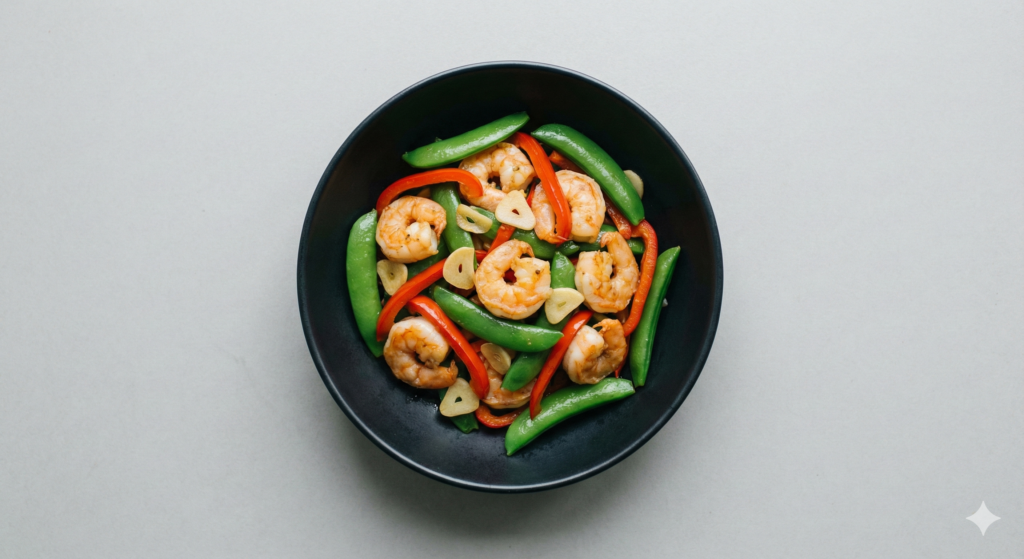
A perfect Garlic Shrimp Stir Fry relies on high heat, batch cooking to prevent steaming, and adding garlic at the very end to preserve the sweet Allicin compound. By using the “C-shape” rule for doneness and organizing vegetables from hard to soft, you can achieve a restaurant-quality snap in under 15 minutes.
The Science of the Perfect Garlic Shrimp Stir Fry: Crisp, Juicy, and Ready in 15 Minutes
Let’s be honest: we have all been there. You crave a restaurant-quality Garlic Shrimp Stir Fry, but the result at home is disappointing. The shrimp comes out rubbery, the vegetables are a soggy mess, and the garlic is either burnt or invisible. In my 15 years of running professional kitchens and developing recipes, I have seen home cooks make the same mistakes repeatedly. It is rarely the ingredients’ fault; it is almost always the technique.
The problem is that most online recipes lie to you. They promise a “one-pan dump dinner,” but they fail to explain the thermodynamics of cooking. When you overcrowd a pan, you aren’t frying; you are steaming. In this guide, I’m going to walk you through the actual science of stir-frying. We are going to fix your texture issues, maximize that garlic punch, and get dinner on the table faster than you can order takeout.
Why Your Stir Fry is Always Soggy (The “Crowding” Effect)
If there is one hill I am willing to die on, it is this: never crowd your pan. Based on my experience teaching cooking classes, the number one reason a Garlic Shrimp Stir Fry fails is that the cook throws the shrimp, peppers, and broccoli into the wok all at once.
Here is the reality of the situation. Vegetables release water when they hit heat. If your pan is packed tight, that moisture has nowhere to go. It pools at the bottom, boiling your ingredients instead of searing them.
The Solution: You must cook in batches. In the field, I always sear the shrimp first, remove them, and then cook the vegetables. This ensures the pan temperature remains high enough to caramelize the sugars in the veggies (the Maillard reaction) rather than steaming them into mush.
The “Allicin” Rule: When to Add Garlic for Maximum Flavor
Most recipes tell you to “sauté garlic in hot oil first.” This is actually terrible advice for a high-heat Garlic Shrimp Stir Fry.
Garlic contains a compound called Allicin, which gives it that pungent, spicy aroma. However, garlic burns at a much lower temperature (around 300°F/150°C) than oil or shrimp. If you throw minced garlic into a screaming hot wok at the beginning, it will turn black and acrid within 10 seconds. I’ve encountered countless cases where a client thought they didn’t like garlic, but they actually just didn’t like burnt garlic.
My Recommendation: Add the aromatics (garlic, ginger, scallions) in the last 30 seconds of cooking, or infuse them into your cold sauce mixture. This preserves the sweet, aromatic profile of the garlic without introducing bitterness.
Fresh vs. Frozen: The Truth About Supermarket Shrimp
We need to debunk a massive myth. The “fresh” shrimp you see sitting on ice at the seafood counter? It was almost certainly frozen on the boat, shipped frozen, and then thawed by the grocery store.
In fact, that “fresh” shrimp might have been sitting there thawing for two or three days, degrading in quality.
The Practitioner’s Choice: Always buy IQF (Individually Quick Frozen) shrimp. These are flash-frozen immediately after being caught, locking in freshness and texture. You can control exactly when they thaw (under cold running water for 10 minutes), ensuring your Garlic Shrimp Stir Fry tastes like it came straight from the ocean, not the back of a delivery truck.
The “C-Shape” Technique: Visual Cues for Flawless Texture
How do you know when shrimp is done? Stop looking at the clock and start looking at the shape. Shrimp muscle fibers contract tightly when heat is applied.
- The “I” Shape: The shrimp is straight. It is undercooked and translucent.
- The “C” Shape: The shrimp curls slightly. It is perfectly cooked, tender, and juicy.
- The “O” Shape: The head touches the tail. It is overcooked, rubbery, and tough.
As soon as your shrimp hits that “C” shape, get it out of the pan immediately. Residual heat will finish the job.
The Master Recipe: Garlic Shrimp Stir Fry
Now that we understand the science, let’s execute the dish. This recipe is designed for speed and texture.
The Ingredients:
- 1 lb Large Shrimp (Devield, tails on or off)
- 2 tbsp Vegetable Oil (High smoke point)
- The Sauce:
- 3 tbsp Soy Sauce (Low sodium preferred)
- 1 tbsp Oyster Sauce (For umami depth)
- 1 tsp Sesame Oil
- 1 tbsp Brown Sugar or Honey
- 1 tbsp Cornstarch (To thicken)
- The Aromatics:
- 4 cloves Garlic, minced (Heavy on the garlic!)
- 1 tsp Fresh Ginger, grated
- The Veggies:
- 1 cup Snap Peas
- 1 Red Bell Pepper, sliced
- 1 cup Broccoli Florets (blanched)
⚠️ Important! Do not use Olive Oil for this recipe. A proper Garlic Shrimp Stir Fry requires high heat. Olive oil has a low smoke point and will burn, ruining the flavor. Stick to Canola, Vegetable, or Grapeseed oil.
How To Cook It (Step-by-Step)
- Prep the Sauce: Whisk together soy sauce, oyster sauce, sesame oil, sugar, ginger, and cornstarch in a small bowl. Set aside.
- Sear the Shrimp: Heat 1 tbsp oil in a wok or large skillet over high heat. Add shrimp in a single layer. Cook for 1-2 minutes per side until they form a “C” shape. Remove shrimp and set aside.
- Stir Fry Veggies: Add the remaining 1 tbsp oil. Add broccoli and snap peas first (the harder veggies). Stir fry for 2 minutes. Add the bell peppers and cook for another minute.
- Combine: Return the shrimp to the pan.
- The Garlic & Sauce Finish: Pour the sauce mixture over the ingredients. Now, add your minced garlic directly into the bubbling sauce. Toss everything vigorously for 30-45 seconds. The sauce will thicken instantly and coat everything in a glossy glaze.
- Serve: Remove from heat immediately and serve over jasmine rice.
The “Hard-to-Soft” Vegetable Hierarchy
To ensure every bite of your Garlic Shrimp Stir Fry is perfect, you cannot treat all vegetables equally. I’ve seen people throw carrots and spinach in at the same time; the result is raw carrots and slimy spinach.
You must follow the hierarchy:
- Hard Veggies (Cook first): Carrots, Broccoli stems, Onions.
- Medium Veggies (Cook second): Peppers, Snap Peas, Zucchini.
- Soft Veggies (Cook last/off heat): Spinach, Scallions, Bean Sprouts.
Protein-Packed & Anti-Inflammatory: The Nutritional Breakdown
Is Garlic Shrimp Stir Fry healthy? Absolutely. Shrimp is one of the leanest proteins available. A standard 3-ounce serving contains roughly 20 grams of protein but less than 100 calories.
Furthermore, garlic and ginger are potent anti-inflammatory ingredients. When you skip the heavy breading and deep-frying found in takeout versions, this meal becomes a powerhouse for weight management and muscle recovery. For more details on the nutrient density of seafood, you can verify data through the USDA FoodData Central, which breaks down the micro-nutrient profile of shellfish.
Pro-Tip: The “Velveting” Technique for Restaurant-Quality Tenderness
If you want to take your Garlic Shrimp Stir Fry to the absolute elite level, try “velveting.”
Marinate your raw shrimp in 1 egg white, 1 teaspoon of cornstarch, and 1/2 teaspoon of baking soda for 15 minutes before cooking. The alkaline baking soda changes the pH of the shrimp, preventing the muscle fibers from tightening up too much. This is the secret reason why Chinese restaurant shrimp always has that distinct, silky “snap” that is hard to replicate at home.
Master Your Wok Today
Cooking a great Garlic Shrimp Stir Fry isn’t about magic; it’s about heat management and timing. By respecting the ingredients—keeping the shrimp plump, the garlic unburnt, and the veggies crisp—you can create a meal that is healthier and faster than delivery.
So, don’t be afraid to crank up the heat. Your wok is waiting.
FAQ (Frequently Asked Questions)
1. Can I use pre-cooked shrimp for stir fry? I strongly advise against it. Pre-cooked shrimp will become rubbery and dry the moment you heat them up again in the pan. Always use raw shrimp for the best texture and flavor absorption.
2. My sauce is too runny, how do I fix it? This usually happens if you didn’t use enough cornstarch or if the pan wasn’t hot enough when you poured the sauce in. You can mix 1 teaspoon of cornstarch with 1 teaspoon of cold water (a slurry) and add it to the simmering pan. It should thicken instantly.
3. Is this recipe good for meal prep? Yes, Garlic Shrimp Stir Fry is excellent for meal prep. However, when reheating, use the microwave at 50% power or reheat gently on the stove. High heat will overcook the shrimp during the reheating process.

![3 Sichuan Peppercorns Recipe Secrets to Master the Ma La Tingle [Pro Guide]](https://lezata.com/wp-content/uploads/2025/10/image-56-768x419.png "3 Sichuan Peppercorns Recipe Secrets to Master the Ma La Tingle [Pro Guide] 6")