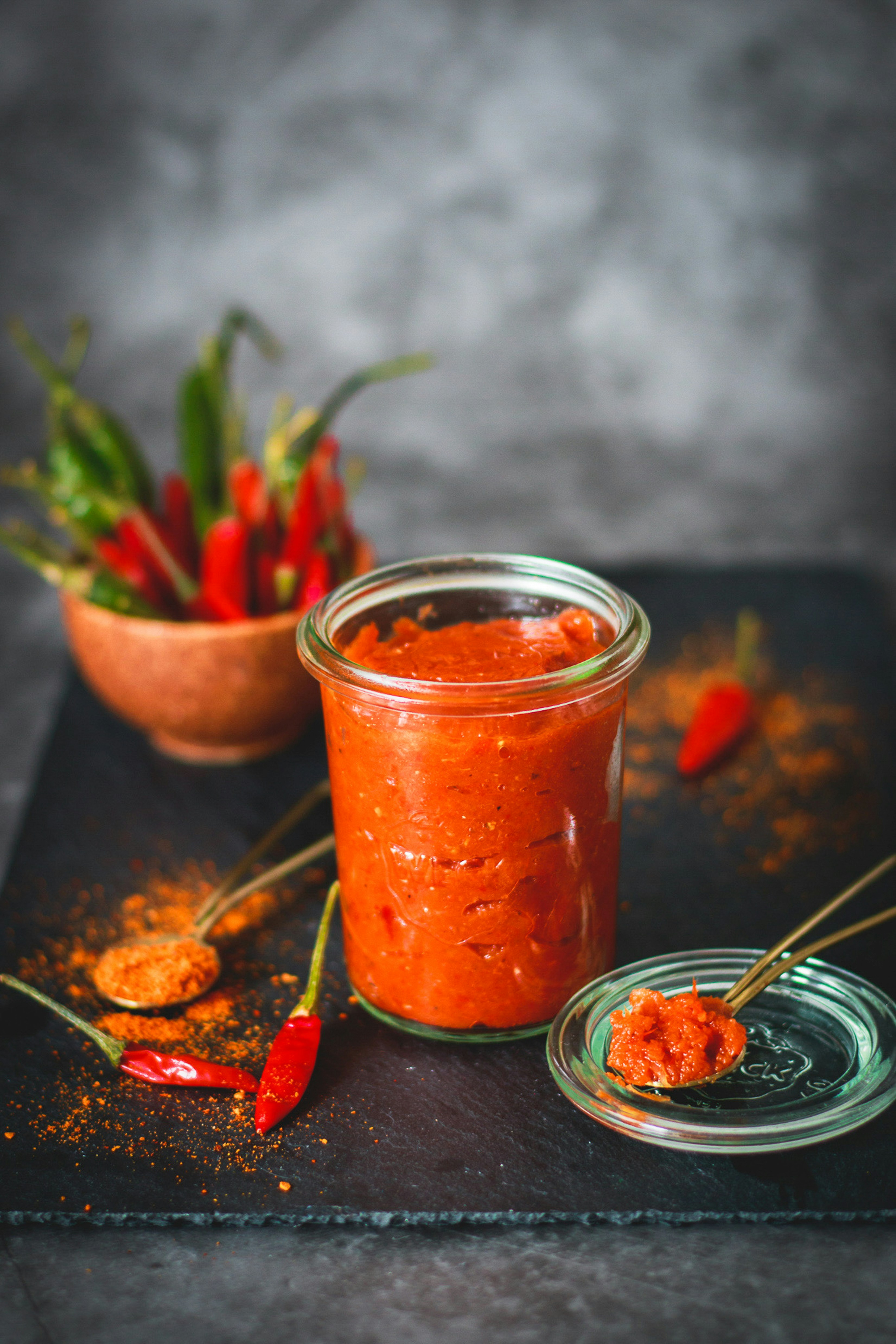
Authentic Sichuan Chili Oil 7 Secrets to Real Ma La Xiang
Last Updated on 2025-12-26 by Suryo

Authentic Sichuan Chili Oil (Hong You) is not merely a spicy condiment but a complex flavor extraction achieved by pouring hot oil over a specific blend of chilies and aromatics at three distinct temperature stages. Unlike simple infusions, it relies on the chemical interaction between hot Caiziyou (roasted rapeseed oil) and specific peppers like Er Jing Tiao to create its signature nutty aroma, numbing sensation, and brilliant ruby-red color.
Let’s be honest for a second. Have you ever wondered why the chili oil you make in your shop kitchen tastes flat compared to the jars flying off the shelves in Chengdu? You bought the expensive peppers, you used plenty of heat, but the result is often a murky brown liquid that tastes mostly of burnt toast and disappointment. I know this frustration well. In my fifteen years of consulting for noodle shops and sauce startups, I’ve seen more batches of oil ruined by impatience than I care to count.
The problem isn’t usually your passion; it’s your physics. Most Western recipes treat this process like an Italian olive oil infusion—low and slow. That is a fatal mistake for your business. To create a product that keeps customers coming back, you need to master the “thermodynamics of Mala.” We aren’t just making something spicy here; we are building a scent architecture that hits the nose before it ever touches the tongue. If you want to scale your business, you need to stop cooking like a home amateur and start extracting like a pro.
Beyond Spicy Understanding the Architecture of Hong You
Many entrepreneurs I work with confuse “Chili Crisp” with Authentic Sichuan Chili Oil. This is the first hurdle we need to clear. If you are bottling a product that is 90% crunchy bits and 10% oil, you are making a crisp (similar to the famous Lao Gan Ma style). While delicious, that is not the foundational “Red Oil” required for signature dishes like Wontons in Red Oil or Dan Dan Noodles.
In the field, I often tell my clients that Hong You is a foundation sauce. It is the liquid gold that carries the flavor. When I helped a struggling dumpling shop in the city optimize their menu, we realized their “house sauce” was just sesame oil and crushed red pepper. It lacked depth. Once we switched to a proper Authentic Sichuan Chili Oil base, their re-order rate on delivery apps jumped by 30% in a month. Why? Because flavor carries memory. The specific ratio of “Ma” (numbing) and “La” (spicy) creates a sensory hook that generic hot sauce simply cannot replicate.
⚠️ Important!
If you are packaging this for retail, visual appeal is your number one sales driver. Your oil must be a clear, vibrant ruby red. If it looks muddy or dark brown, customers will subconsciously label it as “burnt” or “old” before they even open the jar.
Your Choice of Oil is the Difference Between a Flat Heat and a Complex Masterpiece
Here is where 95% of English-language recipes lie to you. They will tell you to use “neutral oil” like canola, grapeseed, or vegetable oil because they don’t want to confuse the flavor of the chilies.
I am going to give it to you straight: Do not use neutral oil if you want the real deal.
In Sichuan, the soul of the flavor comes from Caiziyou (Roasted Rapeseed Oil). Unlike the canola oil we see in the West (which is highly processed to be flavorless), Caiziyou is dark, nutty, and smells almost like wasabi or mustard greens when raw. It has a high smoke point and a density that coats the palate perfectly.
I remember a consultation I did with a startup founder who was trying to replicate a famous Chengdu street food flavor. He spent months tweaking his chili blend but refused to switch his oil supplier because canola was cheaper. His product always tasted “thin.” It lacked that savory, lingering mouthfeel. I finally convinced him to import a drum of semi-refined roasted rapeseed oil. We did a blind taste test with his team, and the difference was night and day. The Authentic Sichuan Chili Oil made with Caiziyou had a viscosity and nuttiness that acted as a flavor amplifier, whereas the canola version just tasted like spicy grease.
However, working with Caiziyou requires a specific step: you must heat it until it smokes (around 400°F / 205°C) to “cook out” the raw vegetable odor. If you skip this, your final product will taste like raw turnips.
The Holy Trinity of Dry Ingredients
You cannot build a house with just one type of brick, and you cannot make Authentic Sichuan Chili Oil with just one type of pepper. Generic “Red Pepper Flakes” from the pizza aisle are absolute profit-killers for your business. They are usually made from cayenne-style peppers that offer a sharp, stabbing heat but zero fragrance.
To create a professional profile, you need a blend. Here is the ratio I recommend to my commercial clients:
- Er Jing Tiao (The Color & Aroma): This is non-negotiable. These peppers are mild in heat but rich in natural red pigment and fruity fragrance. They are responsible for that deep red glow.
- Facing Heaven / Chao Tian Jiao (The Heat): These provide the punch. They are aggressive and spicy.
- Sichuan Peppercorn (The Numbing Agent): This provides the tingle.
A common pitfall I see in production kitchens is sourcing. I once audited a kitchen that was using 100% Facing Heaven peppers because they wanted “the spiciest oil in town.” The result was inedible. It was just pain, no flavor. We adjusted their formula to a 70% Er Jing Tiao and 30% Facing Heaven mix. The result was a rich, fragrant oil that glowed red and had a heat that built up slowly—keeping customers eating rather than reaching for milk.
For more information on the safety standards of imported spices and ensuring your ingredients are contaminant-free, you can check resources at usda.gov. Ensuring high-quality raw materials is the first step in food safety for your business.
The Scorch Point How a Difference of 20 Degrees is Ruining Your Hard Work
Before we get to the pouring technique, we need to talk about temperature failure. This is the number one reason I see batches of Authentic Sichuan Chili Oil poured down the drain.
Chilies burn at a much lower temperature than you think. If you pour boiling oil (400°F+) directly onto ground chili flakes, they will carbonize instantly. The result is a bitter, acrid taste that no amount of salt or sugar can fix. Conversely, if the oil is too cool (below 250°F), it won’t extract the flavors or the red pigment, leaving you with a pale, oily mess.
In the field, I teach my students to use a digital thermometer—it is the most important tool in your arsenal. You aren’t cooking by feel; you are managing a chemical reaction. You need to hit the “sweet spot” where the oil is hot enough to flash-fry the flakes to release aromatics, but cools down quickly enough to prevent burning. This brings us to the secret weapon of the Sichuan masters.
The Secret Technique San Dao You (The Three Pours)
If there is one section of this article you print out and tape to your kitchen wall, make it this one. The difference between a generic spicy oil and Authentic Sichuan Chili Oil lies in the “Three Pours” (San Dao You).
In my early days, I used to dump all the hot oil onto the chilies at once. The result? Sometimes burnt, sometimes weak. It was inconsistent. Then, a master chef in a Chengdu cooking school explained the physics to me: Different flavor compounds release at different temperatures.
Here is how we execute the San Dao You technique to ensure your product has depth:
Pour 1 High Heat (The Flash Cook)
You pour about 50% of your oil when it is around 375°F (190°C).
- The Goal: This initial shock “flashes” the chili flakes. It cooks them instantly to release the raw nutty aroma of the seeds and skins.
- Field Note: You will hear a violent sizzling sound. This is good. If it doesn’t roar, your oil is too cold. This step sets the savory foundation.
Pour 2 Medium Heat (The Color Extraction)
Wait about 1-2 minutes until the oil cools to roughly 275°F (135°C), then pour 30% of the remaining oil.
- The Goal: At this slightly lower temperature, the oil is no longer burning the skin but gently extracting the capsanthin (red pigment) from the Er Jing Tiao.
- Field Note: This is where the magic happens visually. You will see the oil turn from yellow to a deep, glowing amber.
Pour 3 Low Heat (The Spicy Steep)
Wait another 2 minutes until the oil is around 200°F (90°C), then pour the final 20%.
- The Goal: This final gentle bath extracts the capsaicin (heat) without destroying the delicate floral notes of the peppercorns.
- Field Note: This creates the “lingering” heat that sits at the back of the throat, which is crucial for Authentic Sichuan Chili Oil.
⚠️ Important!
Never cover your jar immediately after pouring! I once had a client who sealed his jars right after the third pour to “trap the scent.” He ended up trapping condensation (water), which dripped back into the oil and caused his entire batch to go moldy in a week. Let it cool completely uncovered to let the moisture escape.
Aging like Fine Wine Why Your Oil Tastes Better on Day 3
Here is a logistics tip for your inventory management: Do not sell oil made today.
Freshly made Authentic Sichuan Chili Oil is sharp and disjointed. The flavors haven’t married yet. In my testing, the chemical bonds between the oil and the capsaicin stabilize after 24 to 48 hours. The color also deepens significantly during this rest period.
“How long does it keep?” If you use only dry ingredients (dried chilies, dried spices, oil), your product is shelf-stable for 6 months at room temperature. However, many beginners try to add fresh minced garlic or raw green onions directly into the final bottle to make it “gourmet.” Do not do this. Introducing moisture (water) from fresh vegetables into an anaerobic environment (oil) creates a risk for botulism. If you want garlic flavor, fry the garlic in the oil first, then remove the solids before pouring the oil over the chilies.
5 Ways to Use Your Liquid Gold (Beyond Dumplings)
To sell more product, you need to teach your customers how to use it. Don’t just market it for noodles. Here are 5 angles I’ve used to increase basket size for my clients:
- The Breakfast Hack: Suggest drizzling it over fried eggs or avocado toast. The savory crunch transforms a boring breakfast.
- The Pizza Topper: A growing trend is using Authentic Sichuan Chili Oil instead of standard crushed pepper on pepperoni pizza.
- The Dessert Curveball: This sounds crazy, but vanilla ice cream with a drizzle of chili oil is a massive trend in high-end dining. The fat from the cream balances the heat perfectly.
- The Salad Upgrade: Mix it with vinegar for a smashed cucumber salad dressing.
- The “Lazy Dinner” Savior: Market it as a one-step sauce for leftover rice.
D. HOW-TO: The Master Recipe for Commercial Batch
Here is the standardized workflow I use. Scale this ratio up for your business needs.
Ingredients Ratio:
- 100g Chili Blend (70g Er Jing Tiao + 30g Facing Heaven)
- 10g Sichuan Peppercorns (Whole)
- 500ml Caiziyou (Roasted Rapeseed Oil) or Peanut Oil
- Aromatics for infusion: Ginger slices, Star Anise, Cassia Bark (Cinnamon), Bay Leaves.
Instructions:
- Prep the Spices: Toast your peppercorns in a dry pan until fragrant. Grind them coarsely with your chili blend. Place this dry mix into a heat-proof steel pot (do not use glass; it might shatter).
- Cook the Oil: Pour the Caiziyou into a wok. Heat it to smoking point (400°F) to remove the raw smell. Turn off the heat.
- Infuse Aromatics: Let the oil cool slightly (to 300°F), then drop in your ginger, star anise, and cinnamon. Fry them until they are golden brown and dry. Remove and discard these solids. You now have infused oil.
- The First Pour (High): Re-heat oil to 375°F if needed. Pour 1/2 of the oil onto the chili mix. Stir well to cook the flakes.
- The Second Pour (Medium): Wait until oil drops to 275°F. Pour 1/3 of the remaining oil. Stir to distribute the red pigment.
- The Third Pour (Low): Wait until oil drops to 200°F. Pour the rest. Add a splash of black vinegar (optional) at the very end to “fix” the color.
- The Rest: Let it sit for 24 hours before jarring.
Start Your Red Oil Revolution Today
Making Authentic Sichuan Chili Oil is less about following a recipe and more about respecting the process. It is a discipline. When you stop rushing and start paying attention to the temperature and the quality of your Caiziyou, you aren’t just making a condiment; you are crafting an experience.
I have seen small home businesses go from selling 10 jars a week to supplying entire restaurant chains simply because they nailed this technique. The market is full of mediocre, bitter, brown oils. There is a massive gap waiting for a product that is vibrant, nutty, and truly authentic. That product could be yours.
So, go fire up the wok, watch your thermometer, and let the aroma tell you when it’s ready. Good luck!
G. FAQ (Frequently Asked Questions)
1. Why does my chili oil taste bitter? Bitter oil almost always means you burned the chilies. The oil was too hot during the first pour. Invest in a digital thermometer and ensure your oil is not above 380°F (193°C) when it touches the flakes.
2. Can I use olive oil for Sichuan Chili Oil? I strongly advise against it. Olive oil has a low smoke point and a strong distinct flavor that clashes with Sichuan spices. If you cannot find Caiziyou, use peanut oil or pure soybean oil for a closer flavor profile.
3. Why isn’t my oil red enough? You are likely using the wrong pepper ratio. Standard cayenne or Thai chilies provide heat but very little color. You must use Er Jing Tiao or a dedicated mild paprika-style pepper in your blend specifically for that ruby-red appearance.
![9 Essential Chinese Pantry Staples to Boost Your Menu Profits [Insider Tips]](https://lezata.com/wp-content/uploads/2025/10/3c67ea0a-9945-437f-bbae-a6328259b7e9_019a2daa-6358-71bf-8a40-2290876b8ccf_files_essential_chinese_pantry_staples-768x432.webp "9 Essential Chinese Pantry Staples to Boost Your Menu Profits [Insider Tips] 6")
![7 Secrets to Velveting Chicken for Melt-in-Your-Mouth Stir Fry [Chef Tested]](https://lezata.com/wp-content/uploads/2025/10/image-52-768x419.png "7 Secrets to Velveting Chicken for Melt-in-Your-Mouth Stir Fry [Chef Tested] 7")