The 5 Ultimate Steps How to Make Rendang Vlees

Let’s be honest. If you’re looking up how to make rendang vlees (that beautiful Dutch-Indonesian fusion term for ‘rendang meat’), you aren’t just looking for a recipe. You’re signing up for a relationship. This isn’t a 30-minute weeknight meal. This is a labor of love, a culinary marathon, and quite possibly, the most delicious thing you will ever pull out of a pot. But you have to earn it. And I’m going to show you how.
As a chef who has spent years chasing the dragon of “perfect” slow-cooked dishes, rendang is the final boss. It’s not just a dish; it’s a process of transformation. You’re not just cooking meat; you’re patiently guiding it through stages of boiling, stewing, and, finally, frying in its own rendered coconut oil. Consequently, the flavor is impossibly deep. So, grab an apron and a very comfortable pair of shoes. We’re diving in.
Chef’s Expert Analysis: Watch This First
Before we dive into my novel-length instructions, let’s watch a visual guide. I’ve selected this particular video because it perfectly illustrates the crucial color transformation that defines authentic rendang. Many home cooks stop too early, ending up with Kalio (a delicious, but different, wet curry). This video shows the commitment needed to reach the true, dark, dry rendang stage.
Pay close attention starting around the 1:30 mark. Notice how the ‘bumbu’ (spice paste) and coconut milk reduce. This isn’t just “boiling”; it’s a slow-motion caramelization and frying process all in one. The way the oil (from the coconut milk) begins to “break” and separate is the magic moment. This is a fantastic primer for understanding the visual cues we’ll be discussing. Keep your eye on that color change!
Source: Rendang cooking process on YouTube
What Exactly is Rendang Vlees (And What It Is Not)
First, a crucial clarification. Rendang is not a curry. Let me repeat that. Rendang is NOT a curry. While it starts in a curry-like state (a stage called ‘Kalio’), a curry is defined by its sauce. Rendang is defined by the near-total absence of sauce.
The entire process of making rendang vlees is a method of preservation, originally from the Minangkabau people of West Sumatra. The “sauce” (the coconut milk and spice paste) is slowly, painstakingly reduced over hours until the water has completely evaporated. The coconut milk “breaks,” releasing its oil, which then *fries* the meat and spices.
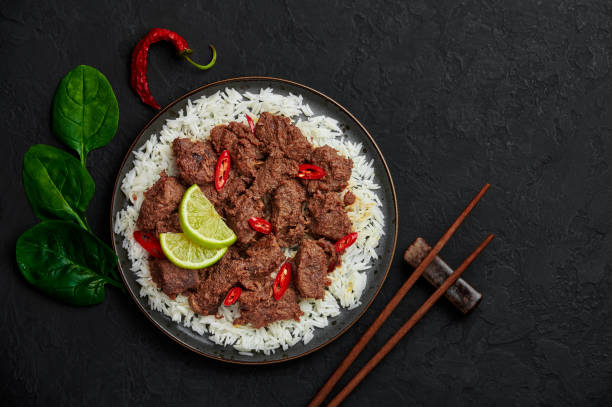
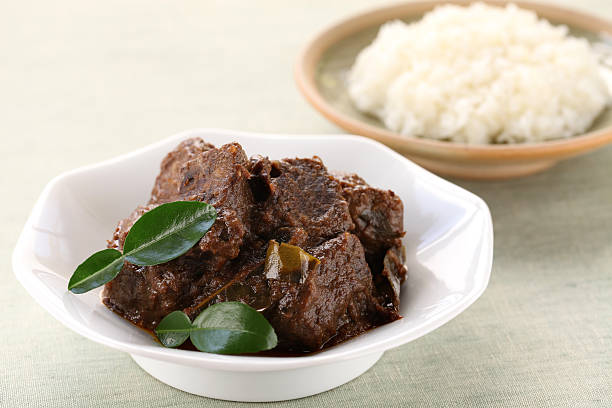
The result? A dark, almost black, caramelized, intensely flavorful meat that is tender yet has a satisfying “bite.” The spices, now fried in coconut oil, act as a natural preservative. This is why authentic rendang can last at room temperature for weeks. It’s a masterpiece of culinary science.
Expert Takeaway: The goal of making rendang is not to create a sauce. The goal is to make the “sauce” disappear, leaving behind only intensely flavored, oil-rich meat.
The Non-Negotiable Arsenal: Ingredients for Authentic Rendang
You cannot cheat your way to good rendang. The quality of your ingredients is paramount. Based on our analysis of countless recipes, the components can be broken down into three critical groups.
H3: The ‘Bumbu’ (Spice Paste): Your Flavor Engine
This is the soul of your rendang vlees. While recipes vary, the core is non-negotiable. You will need:
Shallots (A LOT of them): This is the backbone. We’re talking 15-20 for a 1kg batch. Do not substitute with red onion; the flavor is different.
Garlic: The aromatic partner to the shallots.
Red Chilies: Both fresh large red chilies (for color and mild heat) and small bird’s eye chilies (for the signature kick). You can, of course, learn how to make chili oil separately, but here, the chili is foundational.
Galangal (Lengkuas): This is vital. It has a sharp, peppery, citrusy flavor. It is NOT ginger. Do not substitute.
Ginger: Provides a different kind of warmth and spice.
Turmeric (Kunyit): Fresh is always best. It provides the golden color in the early stages and a deep, earthy flavor.
Coriander Seeds: Toasted and ground.
Practice best is to pound this all into a paste using a mortar and pestle (ulekan). Realistically, a food processor works, but you may need to add a splash of oil to get it moving.
H3: The Aromatics (The ‘Cemplung’ Ingredients)
These are the ingredients you toss in whole to infuse the liquid. ‘Cemplung’ literally means ‘to throw in’.
Lemongrass (Serai): Bruised to release its oils.
Kaffir Lime Leaves (Daun Jeruk): Torn to release their aroma.
Turmeric Leaves (Daun Kunyit): Tied into a knot. This is a signature, hard-to-find ingredient, but it imparts a unique fragrance. If you can’t find it, proceed anyway, but know it’s missing.
Tamarind Slice (Asam Kandis): Provides a subtle, sour brightness to cut through the richness.
H3: The ‘Daging’ (The ‘Vlees’ or Meat): Choosing Your Champion
A common mistake is using the wrong cut. You are about to cook this meat for 4+ hours. Do not use a lean cut. You will end up with dry, stringy sadness.
The best cut for making rendang vlees is a tough, collagen-rich, fatty cut. The collagen will melt, giving the meat a succulent, tender texture, while the fat will render and add to the flavor.
Best Choices: Beef Chuck (Bahu), Brisket (Sandung Lamur), or Boneless Short Rib.
Preparation: Cut the meat into large, uniform cubes (about 2-inch cubes). Don’t cut them too small, or they will disintegrate during the long cooking process.
H3: The Coconut Milk Conundrum: Fresh vs. Canned
In Indonesia, no one would dream of making rendang without fresh-pressed coconut milk. You get both the ‘santan encer’ (thin milk, first press) and ‘santan kental’ (thick milk, second press).
For those of us without a coconut grove, high-quality canned coconut milk is the practical compromise. Do not use “light” coconut milk. This is a culinary crime. You need the fat. Based on our analysis, use a brand with at least 20% fat content. You will also need ‘Kerisik’ (toasted coconut paste), which we’ll discuss next, to re-introduce the roasted flavor lost from using canned milk.
How to Make Rendang Vlees: A Step-by-Step Culinary Marathon
Okay, you have your ingredients. You’ve cleared your schedule for the next 4-6 hours. You’ve warned your family. Let’s begin the how to cook rendang meat process.
H3: Step 1: The ‘Kerisik’ (Toasted Coconut Paste) – The Secret Weapon
Do this first. ‘Kerisik’ is the secret to the nutty, rich, slightly gritty, and dark texture of authentic rendang. Take desiccated coconut (unsweetened) and dry-toast it in a wok or pan over low heat. Stir constantly. It will go from white to golden to a deep, rich brown. Do not burn it.
Once it’s the color of peanut butter, transfer it to a mortar and pestle (or a small, powerful blender) and pound/blend it until it releases its oil and becomes a dark, oily paste. Set this aside. This is your magic bullet.
H3: Step 2: The ‘Bumbu’ (The Flavor Foundation)
Blend or pound all your ‘Bumbu’ ingredients (shallots, garlic, chilis, galangal, ginger, turmeric, coriander) into a smooth, wet paste. It should be fragrant and vibrant.
H3: Step 3: The ‘Marriage’ (Meat + Bumbu + Aromatics)
In a large, heavy-bottomed pot or wok (a Dutch oven is perfect), heat a little oil. Sauté the ‘Bumbu’ paste until it is deeply fragrant and the oil starts to separate from the paste. This is a crucial step; you are cooking out the raw flavor. Add the bruised lemongrass, lime leaves, and turmeric leaf. Stir for another minute until fragrant.
Now, add your cubes of meat. Stir to coat every piece in the glorious paste. Sear the meat on all sides in the ‘bumbu’.
H3: Step 4: The Long Wait (Phase 1 – The ‘Kalio’ Stage)
Once the meat is seared, pour in all the coconut milk and add the tamarind slice. Bring it to a boil, then immediately reduce the heat to a low, steady simmer. Do not cover the pot. You want the liquid to reduce.
And now, you wait. And stir. For the next 2-3 hours, you will stir this pot every 15-20 minutes to prevent the bottom from scorching. The mixture will thicken, and the color will start to change from bright yellow-red to a light brown. This stage, where it’s a thick, wet stew, is called Kalio. It’s delicious, but it’s not rendang.
H3: Step 5: The Transformation (Phase 2 – The ‘Rendang’ Stage)
After 2-3 hours, the magic happens. The water has evaporated, and the coconut milk will “break” or split. You will see oil pooling on the surface. This is not a mistake. This is the entire point.
Now, add your secret weapon: the Kerisik (toasted coconut paste) and salt/sugar to taste. Stir it in.
From this point on, you cannot leave the pot. You must stir constantly. You have now moved from boiling to frying. The meat and spices are frying in the rendered coconut oil. It will spatter. It will hiss. It will smell incredible. Your job is to keep scraping the bottom of the pot, lifting the meat, and ensuring nothing sticks and burns. If it burns, the entire dish is bitter and ruined.
H3: Step 6: The Darkening (The Final Victory)
For the next hour (yes, another hour), you will stir and fry. The color will transform. It will go from light brown, to medium brown, to a deep, dark, glorious chocolate-mahogany brown. The oil will be dark, the meat will be tender, and the ‘bumbu’ will have become a dark, semi-dry coating that clings to every piece of meat.
When it is dark brown, glistening with oil, and almost dry, you have achieved Rendang Vlees. You have won. Turn off the heat. Let it rest. It will taste even better in an hour, and impossibly good tomorrow.
7 Deadly Sins of Making Rendang Vlees (Common Mistakes)
This process is long, and the pitfalls are many. Here are the most common mistakes I see:
Using Lean Meat: As discussed, this is a fatal error. You need fat and collagen. You’ll end up with beef jerky.
Rushing the Process: Trying to make rendang in 2 hours. You’ll only get Kalio. You cannot rush the caramelization and frying stages. Patience is the main ingredient.
Not Stirring Enough: The coconut milk solids and spices will stick and burn. A single burnt spot on the bottom of the pot can ruin the entire batch with a bitter acrid taste. This is especially true after the oil breaks.
Skipping the Kerisik: This is the difference between “a nice beef stew” and “real rendang.” Kerisik adds an irreplaceable nutty depth, dark color, and texture.
Fearing the Oil: When the oil separates, home cooks often panic and try to skim it off. Stop! This oil is the entire point. It’s the cooking medium. It’s liquid gold, full of flavor.
Incorrect ‘Bumbu’ Ratios: Skimping on the shallots, galangal, or chilis. Rendang is supposed to be intense. This is not a subtle dish. Go big or go home. It’s nothing like a simple stir-fry sauce; it’s a complex orchestra.
Boiling on High Heat: Trying to speed it up by cranking the heat. This will make the meat tough and burn the ‘bumbu’ before the meat has time to tenderize. Low and slow is the only way.
The Culinary Science: Why Does Rendang Last So Long?
The original purpose of making rendang vlees was preservation in a hot, tropical climate before refrigeration. The magic lies in two things:
The Spices: Many of the spices used (garlic, galangal, turmeric, chili) have natural antimicrobial and antibacterial properties. They are nature’s preservatives.
Low Water Activity: By cooking the rendang until all the water has evaporated, you remove the environment that bacteria need to thrive. The final “frying” stage is the key. The meat is now preserved in its own flavorful, spiced oil, much like a confit. This is a core principle in mastering stocks and sauces—controlling water content.
Storing and Serving Your Culinary Masterpiece
You did it. You’ve spent half a day creating this dish. Now what?
Serving: Serve it simply. It’s the star. All it needs is plain, hot, steamed rice. Maybe some ‘sambal ijo’ (green chili sambal) on the side if you’re a glutton for punishment.
Storing: Let it cool completely. Store it in an airtight container. It will last in the fridge for at least two weeks, and its flavor will only get deeper and more complex every single day. It also freezes magnificently for months.
In conclusion, learning how to make rendang vlees is more than learning a recipe. It’s a lesson in patience, transformation, and the profound power of slow cooking. It is a journey, and the destination is, without question, one of the most delicious foods on Earth. Good luck.
Frequently Asked Questions About Making Rendang Vlees
1. Why is my rendang vlees not dark brown?
You stopped cooking too soon. The dark brown color comes after the liquid has evaporated and the meat and spices begin to fry in the rendered coconut oil. This “frying” stage (Phase 2) is what caramelizes the ‘bumbu’ and meat. If it’s light brown and saucy, you have ‘Kalio’, not ‘Rendang’. Keep cooking (and stirring)!
2. Can I make authentic rendang vlees in a slow cooker?
Based on our analysis, a slow cooker is excellent for Phase 1 (the ‘Kalio’ stage) to tenderize the meat. However, you cannot achieve true rendang. A slow cooker’s purpose is to trap moisture; rendang’s purpose is to evaporate it. You must transfer the contents to a wok or pot for the final 1-2 hours of constant-stirring and frying to get the correct color and texture.
3. What is the difference between Rendang and Kalio?
‘Kalio’ (or ‘wet rendang’) is the delicious intermediate stage of the cooking process. It’s when the coconut milk has reduced to a thick, gravy-like sauce, and the color is a light, golden brown. ‘Rendang’ is the final stage, where all the water is gone, the oil has separated, and the meat has been fried in that oil until it’s dark brown, dry, and intensely caramelized.
4. Why did my coconut milk split or curdle immediately?
It’s supposed to! The “splitting” or “breaking” (‘pecah minyak’) of the coconut milk is the most critical part of making rendang vlees. It’s not a mistake; it’s the goal. This is the moment the water has evaporated, and the coconut oil is separating from the coconut solids. This oil is what will then fry the meat and spices, preserving them and creating the signature dark color.
5. What does ‘vlees’ mean in ‘rendang vlees’?
‘Vlees’ is the Dutch word for “meat”. The term ‘Rendang Vlees’ is a common Dutch-Indonesian fusion term, originating from the shared colonial history. It simply means “Rendang Meat,” which almost always refers to Beef Rendang (‘Rendang Daging Sapi’).