3 Easy Steps How to Make Sole Water with Pink Salt
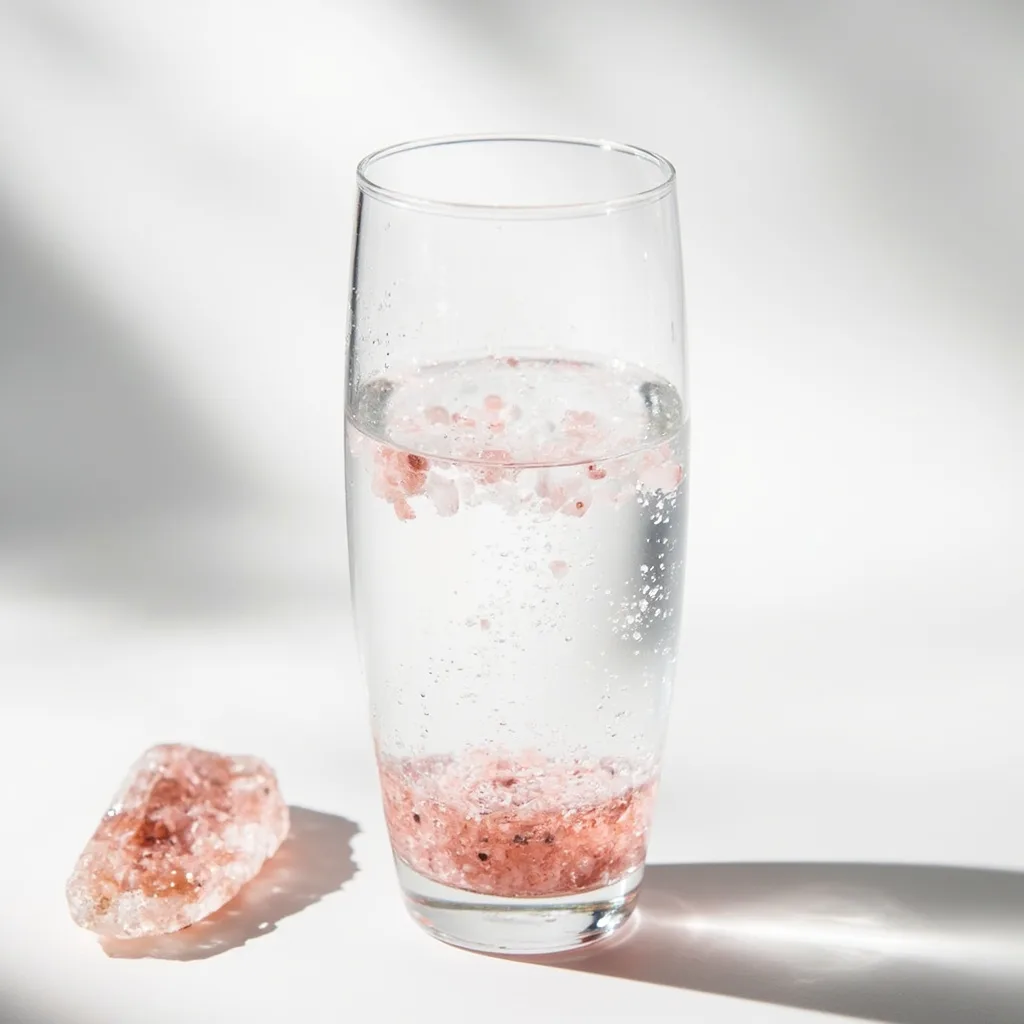
In the world of wellness, there is a constant search for the next simple, natural ritual. One of the most enduring trends is “sole water.” As a food expert and chef, this trend fascinates me because it’s not a gimmick; it’s a return to basic food science. This guide is about how to make sole water with pink salt, a process that is, in essence, a fundamental culinary technique. It’s not a “detox drink” you chug, but a concentrated “mother brine” you create once and use for weeks. Many people confuse this with the high-risk “salt water flush,” and it is my job as an expert to clarify the massive difference.
We are not “making a drink.” We are creating a fully saturated solution. The common mistake is getting the ratio wrong, using the wrong salt, or using the wrong tools, which can lead to an ineffective or unpleasant result. Based on our analysis, the questions people ask most are about the *how* and the *why*. This article will serve as the definitive, expert guide on how to make sole water with pink salt correctly, focusing on the science of saturation and the culinary-grade ingredients you should be using.
What is Sole Water? A Chef’s Definition
Before we learn how to make sole water with pink salt, let’s define our terms. “Sole” (pronounced *so-lay*) is not a “drink” in the conventional sense. You do not drink this mixture straight.
Sole water is a fully saturated solution of water and mineral-rich salt.
In culinary terms, this is a “mother brine.” “Fully saturated” is a scientific term. It means the water has absorbed the absolute maximum amount of salt it can possibly hold. No more salt can dissolve. The water is “full.”
The entire point of this process is to create this stable, concentrated liquid. The “recipe” you *drink* is actually just a tiny amount (usually one teaspoon) of this *sole* diluted into a fresh, full glass of water. This is a critical distinction. The process of making sole water is a one-time setup that lasts for months. The daily “ritual” is the simple act of dilution.
Ingredient Analysis: Why Pink Salt is Non-Negotiable
As a chef, I am a fierce advocate for using the right ingredients. The ingredient *is* the recipe. You wouldn’t make a premium dish with low-quality produce. The same applies here. The “pink salt” in “how to make sole water with pink salt” is not optional, and “salt” is not a singular-concept.
This is the most common mistake people make.
- DO NOT USE Iodized Table Salt: This is the worst possible choice. It is a harsh, heavily processed, and stripped ingredient. It has been chemically bleached, stripped of all its natural trace minerals, and then had iodine and anti-caking agents (like calcium silicate) added. It’s a dead, one-dimensional industrial product.
- DO NOT USE Epsom Salt: This is a completely different chemical. Epsom salt is magnesium sulfate. It is not “salt” in the culinary sense (which is sodium chloride). It has its own benefits, primarily for soaking, but it is not what we use to make sole water.
- DO USE Himalayan Pink Salt: This is the correct choice. Why? Because it is an unrefined, whole food. It is still ~98% sodium chloride, but the remaining 2% is a complex matrix of over 80 trace minerals and elements, including the iron oxide that gives it its signature color, as well as potassium and magnesium.
By using Himalayan pink salt, you are not just making “salt water.” You are making a solution that contains a complex, full-spectrum mineral profile, which is the entire point of the exercise. This mineral complexity is the same reason chefs love it. If you have extra, these 11 Himalayan pink salt cooking tricks and recipes will show you how to use it in your kitchen.
Expert Ingredient Checklist
- The Salt: Use ONLY unrefined, food-grade, Coarse Himalayan Pink Salt. Coarse grain is better as it dissolves more slowly and clearly, showing you the saturation process.
- The Water: Use ONLY Filtered or Spring Water. Avoid tap water, which contains chlorine, fluoride, and other contaminants that will interfere with your pure mineral solution. B
- The Tools: Use ONLY a Glass Jar with a NON-METAL Lid. A plastic, glass, or cork lid is fine. Salt corrodes metal, which will rust and leach into your solution.
The 3-Step Guide: How to Make Sole Water with Pink Salt
This is the core technical process. It is incredibly simple, but it is also precise. The goal is not to “dissolve” the salt, but to achieve *saturation*. Here is the step-by-step method for how to make sole water with pink salt.
Step 1. Prepare Your Jar and Salt
Take your clean, dry glass jar (a 16oz or 32oz Mason jar is perfect). Fill the jar about 1/4 (one-quarter) full with your coarse Himalayan pink salt crystals. Do not fill it halfway. 1/4 is the perfect amount to start. It may look like a lot of salt, but this is correct. We want a large “reserve” of salt crystals at the bottom.
Step 2. Add Your Filtered Water
Pour your filtered or spring water into the jar over the salt. Leave about one inch of “headroom” at the top. You do not need to use warm water; room temperature or cold water is perfectly fine. The salt will dissolve either way.
Step 3. Wait for Saturation (The Critical Step)
Secure your non-metal lid and give the jar a gentle shake. Now, let it sit on your counter at room temperature for 12 to 24 hours.
After 24 hours, look at the bottom of the jar.
You MUST still see a layer of undissolved salt crystals at the bottom.
This is your visual proof of success. Seeing undissolved salt means the water has absorbed the absolute maximum amount of salt it can hold, and it cannot dissolve even one more crystal. Your water is now fully saturated.
What if all the salt dissolved? This is the most common “error” in making sole water. It simply means your ratio was off and the water is not yet saturated. Your solution is too weak. The fix is simple: add more pink salt to the jar, shake it, and wait another 12 hours. Keep adding salt until you have a permanent layer of undissolved crystals at the bottom.
Congratulations. You have just successfully learned how to make sole water with pink salt. This jar of “mother brine” is your concentrate, and it will last indefinitely on your counter, as the high-salt environment is naturally antibacterial and anti-fungal.
How to *Use* Your Sole Water (The Daily Ritual)
This is the second, equally important part of the process. You have your concentrate. Now what? Remember, you NEVER drink from the jar.
The Simple Morning Ritual Recipe
- Get a standard 8-12 oz glass.
- Fill it with fresh, filtered water (room temperature is best for absorption).
- Using a non-metal spoon (wood, ceramic, or plastic), take one (1) teaspoon of the liquid sole water from your jar. Try to get just the liquid, not the crystals.
- Stir this one teaspoon of sole into your full glass of fresh water.
That’s it. This is the drink. It should taste only *mildly* salty, not like a mouthful of seawater. You drink this on an empty stomach, 15-30 minutes before your morning coffee or breakfast. This is a gentle way to introduce trace minerals and electrolytes to your system to support hydration.
Common Mistakes in Using Sole Water
Based on my expert analysis, here are the errors to avoid during the *use* phase:
- Drinking the Concentrate: This is dangerous. Drinking the saturated solution straight can be a shock to your system, cause a laxative effect, and provide a massive overdose of sodium.
- Using a Metal Spoon: Just as the metal lid will corrode, a metal spoon used daily can react with the highly concentrated salt solution. Stick to wood, ceramic, or plastic. Example: `https://www.bonappetit.com/story/metal-spoon-salt`
- Confusing “Sole” with a “Flush”: This is the most critical error. A “salt water flush” involves drinking 1-2 *tablespoons* of salt in a *liter* of water at once to induce a violent laxative effect. This is a high-risk, aggressive protocol. Sole water is a gentle, low-dose *mineral supplement* for daily use. They are not the same.
- Taking Too Much: More is not better. One teaspoon of the sole in a glass of water is all you need. Taking more can lead to excessive sodium intake, which has its own health risks.
A Culinary Perspective: Why Salt is the Key to Life (and Flavor)
My expertise as a chef is built on one simple fact: salt is the single most important ingredient in the world. It is not just “flavor”; it is a flavor *enhancer*. It suppresses bitterness, brightens other flavors, and is essential for life. This is the principle behind hydration.
Your body *needs* salt (sodium) to function. According to Harvard’s School of Public Health, sodium is essential for nerve impulses, muscle function, and fluid balance. The process of making sole water is simply a way of respecting this essential mineral.
This same respect for salt is the key to all great cooking. It’s the foundation for mastering stocks and sauces, where salt transforms flat, savory water into a vibrant base. It’s the balancing act in mastering authentic Chinese food, where it tames bitterness and enhances sweetness. A good salt is the secret to a perfect stir-fry sauce recipe and the backbone of mastering European classics. It even adds a magical dimension to spicy, complex condiments like this ultimate guide to making chili oil.
By learning how to make sole water with pink salt, you are not just following a wellness trend. You are engaging in a fundamental, ancient process: creating a stable, mineral-rich solution, the very foundation of flavor and life.
Final Analysis: What Can You Really Expect?
Let’s be clear and responsible. What does this morning ritual *actually* do? The claims online can be wild. As an expert, here is the reality.
- What it IS: A simple, inexpensive, and natural way to re-introduce a full spectrum of trace minerals into your diet. It’s a way to support your body’s baseline hydration by providing essential electrolytes (sodium, potassium, magnesium) first thing in the morning.
- What it is NOT: It is not a “detox” that “pulls toxins” from your cells. Your liver and kidneys are your detox organs, and they do a fantastic job. It is not a magic weight-loss drink. It is not a cure for any disease.
The practice of drinking sole water is about *balance* and *supplementation*. It is a gentle start to the day. By fmaking sole water with pink salt yourself, you take control of your ingredients, avoid processed additives, and connect with a ritual that is as old as culinary science itself.
Frequently Asked Questions (FAQ)
1. How much sole water should I drink per day?
You should drink one (1) teaspoon of the sole water *solution* (the concentrate) mixed into a full 8-12 oz glass of fresh water. This is a daily ritual, typically done once per day on an empty stomach.
2. What is the correct ratio for how to make sole water with pink salt?
The “ratio” is simply to add enough salt to the water to achieve full saturation. The easiest way to do this is to fill a jar 1/4 full of coarse pink salt, then fill the rest with water. As long as there is undissolved salt at the bottom, your solution is perfect.
3. How long does the jar of sole water last?
Indefinitely. The fully saturated salt solution is naturally antibacterial, antiviral, and antifungal. Nothing can grow in it. You can keep it on your counter with the non-metal lid on. Just top it up with more water and salt as the level gets low (always waiting 24 hours after a refill).
4. Can I use a metal spoon or lid to make my sole water?
No. This is a critical mistake. The highly concentrated salt solution is corrosive and will react with metal, causing it to rust and leach into your sole. You must use a non-metal lid (plastic, glass, cork) and a non-metal spoon (wood, ceramic, plastic).
5. Is sole water the same as a salt water flush?
No. They are completely different. Sole water (1 tsp of solution in water) is a gentle, low-dose daily mineral supplement. A “salt water flush” (1-2 *tablespoons* of dry salt in a liter of water) is a high-dose, aggressive laxative protocol that is high-risk and not intended for daily use.