
7 Secrets for a Perfect Meal How to Stir Fry
Last Updated on 2025-10-29 by Suryo
undefined
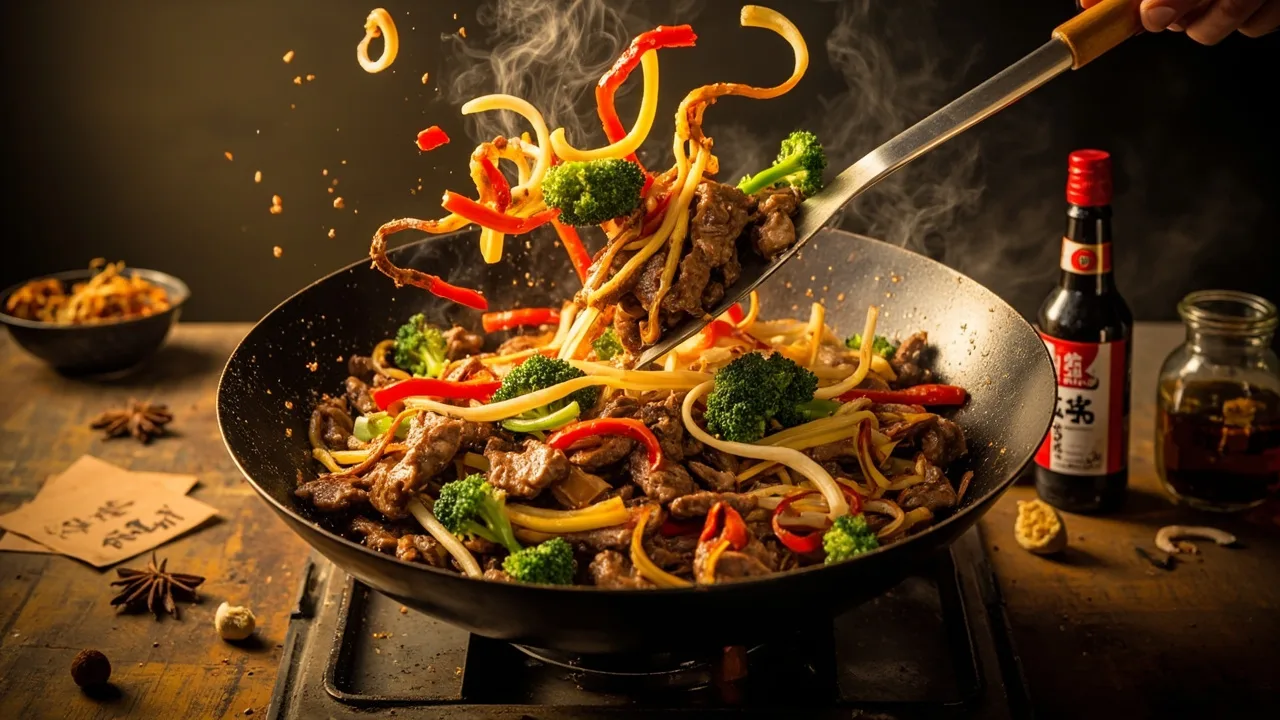
We’ve all been there: you dream of a vibrant, crisp, and flavorful stir-fry, but you end up with a soggy, grey, and watery pile of steamed vegetables and tough meat. This is the most common failure in home cooking. The truth is, most people aren’t stir-frying at all; they are “steam-boiling.” This guide on how to stir fry will teach you the fundamental techniques that restaurant chefs use. In fact, based on our analysis, the secret isn’t a magic ingredient. It’s a method of high-heat cooking that requires preparation, the right tools, and an understanding of fire. Once you master it, you’ll never have a soggy stir-fry again.
This technique is the heart of mastering authentic Chinese food. Consequently, this guide will not just give you a recipe, but will provide the 7 core secrets to the entire stir-frying process. First, we must understand what stir-frying truly is.
What is Stir Frying? The Secret of ‘Wok Hei’
Learning how to stir fry begins with understanding its purpose. Stir-frying is a cooking technique that uses intense, high heat and constant, rapid motion to cook food in a small amount of oil. The goal is to sear the food, creating flavor through caramelization and the Maillard reaction, while maintaining its crisp texture and vibrant color. In contrast, boiling or steaming relies on moist heat, which results in a soft texture.
The pinnacle of stir-frying is achieving ‘wok hei’ (鑊氣), which translates to “the breath of the wok.” This is that elusive, smoky, and slightly charred flavor you only find in great restaurant dishes. As culinary scientists at Serious Eats have demonstrated, this flavor is created when microscopic droplets of oil and water are tossed into the air above the wok, where they combust in the flame, and the resulting smoky compounds fall back onto the food. You can’t get this flavor by boiling. Therefore, every secret that follows is designed to maximize this high-heat, searing environment.
The 7 Secrets for How to Stir Fry Perfectly
Mastering this method is a process. We have broken it down into seven non-negotiable secrets. If you skip any of these, you risk failure. This is the definitive stir frying 101.
Secret 1: The Right Pan (A Carbon Steel Wok)
This is the most important tool. A common mistake is using a modern, non-stick skillet. Unfortunately, these pans are a terrible choice for two reasons. First, they cannot handle the scorching high heat required for a proper stir-fry (the non-stick coating will break down). Second, their flat bottoms and straight sides are inefficient.
A carbon steel wok, on the other hand, is the perfect tool.
- Heat Conduction: It gets blazing hot and responds to temperature changes instantly.
- Shape: The concave shape creates a small, high-heat “well” at the bottom for searing, while the sloped sides provide cooler zones for food to rest and cook through.
- Motion: The shape is designed for the “tossing” motion, which is key to how to stir fry.
Before you start, you must properly season your wok to create a natural non-stick patina. This is a foundational skill in itself.
Secret 2: Intense High Heat & The Right Oil
Your stove must be on its absolute highest setting. The wok should be smoking hot *before* you add any oil. Next, you must use an oil with a very high smoke point. A common mistake is using a flavorful, low-smoke-point oil like extra virgin olive oil or butter; these will burn and turn bitter instantly.
The best practice is to use neutral oils like:
- Peanut Oil (traditional, high smoke point)
- Grapeseed Oil
- Canola Oil
- Soybean or Vegetable Oil
Furthermore, flavorful oils like sesame oil or homemade chili oil are finishing oils. You should add these *off-heat* at the very end for aroma, not for cooking.
Secret 3: ‘Mise en Place’ (Preparation is Everything)
This French term means “everything in its place,” and it is the golden rule of stir-frying. A stir-fry cooks in 90-120 seconds. You have zero time to chop garlic or measure soy sauce once you start. If you try, your food will burn.
Before you turn on the heat, you must:
- Chop all your vegetables into uniform, bite-sized pieces. (This ensures even cooking).
- Mince all your aromatics (garlic, ginger, chilies).
- Marinate and/or “velvet” your protein (see Secret 4).
- Pre-mix your sauce in a single bowl. This is critical.
Having a perfectly balanced, pre-mixed sauce is the key to a fast, successful finish. You cannot be fumbling with three different bottles while your garlic is burning. This is where the only stir-fry sauce recipe you will ever need becomes your greatest asset.
Secret 4: ‘Velveting’ Your Protein
Ever wonder why the chicken in restaurant stir-fries is so incredibly tender and moist? The answer is a technique called “velveting.” Home cooks often skip this, which is a huge mistake. Consequently, their meat (like chicken, pork, or beef) seizes up from the high heat and becomes tough and chewy.
How to velvet chicken (a simple method):
- Slice your chicken thin, against the grain.
- In a bowl, mix 1 lb of chicken with: 1 tablespoon cornstarch, 1 tablespoon soy sauce, and 1 tablespoon oil (or 1 egg white).
- Let this marinate for at least 15-30 minutes.
This thin, starchy coating creates a “velvet” barrier. As a result, it protects the meat from the wok’s intense heat, locking in moisture and ensuring a silky, tender texture every time. This is a vital part of learning how to stir fry chicken.
Secret 5: Do Not Overcrowd the Pan (Cook in Batches)
This is the #1 mistake that leads to a “soggy steam-boil.” When you dump a pound of cold chicken and vegetables into a hot wok, the pan’s temperature plummets instantly. The food’s moisture is released, but the pan isn’t hot enough to vaporize it. Therefore, your food begins to boil and steam in its own juices. The result is grey, soggy, and sad.
[Image showing cooking in batches vs. an overcrowded pan]The best practice is to cook in small batches:
- Heat the wok, add oil.
- Cook your velveted chicken until 80% done. Remove it from the wok onto a clean plate.
- Wipe the wok, add new oil, and get it smoking hot again.
- Cook your “hard” vegetables (like broccoli and carrots). Remove them from the wok.
- Re-heat, add oil, and cook your “soft” vegetables (like mushrooms or bell peppers).
- Finally, add everything back to the wok for the final 30 seconds to combine with the sauce.
Yes, this creates more dishes. However, it is the only way to ensure every single ingredient is perfectly seared and crisp.
Secret 6: The Order of Operations for Stir Frying
A successful stir-fry is a choreographed dance. The order matters immensely. While batches are key, the general flow for how to stir fry vegetables and meat together is:
- Heat Wok: Get it smoking hot.
- Oil In: Swirl in your high-smoke-point oil.
- Aromatics: Add ginger, garlic, and chilies. Cook for 10-15 seconds until fragrant. (Do not burn!)
- Protein: Add your velveted meat. Sear and cook until 80% done. Remove.
- Hard Veggies: Add broccoli, carrots, etc. Stir-fry for 1-2 minutes (a splash of water can help steam-fry them). Remove.
- Soft Veggies: Add bell peppers, mushrooms, bok choy stems. Cook for 1 minute.
- Combine: Return the protein and hard veggies to the wok. Toss to combine.
- Sauce: Add your pre-mixed sauce. It will bubble and thicken almost instantly (due to the cornstarch).
- Finish: Add soft greens (bok choy leaves), scallions, and a drizzle of sesame oil. Toss for 15 seconds and serve immediately.
Secret 7: The Sauce (Add it Last and Use Cornstarch)
A good stir-fry sauce needs balance. This is where mastering stocks and sauces is a key skill. Your sauce should be pre-mixed and almost always contain a thickener, usually cornstarch (mixed with cold water to make a “slurry”).
Why? First, a common mistake is adding sauce too early. Most sauces contain sugar (from hoisin, soy sauce, etc.), which will burn and turn bitter over high heat. Therefore, you must add the sauce in the final 30 seconds. Second, the cornstarch is the secret to that glossy, velvety, restaurant-style sauce that clings to every piece of food, rather than a watery liquid pooling at the bottom of your plate.
Common Mistakes in How to Stir Fry (A Quick Review)
Let’s recap the failures so you can avoid them. This technique is fast, but unforgiving. It’s a world away from the slow-and-low methods of mastering European classics.
- You used a non-stick pan: Your pan was not hot enough.
- You didn’t ‘Mise en Place’: Your garlic burned while you looked for the soy sauce.
- You overcrowded the pan: You boiled your food instead of frying it.
- You used wet vegetables: You washed your broccoli and threw it in wet. The water instantly killed the heat. (Best practice: Dry all vegetables thoroughly!)
- You added sauce too early: Your sugar burned and the sauce became bitter.
- You didn’t cook in batches: The hard carrots were raw, and the soft snow peas were mush.
Expert Takeaways: How to Stir Fry Like a Pro
- Use a Carbon Steel Wok: Get it smoking hot *before* you add a high-smoke-point oil.
- Mise en Place is Law: Cut everything and pre-mix your sauce in one bowl before you start.
- Never Overcrowd: Cook in small, separate batches (protein, hard veggies, soft veggies) to maintain high heat.
- Velvet Your Protein: A cornstarch marinade is the secret to tender, silky meat.
- Add Your Sauce Last: Add your pre-mixed (and cornstarch-thickened) sauce in the final 30 seconds.
Frequently Asked Questions About How to Stir Fry
1. What is the best oil for stir-frying?
The best oil has a high smoke point (above 400°F / 205°C) and a neutral flavor. The best practice is to use peanut oil (traditional), grapeseed oil, canola oil, or avocado oil. Do not use low-smoke-point oils like extra virgin olive oil or butter, as they will burn.
2. Why is my stir-fry always soggy and watery?
This is the most common mistake and is almost always caused by overcrowding the pan. When you add too much food, the wok’s temperature plummets. The food then releases its moisture and begins to boil in its own juices. To fix this, cook in small, separate batches on the highest possible heat.
3. Can I stir-fry without a wok?
You can, but it is more difficult. The best alternative is a large, heavy-bottomed stainless steel skillet or a cast-iron pan. These can handle the high heat. Do not use a non-stick pan. Because these pans are flat, you must be even more careful not to overcrowd them. Work in even smaller batches.
4. What is ‘velveting’ meat and is it necessary?
Velveting is the technique of marinating sliced meat (chicken, pork, beef) in a mixture containing cornstarch and liquid (like soy sauce, egg white, or water) before cooking. Yes, it is necessary for that tender, silky, restaurant-quality texture. It creates a protective layer that locks in moisture during the high-heat cooking.
5. When do I add the sauce in a stir-fry?
Always add the sauce last. Add your pre-mixed sauce in the final 30-60 seconds of cooking. Most sauces contain sugar, which will burn if added too early, and a cornstarch slurry, which is designed to thicken instantly over high heat just before serving.
![9 Essential Chinese Pantry Staples to Boost Your Menu Profits [Insider Tips]](https://lezata.com/wp-content/uploads/2025/10/3c67ea0a-9945-437f-bbae-a6328259b7e9_019a2daa-6358-71bf-8a40-2290876b8ccf_files_essential_chinese_pantry_staples-768x432.webp "9 Essential Chinese Pantry Staples to Boost Your Menu Profits [Insider Tips] 3")

![7 Best Shaoxing Wine Substitute Options for Authentic Flavor [Chef Approved]](https://lezata.com/wp-content/uploads/2025/10/1000115228-768x432.webp "7 Best Shaoxing Wine Substitute Options for Authentic Flavor [Chef Approved] 7")