5 Secrets on How to Use Chili Oil on Pasta for Glossy, Non-Greasy Noodles
Last Updated on 2025-12-26 by Suryo
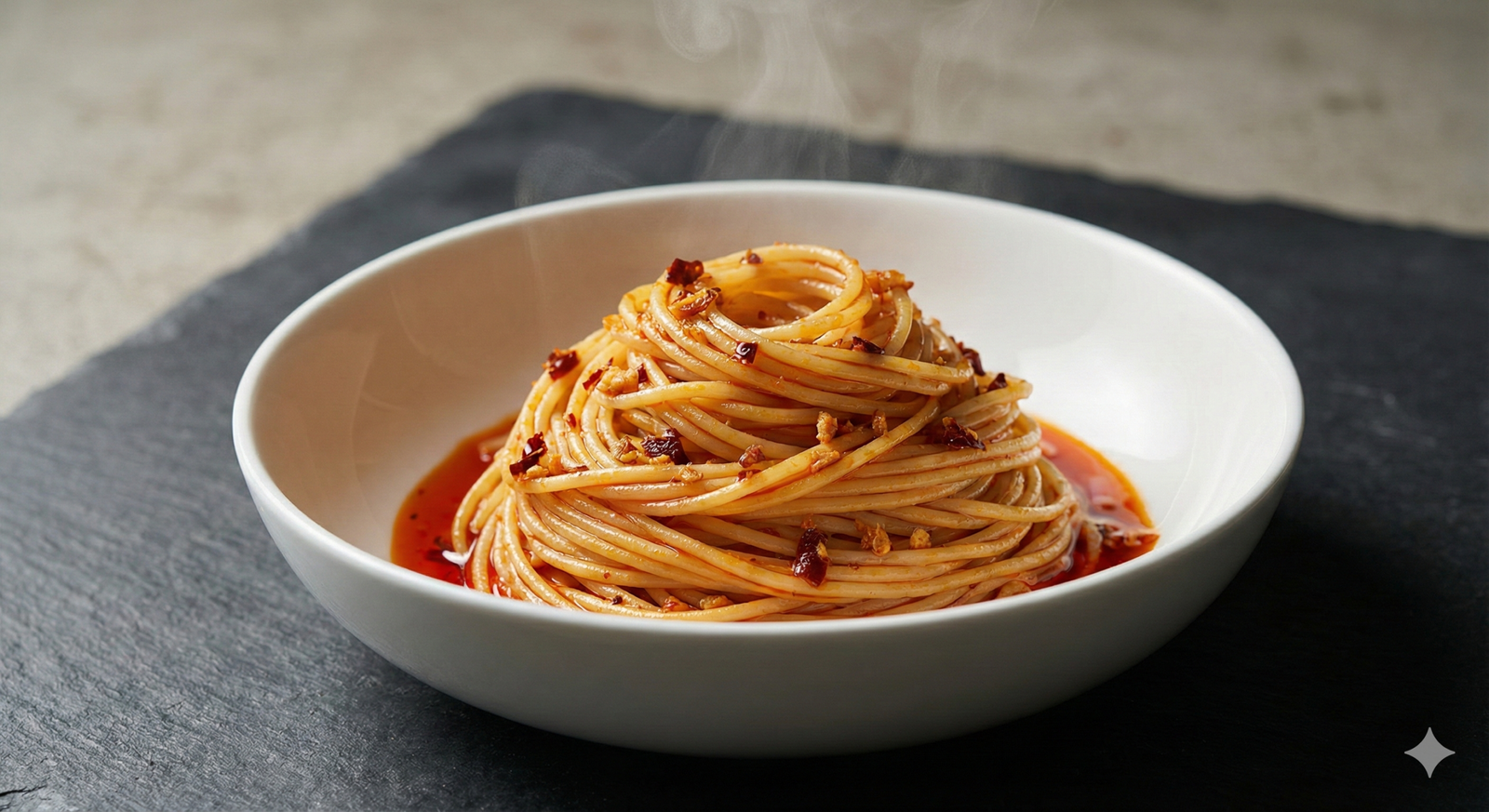
How to use chili oil on pasta correctly relies entirely on one scientific principle: emulsion. Simply pouring oil over cooked noodles results in a greasy, separated mess because oil and water do not naturally mix. To achieve that silky, restaurant-quality glaze, you must utilize the starchy pasta water to bind the chili oil to the noodle, creating a cohesive sauce that clings rather than slides.
Have you ever wondered why the spicy noodles at your favorite fusion spot look glossy and coat your mouth perfectly, while your attempt at home just feels like eating spaghetti swimming in a pool of red grease? It’s frustrating, isn’t it? You buy the premium artisanal chili crisp, you boil the pasta perfectly, but the result is lackluster. The flavor doesn’t stick, and you’re left with a bowl of bland noodles and a puddle of spicy oil at the bottom. The problem isn’t your ingredients; it’s your technique. In my 15 years of developing recipes and consulting for small bistro owners, I’ve seen this happen more than any other mistake in the kitchen. We treat chili oil like a condiment (like ketchup) when we should be treating it like a sauce base that requires mechanical binding.
The Fusion Mistake Most Home Cooks Make
The biggest misconception I see in the field is treating Italian pasta and Asian noodles as identical disciplines. While they share DNA, the way we sauce them differs. In traditional Italian cooking, we are taught that “the sauce waits for the pasta.” In the modern fusion kitchen, specifically when figuring out how to use chili oil on pasta, timing and starch are your only friends.
Most beginners drain their pasta completely, let it sit in the colander (where it dries out), and then pour cold chili oil on top. This is fatal. Once the pasta surface dries, it forms a barrier that oil slides right off of.
⚠️ Important! Never rinse your pasta with cold water if you plan to use chili oil. Rinsing washes away the surface starch, which is the “glue” we need to force the oil and water to become one creamy sauce.
In a professional setting, we rely on starch to create stability. According to general culinary nutrition standards, pasta water is rich in released starches which act as a thickening agent. Without this “liquid gold,” you aren’t making a sauce; you are just lubricating noodles. I’ve consulted for cafes that tried to pre-boil pasta to save time, only to serve greasy dishes because they lost that crucial starch water connection.
Choosing Your Weapon Chili Crisp vs Chili Oil
Before we get to the cooking, we have to talk about your hardware. Not all chili oils are created equal, and knowing how to use chili oil on pasta starts with pairing the right oil to the right noodle shape.
In my experience, there are two distinct categories, and using the wrong one for your pasta shape is a recipe for disappointment:
- The Texture Agent (Chili Crisp/Crunch): This is your Lao Gan Ma or Momofuku style. It is heavy on solids (garlic, soybeans, chili flakes).
- The Flavor Agent (Infused Oil): This is a strained oil, like a Calabrian chili oil or a homemade Szechuan oil with the flakes filtered out.
Here is a breakdown of how I recommend pairing them for the best mouthfeel:
| Oil Type | Characteristics | Recommended Pasta Shape | Why? |
| Chili Crisp | Chunky, heavy sediments, intense crunch. | Shells, Orecchiette, or Rigatoni | You need a shape with a “cup” or ridges to catch and hold the heavy chunks of garlic and chili so they don’t fall to the bottom of the bowl. |
| Infused Oil | Smooth, liquid, high viscosity. | Spaghetti, Angel Hair, or Linguine | Long strands rely on surface tension. A smooth emulsion coats these shapes perfectly without needing pockets to hide ingredients. |
I once helped a client revamp their menu who was serving a chunky chili crisp on smooth spaghetti. Customers complained it was “too oily” because all the delicious crunchy bits fell to the plate, leaving only the oil on the fork. We switched them to Orecchiette (little ears), and suddenly every bite was balanced.
The 3-Step Emulsion Technique
Now, let’s get into the technical execution. This is the exact workflow I teach my students when they ask how to use chili oil on pasta to get that glossy magazine look.
1. The Al Dente Subtraction
The first rule is to never cook your pasta to the package instructions. If the box says “boil for 10 minutes,” you boil for 9. Why? Because you are going to finish cooking the pasta inside the sauce.
If you cook it to 100% doneness in the water, by the time you toss it with the oil, it will turn mushy. You need that structural integrity to withstand the vigorous mixing we are about to do.
2. The “Liquid Gold” Reserve
Before you even think about draining that pot, take a mug and scoop out at least one cup of the cloudy, starchy boiling water. This is the most valuable ingredient in the entire dish.
Field Note: I often see home cooks pour this down the drain. If you do that, you’ve lost the battle. That water contains the starch granules that have exploded during boiling. When mixed with fat (your chili oil), it forms an emulsion—a creamy mixture where fat droplets are suspended in water. This is how to use chili oil on pasta to make it taste creamy without adding a single drop of dairy.
3. The Violent Toss
This is where the magic happens, and it requires some physical effort.
- Place your drained pasta back into the empty hot pot (off the heat).
- Add your chili oil immediately while the pasta is steaming.
- Add a splash (about 1/4 cup) of your reserved pasta water.
- Agitate aggressively. Use tongs to whip the pasta around the pot. You want to hear a “slapping” sound.
The friction between the noodles, the heat, and the starch water will physically shatter the oil droplets, forcing them to bond with the water. Within 30 seconds of tossing, you will see the sauce transform from a separated red puddle into a glossy, opaque orange glaze that clings to every strand.
The Umami Bomb Rule: Bridging Italian and Asian Flavors
One question I hear constantly in my workshops is: “Can I really put Soy Sauce and Parmesan cheese together?” The answer is a resounding yes. In fact, understanding this chemical connection is the key to mastering how to use chili oil on pasta effectively.
When we look at the science of taste, both soy sauce (Asian staple) and aged Parmesan (Italian staple) are packed with natural glutamates. They trigger the same “savory” receptors in our brains. In the culinary world, we call this the “Umami Bomb.” When I develop menus for fusion cafes, I always advise them to layer these ingredients. It’s not about clashing cultures; it’s about amplifying the base flavor.
However, you have to be careful with salt levels. Since chili crisp often contains MSG or salt, and pasta water is salted, adding soy sauce can quickly ruin a dish.
⚠️ Important! If you plan to add soy sauce or oyster sauce to your chili pasta, under-salt your pasta water by about 50%. It is much easier to add salt at the end than to try and fix a salt-lick later.
3 Variations to Try Tonight
Once you have mastered the emulsion technique, the base recipe becomes a canvas. Based on the current market trends I observe, these are the three most profitable and delicious variations of how to use chili oil on pasta.
1. The “Creamy” Hack (The Dan Dan Hybrid)
This is perfect for those who find straight oil too heavy. Whisk 1 tablespoon of tahini (sesame paste) or smooth peanut butter into your chili oil before tossing it with the pasta. The nut butter acts as a stabilizer, making the emulsion almost foolproof. It gives you that rich, velvety mouthfeel of a Carbonara but with the spicy kick of Szechuan noodles.
2. The Garlic Overload (Aglio e Olio Style)
If you love the Italian classic, you can combine methods. Sauté fresh sliced garlic in olive oil until golden, then kill the heat and stir in your chili crisp. This adds a layer of sweet, cooked garlic flavor that raw chili oil often lacks. I’ve found this version appeals most to customers who are hesitant about “fusion” food because it feels familiar.
3. The Protein Packer
Don’t eat empty carbs. For a balanced meal, I recommend adding minced pork or shrimp. If using minced pork, fry it separately until crispy and mix it in at the very end. The texture contrast between the soft noodles and crispy meat is incredible.
Is Chili Oil Pasta Spicy? Adjusting the Heat
Many shop owners are afraid to put this on the menu because they fear it will be too spicy for the general public. Learning how to use chili oil on pasta also means knowing how to tame it.
The heat in chili oil is soluble in fat. If you find your dish is too aggressive, do not add water—that will just dilute the flavor. Instead, mount the sauce with cold butter or a squeeze of lemon juice at the end.
- Butter: Coats the tongue and protects taste buds from the capsaicin burn.
- Acid (Lemon/Lime): Cuts through the oiliness and brightens the flavor profile, making the spice feel “cleaner” rather than heavy.
If you are running a food business, consistency is everything. You cannot have one plate be mild and the next unbearable. According to general industry observation (and even reflected in broad economic consumption patterns seen on sites like BPS), consumers return for consistency, not just novelty. Measure your chili oil ratio precisely every time.
Storage and Reheating (Avoid the “Oil Slick”)
We have all been there: leftovers the next day look like a solid block of noodles in a pool of red oil. This happens because the starch emulsion breaks down as it cools.
Do not just throw it in the microwave.
- Add one tablespoon of water to the cold pasta.
- Cover it loosely.
- Microwave for 60 seconds.
- Stir vigorously immediately.
The added water and steam help re-emulsify the sauce, bringing it back to life.
Elevate Your Pantry Staples Today
Mastering how to use chili oil on pasta is not just about following a recipe; it is about understanding the physics of cooking. It transforms a humble bag of flour noodles and a jar of oil into a gourmet experience that feels intentional and luxurious.
Stop settling for greasy, separated noodles. Use the starch water, choose the right pasta shape, and embrace the fusion of flavors. Your dinner guests (or your customers) will thank you for the upgrade. Go into your kitchen, boil some water, and try the violent toss method tonight—you will see exactly what I mean.
Frequently Asked Questions (FAQ)
1. Can I use olive oil to make chili oil pasta? Technically yes, but I don’t recommend using only olive oil for the chili base itself as it has a low smoke point and a distinct flavor that can clash with Asian spices. However, using a neutral oil (like canola) for the chili infusion and finishing the dish with a drizzle of high-quality extra virgin olive oil works beautifully to bridge the two cuisines.
2. Why is my chili oil pasta dry even though I added oil? This is a classic sign that your pasta was too dry before mixing. You likely drained it too thoroughly or let it sit too long. To fix it, add a splash of hot water (not oil!) and toss it vigorously over low heat. The water will loosen up the starch and make it saucy again.
3. What is the best store-bought chili oil for beginners? If you are just learning how to use chili oil on pasta, start with Lao Gan Ma Spicy Chili Crisp. It has a moderate heat level, excellent texture (crispy soybeans and onions), and a savory flavor profile that isn’t just “hot.” It is the industry standard for a reason and pairs exceptionally well with Rigatoni or broad noodles.