The Perfect Internal Temp for Chicken Breast, Please Stop Overcooking It!
The Fine Line Between Juicy and Chalky
You know the feeling. You cut into a chicken breast, and instead of glistening juice, you are met with a texture that looks like white denim. It shreds dryly, sticks to your teeth, and requires a gallon of water to swallow. This culinary crime usually happens for one reason: fear. We are terrified of undercooked chicken, so we blast it with heat until it is effectively mummified. Finding the correct internal temp for chicken breast is not just a safety requirement; it is the single most important factor in whether your dinner is delicious or destined for the dog bowl.
I have spent years in professional kitchens watching line cooks obsess over thermometers. Why? Because a difference of five degrees is the difference between a succulent meal and a disaster. Whether you are searing meat for my Easy Sweet and Sour Chicken Recipe or just grilling a simple paillard, you need to stop guessing. Throw away the “cut and peek” method. We are going to rely on precision, not luck.
The 165°F Myth: Why You Should Pull It Earlier
If you look at the back of a package of raw chicken, it will scream one number at you: 165°F (74°C). The USDA recommends this as the instant-kill temperature for Salmonella. While this is technically safe, cooking a lean chicken breast all the way to 165°F in the pan guarantees that it will be overcooked by the time it hits your plate.
Here is the physics lesson they didn’t teach you in Home Ec: Carryover Cooking.
When you take meat off a heat source, it doesn’t stop cooking immediately. The residual heat trapped in the outer layers continues to travel toward the center. For a standard 8-ounce chicken breast, the temperature can rise by 5°F to 10°F after you remove it from the heat. If you pull your chicken at 165°F, it will rest up to 175°F. At 175°F, the moisture in the muscle fibers evaporates rapidly, leaving you with that dreaded “chalky” texture.
The Chef’s Target: Pull the chicken from the heat when it hits 160°F (71°C). Allow it to rest for 5 to 10 minutes. During this rest, it will gently glide up to that USDA-approved safety zone of 165°F without drying out.
Pasteurization: Time vs. Temperature
Most home cooks view safety as a single moment: “It hit the number, so it’s dead.” However, killing bacteria is actually a function of temperature and time. This is the science of pasteurization.
According to food safety data and the history of chicken as food regulation, bacteria die instantly at 165°F. But they also die at 150°F—it just takes longer. If you hold a chicken breast at 150°F for about 3 minutes, it achieves the exact same bacterial reduction as hitting 165°F instantly. This is why sous-vide chicken cooked to lower temperatures is safe. For pan-searing or roasting, aiming for a pull temp of 160°F ensures you hit that safety window during the rest period while preserving the moisture.
Mastering the Probe: Placement Matters
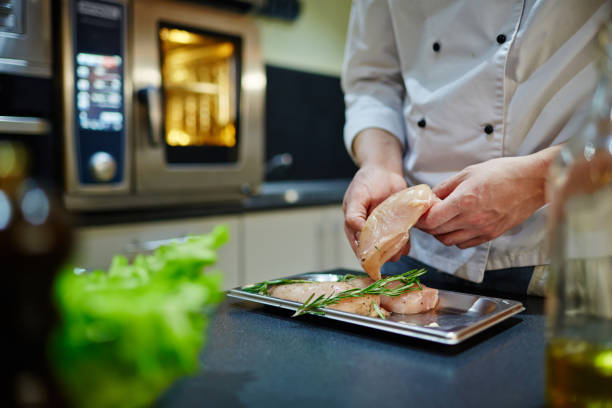
You have the right tool, and you know the target number. Now you need to know where to stick it. I see people stabbing chicken randomly like they are in a horror movie. Precision is key here.
Insert the probe into the thickest part of the breast. This is usually the center of the “bulb” end. If you measure the thin tapered end, it will read 180°F while the thick center is still raw. Furthermore, ensure the tip of the probe is in the dead center of the meat, not touching the pan or any bone (if using bone-in cuts). The bone conducts heat differently and will give you a false high reading.
Push the thermometer through the thickest part until you feel it hit the cutting board (or pan), then pull it back up slowly. Watch the numbers drop. The lowest number you see is the true internal temperature of the core.
Texture Guide: What Each Degree Feels Like
Understanding the numbers is one thing, but knowing the mouthfeel is another. Here is what you can expect at different temperature ranges:
150°F – 155°F (The Danger Zone for some, Heaven for others)
At this range, the meat is incredibly soft, almost velvety. It holds onto all its juices. However, the texture can feel slightly “slick” or undercooked to those used to commercial chain-restaurant chicken. If you pull here, you must rest it for a significant time to ensure safety.
157°F – 162°F (The Sweet Spot)
This is where I live. The meat changes from pink to opaque white. The texture is firm but yields easily to the tooth. It is juicy, tender, and safe. This is the ideal range for slicing into salads or serving with a light garnish.
165°F – 170°F (The Standard Dry)
Once you cross 165°F during the cooking process (before resting), the muscle fibers begin to contract tightly. You squeeze out the intracellular water. The meat becomes stringy. This is “safe” but rarely enjoyable without a heavy sauce.
170°F+ (The Sawdust)
At this point, you are eating protein fibers and little else. If your thermometer reads this high, do not serve the chicken plain. You need to pivot. Shred the meat and toss it into a high-fat liquid, like my Rich Chinese Chicken Broth Recipe, to reintroduce moisture artificially.
White Meat vs. Dark Meat: Different Rules Apply
While we are focusing on the internal temp for chicken breast, it is vital to know that thighs and drumsticks play by different rules. White meat (breast) is low in collagen and connective tissue. It relies on water for juiciness, which is why we treat it gently.
Dark meat (thighs/legs) is loaded with connective tissue and fat. If you cook a thigh to 160°F, it will be safe, but it will taste rubbery and tough. Dark meat needs to be cooked to 175°F or even 180°F. The higher heat breaks down the collagen, turning it into gelatin, which makes the meat succulent. Never apply breast temperature rules to thigh meat, or you will be chewing on rubber bands.
The Crucial Step: Resting the Meat
I cannot overstate this: Do not cut the chicken immediately.
Imagine the juices inside the chicken are like people in a crowded room. When the heat is high, they all run to the center of the room (the coolest part) to escape. If you cut the chicken the second it comes out of the pan, all those juices flood out onto your cutting board because they haven’t had time to redistribute. You are left with a dry bird and a wet board.
Wait 5 to 10 minutes. As the meat relaxes, the juices move back to the edges. While you wait, use that time to deglaze your pan. A quick reduction makes all the difference—check out my guide on The Easiest Pan Sauce Recipe to turn those brown bits into liquid gold while your bird rests.
Troubleshooting: “I Overshot the Temperature”
It happens. You got distracted, the phone rang, and now your thermometer reads 175°F. Don’t panic, and don’t throw it out.
Slice the meat as thinly as possible. The thinner the slice, the less work your mouth has to do to break down the tough fibers. Dress it immediately with olive oil or lemon juice. The fat will coat the dry fibers and trick your palate. If it is truly disastrous, dice it up and use it for chicken salad with plenty of mayonnaise.
Conclusion: Confidence in the Kitchen
Cooking is not about blind faith; it is about verifiable results. Once you start respecting the internal temp for chicken breast and accounting for carryover cooking, you will stop fearing the frying pan. You will serve chicken that is safe, yes, but more importantly, chicken that people actually want to eat.
Go buy that digital thermometer. It is cheaper than a wasted dinner. Tell me in the comments: have you been a “cut and peek” cook, or are you already on the thermometer team?
Frequently Asked Questions
Is it safe to eat chicken breast at 160°F?
Yes, provided you let it rest. If you pull chicken at 160°F and let it rest for 5 minutes, the carryover heat will raise the internal temperature to 165°F, or the time spent at 160°F will be sufficient to pasteurize the meat and kill harmful bacteria.
Why does my chicken look pink even when it is 165°F?
Color is not a reliable indicator of doneness. Chemical reactions with myoglobin, the age of the chicken, or nitrates in your seasoning/vegetables can keep meat pink even when fully cooked. Trust your thermometer, not your eyes.
How do I check temperature without a thermometer?
While a thermometer is best, you can use the “cake tester” method. Insert a thin metal skewer into the thickest part of the meat for 5 seconds. Touch it to your bottom lip. If it feels warm/hot, it is likely done. If it feels cool or barely lukewarm, it needs more time. However, this requires experience to judge accurately.
Should I check every piece of chicken in the pan?
Yes. Chicken breasts vary in size and thickness. The smaller pieces will finish cooking minutes before the larger ones. Check the smallest one first and remove pieces individually as they hit the target temperature.
Does bone-in chicken require a higher temperature?
The safety temperature remains the same (165°F), but bone-in chicken takes longer to cook because the bone insulates the meat. Be careful when measuring; if your probe touches the bone, it will read hotter than the actual meat. Measure the meat right next to the bone for accuracy.