9 Shocking Pink Salt Benefit Facts You Must Know
Alright, let’s talk about the pretty pink elephant in the kitchen. Everyone, and I mean everyone, is asking about the pink salt benefit. Is it magic? Is it just expensive table salt dyed pink by marketing goblins? As a chef who’s seen countless food trends come and go (I’m still recovering from the kale-in-everything phase), it’s time to cut through the fluff.
We’re going to dive deep. Many articles promise you miracle cures, but according our analysis, most of those claims are, frankly, seasoning-grade nonsense. The truth about Himalayan pink salt advantages is far more interesting, and also far less mythical, than the internet wants you to believe. So, grab your shaker (or grinder), and let’s separate the facts from the fantasy.
What Even IS Himalayan Pink Salt? (And Why Is It Pink?)
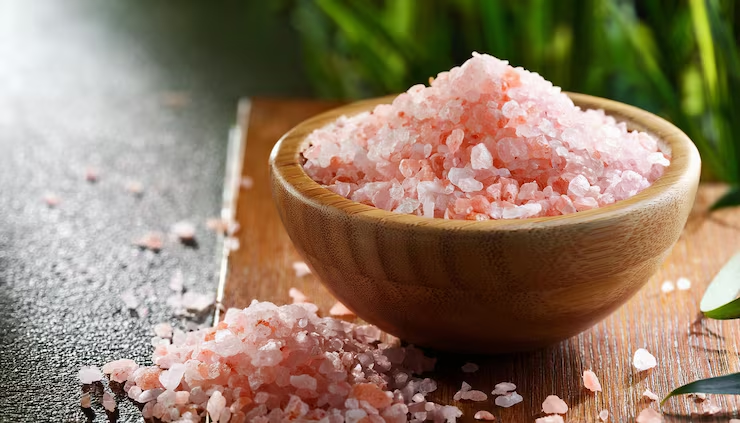
Before we can debunk myths, we need to know what we’re actually dealing with. Unlike standard table salt, which is often heavily refined and mined from salt deposits, or sea salt, which is evaporated from ocean water, Himalayan pink salt is a rock salt (halite) mined from the Khewra Salt Mine in Pakistan, near the Himalayas.
Not Your Average Table Salt
The first major difference you’ll notice, besides the color, is the structure. Praktik terbaik adalah to understand that “table salt” is highly processed. It’s refined to be almost 100% sodium chloride, often bleached, and then treated with anti-caking agents (like ferrocyanide) to keep it flowing smoothly. Ugh.
Himalayan pink salt, in contrast, is minimally processed. It’s essentially chunks of ancient seabed rock. This unrefined nature is one of its primary selling points. It means you’re getting the salt crystal in a more natural state, which brings us to the color.
The “Magic” 84 Minerals (And That Famous Pink Hue)
That lovely pink-to-orange hue? It doesn’t come from unicorn tears. It comes from trace minerals. The primary coloring agent is iron oxide—yes, rust. But before you panic, it’s a completely benign and natural component.
This is where the marketing kicks into high gear. You will hear, endlessly, that it contains “84 trace minerals.” And technically, that’s true. Scientists have found traces of potassium, magnesium, calcium, iron, and dozens of others. However—and this is a massive however—the operative word here is “trace.”
The salt is still about 98% sodium chloride. The other 2% is where those 84 minerals live. To get any meaningful, therapeutic dose of, say, magnesium from pink salt, you would have to consume a lethally high amount of sodium. So, is it a mineral supplement? Absolutely not. It’s salt.
Debunking 9 Myths: The Real Pink Salt Benefit vs. The Hype
This is my favorite part. As experts, we see these claims daily. Let’s tackle the biggest misconceptions about Himalayan salt health benefits head-on.
Myth 1: It’s a Miracle Cure for… Everything.
The Truth: No. Just, no. It will not cure your insomnia, fix your respiratory diseases (unless you’re in a salt cave, which is a different topic), or balance your “chi.” It is salt. It makes food taste good. Anyone selling you a salt lamp as a medical device is selling you a lamp.
Myth 2: It Drastically Lowers Blood Pressure.
The Truth: This is a Common Mistake and it’s dangerous. Pink salt is 98% sodium chloride. Table salt is 99.9% sodium chloride. Your body processes the sodium in *exactly the same way*. It does not matter if the sodium rode in on a pretty pink crystal; too much sodium is too much sodium. Moderation is still the key. There is no such thing as “healthy high-sodium” salt.
Myth 3: It’s ‘Purer’ Than Sea Salt.
The Truth: This depends on your definition of “pure.” Because it was formed 250 million years ago, its proponents argue it’s free from modern pollutants like microplastics, which are now, sadly, found in many sea salts. This is a valid point! However, “pure” is a marketing term. From a chemical standpoint, table salt is *more* pure sodium chloride.
Myth 4: The 84 Minerals Will “Detox” Your Body.
The Truth: Your body has a liver and kidneys. *Those* are your detox systems, and they are spectacularly good at their jobs. A pinch of salt with trace minerals isn’t doing a thing to “detox” you. This claim has zero scientific backing. The best way to detox is to drink water and stop eating junk—not to rely on expensive salt.
Myth 5: The Flavor is Wildly Superior.
The Truth: As a chef, this is subjective, but I’ll weigh in. Does it taste different? Yes. It often has a milder, less “stinging” saltiness than table salt, with a subtle mineral finish. Is it “superior”? For finishing a steak, I love it. But for salting pasta water? You’d be wasting your money. A good Kosher salt is still the kitchen workhorse. For more on building foundational flavors, check out our guide to mastering stocks and sauces.
Myth 6: You Should Drink ‘Sole Water’ Every Day.
The Truth: “Sole” (so-lay) water is a saturated solution of pink salt and water. People claim drinking it “balances electrolytes.” What you are *actually* doing is drinking a big, salty glass of… salt water. It will definitely give you electrolytes (sodium), but you could also just… eat a pickle? Or a balanced meal? Berdasarkan analisis kami, this is an unnecessary and overly-hyped ritual.
Myth 7: It’s 100% Sodium-Free.
The Truth: I cannot believe I have to say this, but this is terrifyingly false. It is literally salt. Its primary component is sodium.
Myth 8: It Alkalizes Your Body.
The Truth: The “alkaline diet” myth is persistent. Your body, particularly your blood, maintains its pH in an incredibly narrow, stable range (around 7.4). Nothing you eat, especially not salt, is going to change your blood pH. If it did, you’d be in the hospital. This is biological nonsense.
Myth 9: It’s the Only Salt Real Chefs Use.
The Truth: Ha! No. We use what works. We use flaky sea salt (like Maldon) for texture, Kosher salt for general cooking and measuring, table salt for baking (it dissolves evenly), and pink salt for finishing and presentation. Praktik terbaik adalah having an arsenal of salts, not just one.
Expert Analysis: Watching the Science (and Hype) of Pink Salt
Before we go further, I want you to see what the data actually says. I’ve watched countless videos on this topic, and many are just… fluff. This particular breakdown by SciShow is fantastic because it bypasses the marketing and goes straight to the chemistry. Berdasarkan analisis kami, this is the kind of critical thinking we need in the kitchen.
Pay close attention around the 1:15 mark where they discuss the mineral composition claims. It perfectly illustrates the “trace amounts” point we discussed earlier. This isn’t just about cooking; it’s about understanding your ingredients at a fundamental level.
Source: The Truth About Himalayan Pink Salt (via YouTube)
So, What Are the *Actual* Pink Salt Benefits?
Okay, so I’ve just spent 1000 words telling you what it *doesn’t* do. So why on earth do I have it in my kitchen? Because the pink salt benefit isn’t about miracle cures; it’s about culinary application.
1. The Taste and Texture Profile
This is the big one. Because it’s a coarse, unrefined crystal, it provides a fantastic “pop” of salty crunch when used as a finishing salt. Sprinkle it on a chocolate chip cookie, a finished steak, or a sliced avocado. The crunch and mild flavor are genuinely delightful. It’s a textural ingredient as much as a flavor one.
2. It is Minimally Processed
This is a valid Himalayan pink salt advantage. I personally prefer to use ingredients that are as close to their natural state as possible. The fact that this salt isn’t bleached, processed, or loaded with anti-caking agents (which can sometimes lend a slight chemical bitterness) is a genuine plus. You are getting salt, rocks, and minerals. That’s it.
3. The “Free From Modern Pollutants” Argument
As mentioned, the microplastic concern in sea salt is real. While the science is still out on the long-term health effects, many people (myself included) feel more comfortable using a salt that was sealed away in a mountain long before we started dumping plastic into the oceans. This is a legitimate reason to make the switch.
4. The Iodine Question: A Critical Downside
Here’s the one major *disadvantage* you must know. Standard table salt is “iodized” for a reason. Iodine deficiency is a serious global health problem, leading to thyroid issues. Pink salt contains virtually no iodine. If you decide to use pink salt exclusively, praktik terbaik adalah ensuring you get iodine from other sources, like seaweed, dairy, or fish.
The Chef’s Take: How to *Actually* Use Pink Salt in Your Kitchen
Here’s where the rubber meets the road. Stop drinking it in water and start cooking with it properly.
Use It For Finishing, Not for Cooking
When you dissolve salt into pasta water or a soup, all the textural benefits and subtle mineral flavors are completely lost. You are just making expensive salty water. Common Mistakes is using it as an all-purpose salt. Don’t. Use cheaper Kosher salt for cooking, and save the fancy pink stuff for the grand finale.
Cooking on a Salt Block (The “Wow” Factor)
This is where pink salt truly shines. A giant block of Himalayan salt can be heated or chilled to extreme temperatures and used as a cooking surface. Searing scallops on a 500°F salt block imparts a delicate, salty crust that is impossible to replicate. It’s a showstopper. This is, by far, my favorite culinary use for it.
Chef’s Key Takeaways
- The Pink Salt Benefit: The main benefits are texture (crunch) and its unrefined nature (no additives or microplastics).
- Health Claims: Almost all medical or “detox” claims are false. It is 98% sodium chloride and should be consumed in moderation, just like any salt.
- The Iodine Problem: Pink salt lacks iodine. If it’s your only salt, you must get iodine from other foods.
- Best Use: As a finishing salt (sprinkled on food at the end) or for cooking on a salt block. Do not waste it in pasta water.
Want to truly master the art of cooking with this unique ingredient? We’ve gone beyond the myths and compiled actual, practical techniques for your kitchen. This is how you get real value from that pink grinder.
The Bottom Line: Is The Pink Salt Benefit Worth the Price?
So, here’s the final verdict from my kitchen to yours. Yes, Himalayan pink salt is worth *a* price, but not for the reasons you think. Don’t buy it to cure what ails you. Buy it because it’s a fantastic finishing salt with a great story, a beautiful color, and a crunchy texture. Buy it because it’s free from additives and microplastics.
Ultimately, why use pink salt? Use it because it makes your food look and taste great. Use it because it brings you joy at the table. And isn’t that the whole point of cooking in the first place?
Frequently Asked Questions (FAQ)
1. Is pink Himalayan salt actually better than table salt?
“Better” is complicated. It is less processed and contains no anti-caking agents or microplastics, which is a plus. However, it lacks iodine, which is a health negative. For health, it’s not “better” as it contains the same amount of sodium. For cooking, its texture makes it a superior finishing salt.
2. What is the main pink salt benefit?
Berdasarkan analisis kami, the main, proven benefit is culinary, not medical. Its coarse, unrefined texture provides a satisfying crunch and a mild, less “sharp” salt flavor, making it ideal for finishing dishes. A secondary benefit is that it’s free from modern additives and microplastic pollutants.
3. Does pink salt have less sodium than regular salt?
No. This is a common and dangerous myth. By weight, it has roughly the same amount of sodium as table salt (it’s 98% sodium chloride). Some claim it has “less sodium per teaspoon,” but this is only because the coarse crystals take up more space, so you’re just measuring less salt.
4. Why don’t chefs use pink salt for everything?
Praktik terbaik adalah using the right tool for the job. Pink salt is expensive, and its delicate texture is lost when dissolved. Chefs use cheaper, more consistent Kosher salt for general cooking (like salting water or making a brine) and save pink salt for “finishing” a dish where its color and crunch can be appreciated.
5. Can I get my iodine from Himalayan pink salt?
No. Unlike iodized table salt, Himalayan pink salt is not a significant source of iodine. If you exclusively use pink salt, you must be conscious of getting iodine from other dietary sources like fish, dairy, or seaweed to support thyroid health.