5 Reasons Your Slow Cooker Beef Rendang With Paste Sucks
Last Updated on 2025-11-10 by Suryo
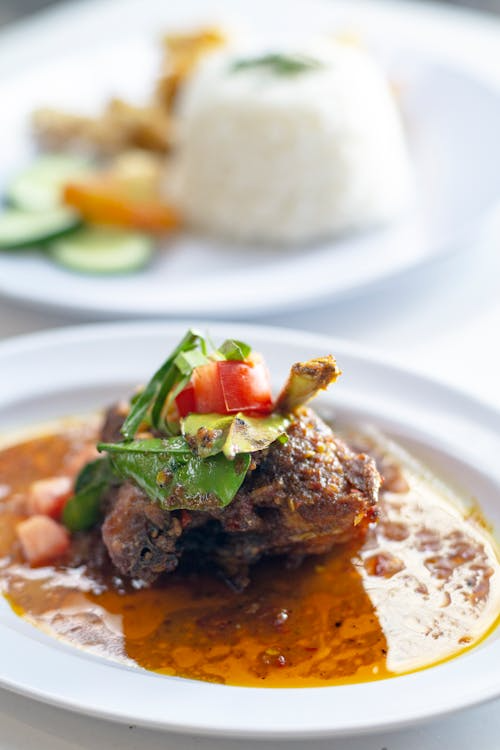
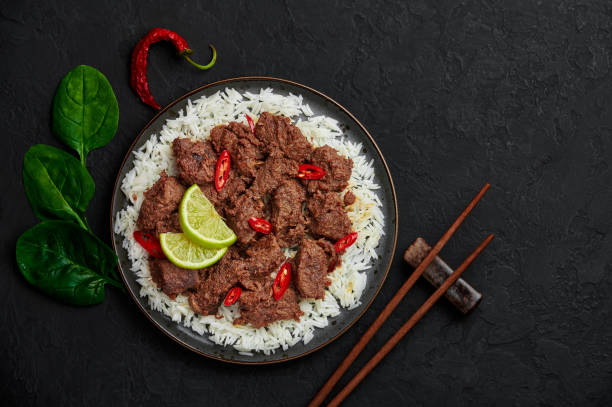
Let’s be brutally honest for a second. Your last attempt at beef rendang was… disappointing, wasn’t it? Perhaps it was watery. Maybe the beef was tough. Or worse, it just tasted like a generic, sad brown stew. You’ve heard the whispers, seen the Instagram posts, and now you’re trying to find a shortcut. And that led you here, to the magic phrase: slow cooker beef rendang with paste.
As a chef with over 30 years of hauling heavy pots and sniffing out lazy shortcuts, I’m here to tell you two things. First, using a slow cooker and a store-bought paste is not cheating. It’s smart. It’s efficient. Second, despite this “easy” method, you’re probably still doing it wrong. Very wrong.
The problem isn’t the paste, and it’s not the slow cooker. The problem is you. (Just kidding… mostly). The problem is technique. You’re treating a complex, multi-stage caramelization process like a “dump and go” casserole. And that, my friend, is why your rendang sucks.
But today, that changes. We’re going to fix it. We will deconstruct the common failures and rebuild your process, step-by-step. By the end of this, you’ll be making a crock pot beef rendang with rendang paste that is so deeply flavorful, your family might just suspect you flew an Indonesian grandmother into the kitchen.
Analisis Ahli: Mengapa Video Ini Wajib Ditonton
Baik, perhatikan. Saya telah menyertakan video di bawah ini bukan hanya untuk mengisi ruang. Berdasarkan analisis saya, video ini menunjukkan satu langkah krusial yang sering dilewatkan orang: bagaimana pasta dan santan berinteraksi di awal. Banyak resep hanya menyuruh Anda “mencampur semuanya”, yang merupakan resep untuk bencana berair.
Perhatikan baik-baik di sekitar menit 1:30 hingga 2:00. Lihat bagaimana mereka tidak hanya menuangkan santan? Mereka menumis pasta terlebih dahulu untuk “membangunkan” rempah-rempah yang tidak aktif di dalamnya. Ini adalah praktik terbaik. Video ini secara visual menangkap momen di mana minyak mulai terpisah (pecah minyak) — sebuah sinyal visual yang menandakan Anda berada di jalur yang benar. Jangan lewatkan bagian itu. Ini adalah pembeda antara “sup” dan “rendang”.
Sumber: Video Panduan Rendang Daging Sapi di YouTube
Why “Slow Cooker Beef Rendang With Paste” is Secretly Genius
Let’s get one thing straight. The purists will scoff. They’ll tell you that “authentic” rendang requires seven hours of standing over a hot wok, stirring continuously with a wooden spoon carved from a sacred tree. They’re not entirely wrong about the “seven hours” part, but they’re missing the point.
What is beef rendang, really? It’s a process of reduction and caramelization. The beef isn’t just *boiled* in coconut milk; it’s *braised* until that milk reduces, the oils separate, and the whole mixture essentially fries in its own concentrated, spiced coconut oil. This is what creates that dark, rich, almost-dry texture and complex flavor.
The slow cooker is the perfect tool for the first 90% of this journey. It excels at “low and slow” braising, breaking down tough cuts of beef into fork-tender perfection without you having to supervise it. The “paste” is your flavor base, a standardized, consistent starting point that saves you from sourcing 15 different obscure roots and leaves.
The “genius” is combining the two. You use the slow cooker for the heavy lifting (the braise) and the paste for the flavor foundation. The “failure” happens when you assume that’s the *entire* process.
The Anatomy of a *Good* Rendang Paste
Not all jars are created equal. As an expert, I can tell you that 90% of the battle is won by choosing the right paste. A “bad” paste is just chili, salt, and onion powder. A good paste is a complex *bumbu* (spice mix) that has been properly balanced.
When you’re reading the label, you’re not just looking for “Rendang Paste.” You are on a mission. Look for these ingredients. If they are missing, the paste is weak, and your rendang will be bland.
- Galangal: This is non-negotiable. It’s not ginger. It has a sharp, piney, almost medicinal flavor that is the backbone of rendang.
- Lemongrass: Provides that bright, citrusy aroma.
- Turmeric (Kunyit): For color and a deep, earthy bitterness.
- Kaffir Lime Leaves: That distinct, floral citrus note.
- Shallots & Garlic: The aromatic base, and lots of it.
How to “Doctor” Your Store-Bought Paste (The Pro Move)
This is the single biggest tip I can give you. Never, ever, use the paste straight from the jar. It’s “dormant.” You need to wake it up. The best practice is to always bloom the paste.
Before it ever sees the slow cooker, heat a tablespoon or two of coconut oil in a skillet. Add the paste and fry it over medium heat for 2-3 minutes. You’ll smell it change. It will go from smelling like “jar” to smelling like “food.”
Want to go full-on expert mode? Add a few “fresh” aromatics while you bloom the paste. A stalk of lemongrass (bruised with the back of your knife) and 2-3 torn kaffir lime leaves will add a dimension of freshness that masks the “store-bought” taste completely. This simple, 5-minute step is what separates the amateurs from the masters.
There’s one ingredient almost always missing from a paste, and it’s the soul of rendang: Kerisik. This is toasted, grated coconut that has been pounded into a dark, oily paste. It adds a profound, nutty, and slightly sweet depth and also acts as a thickener. If your rendang feels “thin” or “one-note,” it’s probably missing kerisik. You can buy it in jars or make it yourself (which is a pain, but worth it). Stir it in during the last hour of cooking.
The 5 Cardinal Sins of Slow Cooker Rendang (And Why Yours Sucks)
Alright, class is in session. I see these mistakes constantly. These are the 5 reasons your slow cooker beef rendang with paste is failing to impress. Read them, learn them, and stop committing these culinary crimes.
Sin 1: The “Plop and Drop” (Skipping the Sear)
You’re lazy. I get it. The whole point of a slow cooker is “convenience.” So you just… dumped the cold, raw, gray cubes of beef from the package directly into the pot, didn’t you? You monster.
Why it’s a sin: You’ve skipped the Maillard reaction. That beautiful, brown crust you get from searing meat in a hot pan isn’t just for looks; it’s a massive chemical reaction that creates hundreds of new flavor compounds. By skipping it, you are starting with a flavor deficit of, scientifically speaking, “a metric ton.”
The Fix: Heat a pan until it’s screaming hot. Add oil. Sear your beef cubes (dusted in flour and salt) in batches. Do not crowd the pan. Get a deep, dark brown crust on all sides. This is non-negotiable. This is the foundation of flavor.
Sin 2: The Watery Coconut Milk Disaster
You read “coconut milk” and just grabbed the cheapest “lite” version you could find. Or, you added 4 cans of it, thinking “more sauce is better.”
Why it’s a sin: Rendang is not a curry or a soup. The goal is reduction. By starting with a “lite” version (which is just watered-down milk) or by adding too much liquid, you’ve created an impossible task for your slow cooker. Slow cookers are sealed environments; they *trap* moisture. You’ve just guaranteed a watery, pale, and pathetic result.
The Fix: Use full-fat, premium canned coconut milk. You need the fat. The fat is what will eventually separate and “fry” the beef. Use less liquid than you think. For 2-3 lbs of beef, one or two cans (400ml each) is more than enough. Remember, the beef will also release its own liquid. Start thick.
Sin 3: The “Set It and Forget It” Mentality
“But it’s a slow cooker! That’s the whole point!” Yes, for a pot roast. Not for rendang. Rendang has stages. If you just put the lid on for 8 hours and walk away, you won’t get rendang. You’ll get “Beef in Coconut Soup.”
Why it’s a sin: The final, critical stage of rendang is the reduction and caramelization phase. This cannot happen with the lid on. As established, the slow cooker *traps* moisture. To get that thick, dark, oily paste, moisture must escape.
The Fix: Use the slow cooker for the braising stage (e.g., 6 hours on LOW). After that, the beef is tender. Now, your job is to get rid of the water. Take the lid off. Turn the slow cooker to HIGH. Let it bubble away for the last 1-2 hours, stirring occasionally. This is how you go from “Kalio” (wet rendang) to “Rendang” (dry rendang).
Sin 4: The Wrong Cut of Beef
You used a beautiful, expensive sirloin steak, didn’t you? You thought “better meat, better rendang.” Wrong. You just wasted $20.
Why it’s a sin: Lean, tender cuts (like sirloin, tenderloin, or filet) have no connective tissue. When cooked for a long time, they don’t get “tender;” they get “dry” and “chalky.” They fall apart into stringy, flavorless bits.
The Fix: Rendang is a peasant dish. It was designed for tough, cheap cuts of meat. You need cuts that are high in collagen and connective tissue. Think: Chuck roast, beef shin, brisket, or even oxtail. These cuts will break down over the long cooking time, and all that collagen will melt into gelatin, giving the sauce a rich, unctuous, sticky mouthfeel that you simply cannot get from a lean cut.
Sin 5: Treating it Like a Stew, Not a ‘Dry’ Braise
This is a mental error that combines all the previous sins. You’re thinking “beef stew.” You’re adding potatoes, carrots, and a gallon of beef stock. Stop. Just stop.
Why it’s a sin: This isn’t a stew. There are no vegetables (traditionally). There is no “gravy.” It’s an intense, dry-ish, flavorful coating on meat. Every extra ingredient you add, especially watery ones like vegetables or stock, dilutes the flavor and prevents the all-important reduction.
The Fix: Respect the process. The only liquids should be the coconut milk and the tiny bit of water/oil used to bloom the paste. The only “vegetables” are the aromatics *in* the paste (lemongrass, galangal). The goal is not a “bowl” of food; it’s a “plate” of food. The final product should be so thick you can stand a spoon in it.
Based on our analysis, your slow cooker process must have 3 distinct stages:
1. The Prep Stage (Stovetop): Searing the beef, blooming the paste.
2. The Braise Stage (Slow Cooker, Lid ON): 5-6 hours on LOW. The beef becomes tender.
3. The Reduction Stage (Slow Cooker, Lid OFF): 1-2 hours on HIGH. The sauce thickens, darkens, and the oil separates. This is the rendang-ification process. Do not skip stage 3.
An Expert’s Step-by-Step Guide to Perfect Crock Pot Beef Rendang With Rendang Paste
Okay, you’ve learned from your mistakes. Now let’s put it all together. This is the process. This is the way. No shortcuts (beyond the two we’ve already approved: the slow cooker and the paste).
H3: Ingredients (The “Good” List)
- 2-3 lbs (approx 1.5kg) Beef Chuck Roast, cut into 2-inch cubes
- 2-3 tbsp All-Purpose Flour
- Salt and Freshly Ground Black Pepper
- 2-3 tbsp Coconut Oil (or vegetable oil)
- 1 Jar (approx 7-8 oz) High-Quality Rendang Paste (Check for galangal!)
- 1 Stalk Lemongrass, white part only, smashed with a knife
- 3 Kaffir Lime Leaves, torn slightly
- 2 Cans (13.5 oz / 400ml each) Full-Fat Coconut Milk (do not use ‘Lite’)
- 1/2 cup (approx 50g) Kerisik (Toasted Coconut Paste) (This is your secret weapon)
- 1-2 tbsp Tamarind Paste (optional), for a slight sour note
- 1-2 tsp Brown Sugar (optional), to balance flavor
H3: Step 1: The Sear (Foundation of Flavor)
Do not, under any circumstances, skip this. Pat your beef cubes dry with a paper towel (moisture is the enemy of a good sear). Toss them in a bowl with the flour, salt, and pepper. The flour will help create a fantastic crust.
Get a heavy-bottomed skillet (cast iron is perfect) searing hot. Add your coconut oil. Working in batches, sear the beef cubes on all sides until they are a deep, dark brown. This is not “gray;” this is “brown.” Remove the seared beef and set it aside. Yes, this takes 20 minutes. Do it.
H3: Step 2: Bloom the Paste (Waking the Dead)
In the same pan (don’t clean it!), lower the heat to medium. Add a little more oil if needed. Scrape up all those browned bits (this is called ‘fond,’ and it’s pure flavor).
Now, add your entire jar of rendang paste, the smashed lemongrass, and the torn kaffir lime leaves. Sauté this mixture for 3-5 minutes. You’re “blooming” the spices. It will become incredibly fragrant. This is the moment your kitchen starts to smell like a real restaurant.
H3: Step 3: The Braise (The Slow Cooker’s Job)
Turn off the heat. Pour one can of the coconut milk into the skillet and stir, scraping the bottom to deglaze the pan completely. Get every last bit of flavor.
Now, transfer your seared beef cubes to the slow cooker. Pour the coconut milk-paste mixture from the skillet over the beef. Add the second can of coconut milk. Stir everything to combine. The beef should be *just* covered. If it’s swimming, you’ve added too much liquid.
Put the lid on. Set it to LOW. Walk away for 6 hours. Go live your life. Don’t peek.
H3: Step 4: The Rendang-ification (The Most Crucial Step)
After 6 hours, your beef is tender, but the sauce is thin and light brown. This is “Kalio.” It’s fine, but it’s not Rendang. It’s time to get serious.
Take the lid off. Turn the slow cooker to HIGH.
Now, stir in your secret weapon: the Kerisik (toasted coconut paste). Stir it in completely. This will immediately thicken and darken the sauce, adding a profound, nutty flavor. If you’re using tamarind or sugar, add them now.
Let it bubble away, uncovered, for 1-2 hours. You must stir every 20-30 minutes now, as the thickening sauce can stick and burn on the bottom. You will physically watch it transform. It will get thicker. It will get darker. The oil (a beautiful, reddish-orange) will start to separate and bubble on the surface. This is exactly what you want. This is the “pecah minyak.”
It’s “done” when you say it’s done. Want it saucy (Kalio)? Stop after 1 hour. Want it dark, thick, and drier (Rendang)? Go the full 2 hours. The final consistency should be a thick, oily, dark-brown paste that clings lovingly to each piece of incredibly tender beef.
Before serving, remove the woody lemongrass stalk and the lime leaves. Serve with plain steamed rice. Accept your applause.
Tantangan Diterima: Coba Resep Rendang Daging Sapi Terbaik (Dari Awal)Frequently Asked Questions (FAQ)
1. Can I really make good beef rendang in a slow cooker with paste?
Absolutely, but only if you follow the correct technique. Based on our analysis, the “dump and go” method will fail. You must sear the beef, bloom the paste, and finish by cooking with the lid OFF to reduce the sauce. The slow cooker is a tool for braising, not a magic pot.
2. How do I make store-bought rendang paste taste better?
The practice terbaik adalah “membangunkan” pasta itu. Selalu tumis (bloom) pasta dalam minyak panas selama 3-5 menit sebelum menambahkannya ke slow cooker. Untuk hasil terbaik, tambahkan aromatik segar seperti serai yang dimemarkan, beberapa lembar daun jeruk purut, dan sepotong lengkuas saat menumis pasta.
3. Why is my slow cooker rendang so watery?
Ini adalah kesalahan paling umum. Ada dua penyebab: 1) Anda memasak dengan penutup (lid) ON sepanjang waktu. Slow cooker menjebak uap, sehingga saus tidak bisa mengental. 2) Anda menggunakan santan “lite” atau menambahkan terlalu banyak cairan. Solusinya: Lepaskan penutup untuk 1-2 jam terakhir memasak dengan api BESAR (HIGH) agar cairan menguap.
4. Do I really have to brown the beef for slow cooker rendang?
Yes. We cannot stress this enough. Skipping the searing step (Maillard reaction) means you are leaving 80% of the potential flavor behind. Your rendang will taste flat, boiled, and “gray.” Searing the beef is the non-negotiable foundation of a deep, rich flavor.
5. What’s the difference between Rendang and Kalio (wet rendang)?
They are two stages of the same dish. Kalio is the “wet” version, where the beef is tender but the sauce is still abundant, lighter in color, and more like a thick gravy. Rendang is the “dry” version, where the sauce has been reduced and caramelized for much longer, becoming a dark, oily, and intense paste that coats the meat. Our recipe’s “Stage 3” (lid off) is the process of turning Kalio into Rendang.