The Secret to Chili Oil Infusion (Without Burning)
Last Updated on 2025-11-01 by Suryo
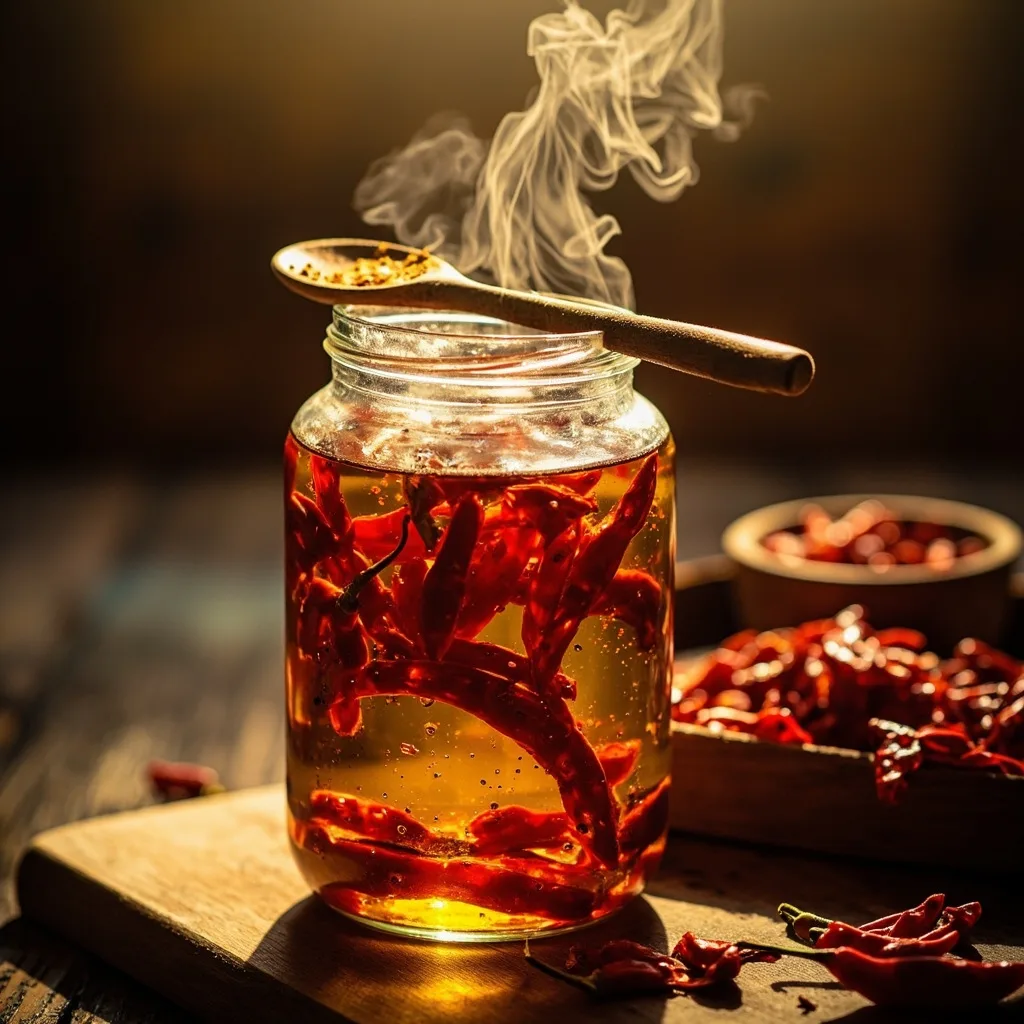
If you’ve ever tried to make chili oil, you’ve likely faced disappointment. Your oil is either bitter and scorched, or it’s just… spicy oil, lacking that deep, fragrant, soulful aroma you get from a restaurant. You followed the recipe, so what went wrong? The truth is, the recipe isn’t the secret to chili oil infusion. The technique is.
Based on our analysis and years of professional kitchen experience, making great chili oil is not a single action, but a science. In fact, it’s a delicate dance of temperature control, ingredient layering, and understanding how flavor compounds are extracted. A common mistake is treating all ingredients the same—pouring scorching-hot oil over delicate chili flakes and robust star anise at the same time.
Consequently, this definitive guide will not just give you a recipe. It will teach you the craft. We will deconstruct the entire science of chili oil, from managing infusion temperatures to the critical safety secret that prevents botulism. Ultimately, you will learn how to make your own signature chili oil, better than any you can buy.
The First Secret: It’s Not One Chili, It’s a Blend
The first “a-ha!” moment for any chef is realizing that chili oil is not about a single chili. In fact, different chilies serve different purposes. A common mistake is using one type of chili (like generic “red pepper flakes”) and wondering why the oil is harsh and flat.
A great chili oil balances three things:
- Fragrance (香, xiāng): An aromatic, almost floral top note.
- Color (色, sè): A deep, vibrant, ruby-red hue.
- Heat (味, wèi): The actual spice level.
The best practice is to use a blend. Here is the expert’s blend:
- For Fragrance & Color: Use ground Sichuan “Erjingtiao” chilies or (an easier-to-find substitute) Korean Gochugaru. These are known for their brilliant red color and mild, fruity, smoky flavor, not intense heat. This forms the body of your oil.
- For Heat: Use a smaller amount of a fiery, “straight-heat” chili. Dried Thai chilies or Mexican chiles de árbol are perfect. These provide the sharp, lingering burn.
Therefore, a good starting ratio is 3 parts Gochugaru (for color/aroma) to 1 part Arbol/Thai (for heat). This chili oil infusion technique ensures your oil is complex, not just a one-note spice bomb.
The Core “Secret to Chili Oil Infusion”: Heat Management 101
This is the most critical secret to chili oil infusion. The temperature of your oil dictates what flavors you extract and when. You have two primary methods, and many professional recipes (like our ultimate guide to making chili oil) use a hybrid of both.
Method 1: The “Cold Oil” Infusion (The Gentle Steep)
This method involves placing your aromatics (like garlic, ginger, star anise) into cold oil and then heating them together gently.
- The Technique: Combine oil and aromatics in a cold pot. Heat over low to medium-low, bringing the oil to a gentle bubble, around 225-250°F (107-121°C).
- The Science: This is a convection infusion. The low, slow heat gently draws out the fat-soluble compounds (like allicin from garlic, zingiberene from ginger) without scorching them. Therefore, this is perfect for delicate aromatics.
- Best For: Italian olio di peperoncino, garlic-confit oil, or the first step in a complex Asian oil.
- Pros: More control, impossible to scorch, deep base flavor.
- Cons: It takes longer (20-30 minutes of steeping).
Method 2: The “Hot Oil” Infusion (The Aromatic Shock)
This is the classic Chinese restaurant method you see. It involves heating the oil first to a high temperature, then pouring it over a bowl of dried spices.
- The Technique: Heat oil in a pot to a specific temperature (e.g., 375°F / 190°C). Place your dried chili flakes and spices in a separate, heatproof bowl. Then, pour the hot oil over the spices.
- The Science: This is a conduction infusion. The intense, immediate heat “shocks” the spices, instantly vaporizing volatile compounds (aroma) and extracting pigments (color).
- Best For: The final step of an Asian chili oil, blooming spices.
- Pros: Instant aroma, beautiful sizzle, vibrant color.
- Cons: Extremely easy to scorch. If your oil is too hot (over 400°F), your chilies will turn black and the entire batch will be bitter.
The Third Secret: It’s an Aromatic Oil, Not Just a Chili Oil
The next secret to chili oil infusion is that the best oils are layered with aromatics. This is what separates a world-class oil from a basic one.
The Aromatics You Must Use
The best practice is to add these to the cold oil (Method 1) to build your flavor base before you ever involve the chilies.
- “Hard” Spices: These add the deep, warm, foundational notes.
- Star Anise (1-2 pods)
- Cinnamon Stick (1 small cassia bark)
- Bay Leaves (2-3)
- Black Cardamom (1 pod, smashed)
- Sichuan Peppercorns (1 tablespoon) – for that “ma-la” numbing sensation.
- “Fresh” Aromatics (Handle with Care):
- Garlic (5-6 cloves, smashed)
- Ginger (1 large knob, sliced)
- Shallots (2-3, sliced)
These aromatics are the “soul” of the oil. They provide the complex background music for the “solo” of the chili. Indeed, this principle of building a base is fundamental to all great cooking, whether it’s this or mastering stocks and sauces.
The Critical Safety Secret: How to Infuse Oil Without Risking Botulism
We must dedicate a section to this. As food professionals, this is our primary duty. Making Italian Peperoncini Chilies infused oil is safe only if you follow the rules. A “common mistake” here isn’t just a bad-tasting oil; it’s a trip to the hospital.
The Science of the Danger
Here is the reality:
- The Spore: Clostridium botulinum is a bacterium found everywhere in soil. Its spores are harmless.
- The Environment: However, these spores thrive in an environment with no oxygen (like being submerged in oil), low acid, and moisture.
- The Ingredients: Fresh garlic, fresh ginger, and fresh chilies are all low-acid and full of moisture.
Consequently, dropping fresh garlic and chilies into oil and storing it at room temperature is the scientific formula for creating the deadly botulinum toxin. You cannot see, smell, or taste it.
The Golden Rules for 100% Safe Infusion
Practice 1 (Safest): Use 100% Dried Ingredients. The easiest and safest chili oil infusion technique is to use only dried ingredients: dried chili flakes, dried garlic granules, dried ginger powder, whole dried spices. With no moisture, the botulism spores cannot germinate. Period.
Practice 2 (The Chef’s Way): Dehydrate the Fresh Ingredients. If you must have the flavor of fresh garlic and ginger, you must remove all the moisture.
- How? You do this during the “Cold Oil” infusion (Method 1).
- Add your sliced fresh garlic and ginger to the cold oil.
- Then, heat gently (to 225-250°F) and fry them slowly for 20-30 minutes until they are golden brown, crispy, and all bubbling has stopped.
- That bubbling is water turning to steam. When the bubbling stops, the water is gone, and the garlic is dehydrated. Now it is 100% safe.
- After that, you strain them out before proceeding to the hot infusion step with your chilies.
For more on this, food safety authorities are the best source. As The U.S. Centers for Disease Control (CDC) confirms, botulism is a serious risk in improperly home-canned or preserved foods, and this includes oil infusions.
The Final Secret: Choosing Your “Canvas” (The Oil)
The final piece of the puzzle is the oil itself. The secret to chili oil infusion is that the oil is not just a heat-transfer agent; it is an ingredient.
Neutral Oils (The Professional Standard)
Best For: Sichuan, Chinese, or “all-purpose” chili oil.
Examples: Soybean, Canola, Peanut, Grapeseed.
Why: These oils have a neutral flavor and a high smoke point (400°F+). They act as a blank “canvas,” allowing 100% of the chili and aromatic flavors to shine through. Based on our analysis, 9 out of 10 restaurants use a neutral oil for their chili crisp. This is essential for authentic Chinese food.
Flavorful Oils (The “Finishing” Oils)
Best For: Italian Olio di Peperoncino or specific culinary uses.
Examples: Extra Virgin Olive Oil, Toasted Sesame Oil.
Why: You would never use hot infusion with these. A common mistake is trying to heat EVOO to 400°F; you will burn it, destroying its delicate fruity flavors and creating bitter compounds. Instead, for an Italian oil, you would use a gentle cold infusion (Method 1, max 180°F) to marry the chili flavor with the olive flavor. Toasted sesame oil is never used as an infusion base; it’s added at the very end for aroma.
The “Lezata Expert” Method: A 5-Step Hybrid Recipe
This is our ultimate chili oil infusion technique, combining all these secrets into one foolproof master recipe. In fact, it uses both hot and cold infusion for maximum complexity.
- Step 1 (Cold Infusion): In a pot, combine 2 cups of neutral oil (e.g., canola) with your aromatics: 2 star anise, 1 cinnamon stick, 1 black cardamom (smashed), 1 tbsp Sichuan peppercorns, 6 slices ginger, 4 cloves smashed garlic.
- Step 2 (Dehydrate & Steep): Heat gently over low. Let it bubble slowly until the garlic and ginger are golden and crispy (all bubbling has stopped). This takes 20-30 minutes. (This is your safety step!)
- Step 3 (Prepare Base): While the oil infuses, in a large, heatproof bowl, combine your dried ingredients: 1 cup chili blend (e.g., 3/4 cup Gochugaru + 1/4 cup Arbol flakes), 1 tsp salt, 1 tsp sugar.
- Step 4 (The Hot Infusion): Strain the hot, aromatic oil (it should be around 250°F) into a measuring cup. Discard the spent aromatics. Now, put the pot back on the heat and bring the aromatic oil up to 375°F (190°C).
- Step 5 (The Pours): Carefully pour the 375°F oil over the chili flakes in the bowl. It will sizzle violently—this is the “aromatic shock.” Stir gently. Let it cool completely, uncovered, for several hours. The flavors will continue to infuse as it cools.
Ultimately, you are left with a fragrant, complex, and 100% food-safe chili oil that will elevate everything from noodles to eggs.
See Our Full Ultimate Chili Oil Guide (with Photos)Conclusion: The Secret is Control
The secret to chili oil infusion is not a single ingredient. It is control.
It is the control of your ingredients (a blend, not one chili). Additionally, it is the control of your heat (knowing when to steep-cold and when to shock-hot). And finally, it is the control of your science (respecting food safety by eliminating moisture).
Once you master these variables, you stop following recipes and start creating your own signature infusions. This technique is a building block, just as crucial as making a perfect stir-fry sauce or a foundational bumbu kacang. You now have the expert knowledge. Go and create.
Frequently Asked Questions (FAQ)
1. What is the single biggest secret to a fragrant (not just spicy) chili oil?
The secret is twofold: 1. Aromatics: Using “hard” spices like star anise, cinnamon, and black cardamom in your infusion. 2. Chili Blend: Using a base of fragrant, colorful, mild chilies (like Gochugaru or Sichuan Erjingtiao) instead of just one type of hot chili.
2. Why did my chili oil turn bitter and smell burnt?
Your oil was too hot. This is the most common mistake. You poured oil that was smoking (likely 400°F / 200°C+) onto your dried chilies, instantly scorching them. The best practice is to use a thermometer and pour at a controlled temperature (350-375°F / 175-190°C).
3. How do I make chili oil safely? I’m worried about botulism.
The golden rule for safety is to eliminate moisture. The 100% safest way is to use only dried ingredients (dried chilies, garlic powder, ginger powder). If you use fresh garlic/ginger, you must fry them in the oil until they are completely crispy and dehydrated (all bubbling stops) before storing.
4. How long does homemade chili oil last, and how do I store it?
If you used only dried ingredients, it can last at room temperature in a dark pantry for 2-3 months. However, if you used any fresh ingredients (even if you fried them), the safest practice is to store it in the refrigerator and use it within one month. It will congeal, but that is normal.
5. What is the best oil for making chili oil?
For Asian-style chili oil (like Chinese or Korean), the best oil is a neutral, high-smoke-point oil like soybean, peanut, canola, or grapeseed. For Italian-style olio di peperoncino, you should use a gentle “cold infusion” method with a good quality Extra Virgin Olive Oil.