
7 Fatal Timing Errors for Perfect Chinese Hot Pot (Stop Stewing!)
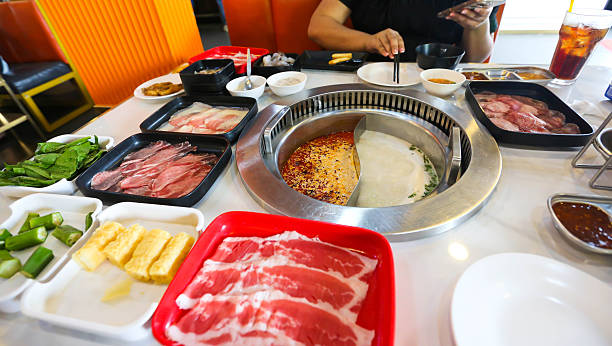
The Golden Rule: The most frequent timing errors for perfect Chinese hot pot stem from treating the communal pot like a slow cooker. Beginners often dump all ingredients in at once, causing the broth temperature to plummet and delicate proteins to toughen. To achieve restaurant perfection, you must embrace “Active Poaching”: cook your meat slice-by-slice for seconds, not minutes, and stagger your vegetables based on density to ensure every bite retains its distinct texture.
There is a specific kind of dining tragedy that occurs at hot pot tables across the US and Australia. It usually involves a beautiful, marble-rich slice of premium beef or a delicate scallop being dropped into the bubbling abyss, only to be forgotten.
Ten minutes later, it is fished out—grey, rubbery, and completely devoid of joy. I remember my first hot pot experience where I treated the broth like a dumpster, throwing in everything from noodles to lettuce simultaneously. The result was a thick, starchy sludge where nothing tasted distinct.
Hot pot is not just a meal; it is an active sport. Avoiding timing errors for perfect Chinese hot pot requires you to be a participant, not just a consumer. Whether you are enjoying a numbing Mala broth or a gentle bone broth, the clock is ticking the moment food hits the liquid.
1. The “Dump and Pray” Mistake
The cardinal sin of hot pot is the “mass dump.” When you throw a pound of cold ingredients into the pot at once, the boiling broth stops boiling immediately. You are no longer poaching your food; you are tepidly bathing it.
This temperature crash is the root cause of many timing errors for perfect Chinese hot pot. The recovery time for a home electric skillet or portable gas burner is slow. While the broth struggles to boil again, your meat turns grey and tough instead of searing instantly.
The fix is patience. Introduce ingredients in small batches. Never cover more than 60% of the surface area with food. This ensures the broth stays at a rolling boil, which is essential for food safety and texture.
2. Overcooking Premium Beef (The 8-Second Rule)
If you have splurged on thinly sliced Ribeye or Wagyu, leaving it in the pot for a minute is a crime. These cuts are designed to be cooked literally in seconds. This is where the Japanese concept of Shabu-Shabu (swish-swish) applies perfectly to Chinese hot pot.
You should hold the meat with your chopsticks and swish it through the bubbling liquid for 8 to 10 seconds. The meat should still be slightly pink when it hits your dipping sauce. If you let it go, you are committing one of the classic timing errors for perfect Chinese hot pot that ruins expensive ingredients.
3. Ignoring the Root Vegetable Base
While meat requires speed, root vegetables like lotus root, daikon radish, and potato need time. A common mistake is throwing them in late, resulting in a crunchy, raw bite that ruins the mood.
These dense ingredients should actually go in first, often before the broth even fully boils. They act as a flavor enhancer for the soup itself. Let them simmer for at least 10-15 minutes.
By the time you are ready to eat them, they will be soft and will have absorbed the essence of the soup. Just don’t forget about the potatoes, or they will dissolve and thicken your soup into a gravy—another one of those annoying timing errors for perfect Chinese hot pot.
4. The Leafy Green Texture Trap
Leafy greens like Spinach, Bok Choy, and Napa Cabbage are deceptive. The stems take minutes, but the leaves take seconds. If you throw a whole stalk of Bok Choy in and wait for the stem to soften, the leaves will turn into slime.
To avoid these timing errors for perfect Chinese hot pot, prep your vegetables correctly. Separate leaves from stems, or simply hold the stem part in the broth for a minute before dropping the whole vegetable in. This ensures uniform cooking.
5. Noodles: The Soup Thieves
We all love the starch finish, but adding noodles too early is a tactical error. Fresh noodles are covered in flour or starch. When added to the pot, they thicken the broth significantly and alter the flavor profile.
If you add noodles at the start, your crisp, clean broth becomes a starchy, heavy sauce that burns at the bottom of the pot. Save the noodles for the absolute end of the meal. It is the “closer” that soaks up all the complex flavors developed over the last hour.
6. Losing the Seafood
Shrimp, scallops, and squid are high-protein, low-fat ingredients that become rubbery the instant they are overcooked. Dropping a shrimp ball in and “coming back for it later” is a guarantee of failure.
Use the ladle or a dedicated mesh scooper for seafood. Never let it float free. According to culinary experts at Serious Eats, keeping seafood contained allows you to monitor the color change visually, pulling it the second it turns opaque.
7. The Mushroom Sponge Effect
Mushrooms are fantastic for adding umami, but they are also heat-resistant sponges. People often pull them out too early, fearing they are overcooked. In reality, mushrooms are very hard to overcook due to their polymer structure.
However, they retain heat like molten lava. One of the painful timing errors for perfect Chinese hot pot is biting into a shiitake mushroom that has just come out of the pot. It will burn your mouth. Let mushrooms rest in your bowl for at least two minutes before eating.
Conclusion: The Rhythm of the Pot
Great hot pot is about rhythm. It is a social dance of adding, swishing, and retrieving. By avoiding these common timing errors for perfect Chinese hot pot, you ensure that every bite is cooked to its specific potential.
Don’t rush, don’t overcrowd, and keep your eye on the prize. Your dinner guests will thank you for the perfectly tender beef and crisp vegetables.
Common Hot Pot Questions (FAQ)
- What goes into the hot pot first?
Start with dense root vegetables (potatoes, lotus root, corn) and flavor enhancers like mushrooms. These take the longest to cook and flavor the broth. - Is it safe to use the same chopsticks for raw and cooked meat?
Technically, no. It is safer to use “communal chopsticks” for the raw ingredients and your personal chopsticks for eating. However, in boiling broth, the risk is minimal if the tips are sterilized in the heat. - How do I know if the broth is too hot or too cold?
It should be at a gentle rolling boil. If it’s splashing violently, turn it down. If it’s perfectly still, stop eating and wait for it to boil again—it’s not safe to cook in tepid water. - Can I reuse the leftover hot pot broth?
Yes, it makes an amazing base for noodle soup the next day. Strain it first. However, if it is very oily or spicy (Mala), it might be too heavy to reuse. - How long should meatballs cook?
Frozen meatballs usually take 5-8 minutes. Wait until they float to the surface, then give them another minute to ensure the center is piping hot.

![4 Ways to Steam Fish Without a Bamboo Steamer [Chef’s Guide]](https://lezata.com/wp-content/uploads/2025/10/3c67ea0a-9945-437f-bbae-a6328259b7e9_019a2daa-6358-71bf-8a40-2290876b8ccf_files_steam_fish_without_bamboo_steamer-768x432.webp "4 Ways to Steam Fish Without a Bamboo Steamer [Chef's Guide] 8")