5 Things You Never Knew What is Beef Rendang

So, you’re asking, what is beef rendang? Oh, buckle up, my friend. You’ve stumbled into one of the greatest culinary rabbit holes on the planet. The simple answer? It’s a slow-cooked beef dish from Indonesia. The real answer? It’s a masterpiece. It’s a symbol of patience, a cultural icon, and frankly, one of the most complex and delicious things you will ever put in your mouth.
Let’s get one thing straight right out of the gate, because this is the single biggest mistake people make: Rendang is not a curry. I’ll say it again for the people in the back. Not. A. Curry. Calling rendang a ‘curry’ is like calling a 12-hour smoked brisket a ‘burger.’ It’s just… no. We’ll fight about this later, I promise. First, let’s look at what this dish actually is.
Expert Analysis: Alright, before we go further, I want you to watch this. video is showing the rendang cooking process. As a chef, I’d tell you to pay close attention to the stages.
You’d first see the ‘gulai’ stage, where it’s a wet, soupy curry. Then, it boils down to ‘kalio,’ a thick, saucy stew. But the real magic, the part most people skip, is what happens after that. You keep cooking. You cook it for hours until that coconut milk breaks, the oils split, and the entire mixture reduces into a dark, rich, almost dry paste that clings to the beef. That final stage, that is rendang. Now, let’s break down the science.
The Soul of Rendang: More Than Just Food, It’s a Philosophy
To ask “what is beef rendang” is to ask about the heart of the Minangkabau people of West Sumatra, Indonesia. This isn’t just a recipe; it’s a cultural artifact. Originally, the long, slow cooking process was a brilliant method of preservation. By cooking the beef in coconut milk and spices until all the liquid evaporated, the Minang people created a dish that could last for weeks, even months, without refrigeration. The spices act as natural preservatives, and the lack of moisture inhibits bacterial growth.
This made it the perfect food for travel, for festivals, and for honoring guests. In Minangkabau philosophy, rendang represents three core values:
- Patience (from the long cooking process): You cannot rush rendang. It teaches you to wait, to tend, and to trust the process.
- Wisdom (from the selection of spices): Each ingredient has a purpose, a balance of hot, aromatic, savory, and sweet.
- Perseverance (from the constant stirring): You must stir. And stir. And stir. For hours. It’s a commitment.
This is why, based on our analysis, rendang is served at every important life event, from births and marriages to funerals and major festivals like Eid al-Fitr. It’s not just food; it’s community and identity cooked in a pot.
Deconstructing the Magic: What is Beef Rendang *Made* Of?
The flavor of rendang is a symphony, and every instrument is critical. You can’t just throw “curry powder” at it and call it a day. The complexity comes from the ‘bumbu,’ or spice paste, which is the heart of the dish.
The ‘Bumbu’ (Spice Paste): The Engine of Flavor
This isn’t your average Tuesday night spice blend. We’re talking about a complex, wet paste, traditionally ground by hand on a stone, which includes:
- Aromatics: Galangal (a tough, piney ginger cousin), lemongrass, turmeric (for that golden color and earthy note), and ginger.
- Heat: A generous amount of red chilies. Authentic rendang has a deep, warming kick.
- Base Notes: Shallots (a lot of them), and garlic.
- ‘The Big Four’ (Dried Spices): Cloves, star anise, cardamom, and cinnamon. These add that warm, “holiday” spice background.
This paste is meticulously sautéed until fragrant, releasing all its essential oils. This process is fundamental to building flavor, a concept we explore deeply in our guide to mastering stocks and sauces. The principles are universal: no good foundation, no good final product.
The Coconut Milk: The Magical Transformation
This is the other pillar of rendang. We’re not talking about a splash from a can. We’re talking about copious amounts of full-fat coconut milk. The beef simmers in this milk, which performs two jobs.
First, it tenderizes the meat over the long cooking time. Second, it goes through a stunning transformation. As the water in the milk evaporates, the milk thickens. Eventually, it “breaks,” meaning the oils separate from the milk solids. This released coconut oil then begins to fry the beef and the spices, a process called caramelization. This is what turns the rendang from a pale, soupy gulai into a dark brown, intensely flavorful dish. The oil itself, now infused with all the spices, is a prized part of the dish, known as ‘dedak rendang’.
The Meat: Why Beef?
Traditionally, tough cuts of beef are used, like shank, chuck, or brisket. Why? Because the 4-8 hour cooking time is designed to break down all that tough connective tissue (collagen) and turn it into luscious, melt-in-your-mouth gelatin. Using a lean, expensive cut like tenderloin would be a disaster; it would just turn into dry, stringy sadness. The dish is a testament to making humble ingredients extraordinary.
The Great Rendang Debate: Is It a Curry? (Spoiler: No.)
Okay, let’s settle this. As a food professional, this is a hill I will die on. Here is why beef rendang is not a curry.
Understanding the “Stages” of Cooking: Kalio vs. Rendang
The confusion happens because the cooking process for rendang *includes* a stage that looks like a curry. As mentioned, there are three distinct phases:
- Gulai (The “Curry” Stage): This is the first hour or so. The beef is simmering in a large amount of liquid, spicy, golden coconut milk. It’s thin, soupy, and bright. If you stopped here, you would have a delicious Indonesian gulai, which is, effectively, a curry.
- Kalio (The “Stew” Stage): After a few more hours, the liquid has reduced and thickened significantly. The color is darkening to a light brown. It’s a wet, thick stew. This is often what is served in “Indonesian” restaurants abroad because it’s faster. It’s delicious, but it’s not rendang. It’s kalio (a wet rendang).
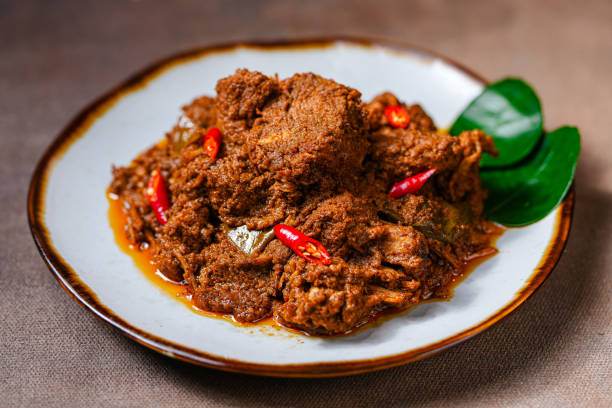
- Rendang (The “Dry” Stage): This is the final frontier. You keep cooking past the Kalio stage. You stir constantly as the mixture becomes a dark brown paste, the oil has separated, and the beef has absorbed every ounce of flavor. It’s a caramelization process. The final dish is “dry” (though it’s oily), and the flavor is profoundly deep, nutty, and smoky.
The Difference is Water (and Time)
A curry is defined by its sauce or gravy. The liquid is a essential part of the dish. Rendang is defined by the absence of that liquid. The entire point is to cook the water *out* of the dish, concentrating the flavor and using the resulting oil to preserve the meat. It’s a completely different culinary objective. Calling it a curry is a common mistake that misunderstands the entire point of the dish.
The Cooking Process: A Masterclass in Patience
So, what does making rendang actually look like? It’s a labor of love.
Step 1: The ‘Bumbu’. You pound or blend all your fresh spices (galangal, lemongrass, chilies, shallots, etc.) into a fine paste. This is your flavor bomb.
Step 2: The Sauté. You fry this paste, along with your dry spices and aromatic leaves (like turmeric leaves and kaffir lime leaves), in oil until it’s insanely fragrant and the color deepens. This “blooms” the spices.
Step 3: The Simmer (Gulai). In goes the beef, tossed to coat, followed by all the coconut milk. You bring it to a boil, then reduce it to a low, steady simmer. For the next hour, it looks like a curry.
Step 4: The Reduction (Kalio). For the next 2-3 hours, you just let it bubble away, stirring occasionally so it doesn’t stick. The liquid reduces, thickens, and darkens. This is the kalio stage. Many people stop here. We do not.
Step 5: The ‘Kerisik’ and The Stir (Rendang). This is the final, critical stage. You’ll add ‘kerisik’ (toasted, pounded coconut) which adds a nutty, gritty texture. The liquid is almost gone. The oil is splitting. Now, you cannot walk away. You must stir constantly for the last hour (or more) to prevent the bottom from scorching. The color will change from medium brown to a deep, dark, glorious mahogany. The beef will be so tender it’s about to collapse.
A common mistake is turning the heat up to rush this. Don’t. You’ll scorch the coconut solids, and it will be bitter. Low and slow is the only way. This same principle of patience applies to other complex cuisines, like mastering authentic Chinese food; the best dishes can’t be rushed.
Variations of Rendang: It’s Not a Monolith
While Rendang Daging (beef rendang) is the king, the philosophy of rendang can be applied to other ingredients. Understanding beef rendang means understanding it’s a *cooking method* as much as a dish.
- Rendang Ayam (Chicken): Uses the same ‘bumbu,’ but the cooking time is much shorter, usually 1.5-2 hours. You still reduce the sauce, but the chicken would disintegrate if cooked for 8 hours.
- Rendang Itik (Duck): A specialty. The rich, fatty duck meat stands up beautifully to the strong spices.
- Rendang Jengkol (Stink Bean): A popular vegetarian(ish) version using a type of bean with a… well, an *acquired* taste.
- Modern/Vegetarian: You’ll see rendang made with potatoes, hard-boiled eggs, or even jackfruit or mushrooms for a vegetarian take. The key is to create a robust ‘bumbu’ that carries the dish.
How to Serve and Eat Beef Rendang Like a Pro
Rendang is never, ever eaten alone. It’s the star of the show, but it needs a supporting cast. The best practice is to serve it as part of a ‘Nasi Padang’ spread (a Minang-style feast).
At a minimum, you need:
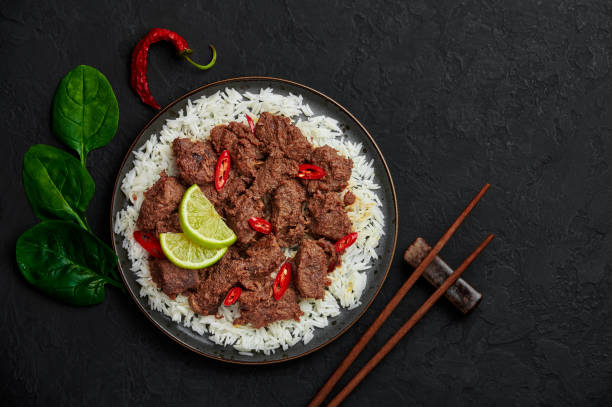
- Steamed White Rice: A fluffy, neutral base is non-negotiable. It’s the canvas for the masterpiece.
- Sambal Ijo (Green Chili Sambal): A fresh, sharp, spicy counterpoint to the rich, deep rendang.
- Boiled Cassava Leaves: A slightly bitter green to cut through the richness.
When you eat it, you take a small amount of rice, a piece of the rendang, and a dab of sambal, all in one bite. The explosion of flavors—rich, spicy, creamy, aromatic, savory—is what has consistently earned it the title of “World’s Best Food” in global polls.
And the best part? Based on our analysis, rendang tastes better the next day. And the day after that. The flavors continue to marry and deepen. It’s the gift that keeps on giving.
Frequently Asked Questions About Beef Rendang
1. Is beef rendang very spicy?
It can be, but it’s more complex than just “hot.” Authentic rendang uses a significant amount of chili, but the heat is balanced by the incredible richness of the coconut milk and the aromatic spices like galangal and lemongrass. The result is a deep, warming, flavorful heat, not a sharp, searing pain. The spice is integral to the flavor, not just an afterthought.
2. What is the difference between beef rendang and beef curry?
This is the big one! A curry is a dish defined by its sauce or gravy. Beef rendang is defined by the absence of liquid. It starts as a ‘gulai’ (curry), but is then cooked for hours until all the water evaporates, and the coconut oil separates and fries the meat. The final dish is a dark, dry, and intensely concentrated paste, not a saucy stew.
3. Why does beef rendang take so long to cook?
The long cooking time (4-8 hours) is essential for three reasons. First, it tenderizes a tough cut of beef until it’s melting. Second, it evaporates all the water from the coconut milk, concentrating the flavors. Third, it allows the beef and spices to fry in the separated coconut oil, creating a deep caramelization and flavor that is impossible to get from a quick stew.
4. What does beef rendang taste like?
It’s one of the most complex flavors in the world. It’s deeply savory and beefy, with a powerful aromatic punch from lemongrass, galangal, and kaffir lime. It has a creamy, nutty richness from the caramelized coconut milk (kerisik) and a warming, deep heat from the chilies. It’s not one-note; it’s a symphony of sweet, sour, salty, and spicy all at once.
5. Can you make rendang with chicken or vegetables?
Absolutely. Rendang Ayam (chicken rendang) is very popular, though it’s cooked for a shorter time (about 1.5-2 hours) so the chicken doesn’t disintegrate. Vegetarian versions using young jackfruit, potatoes, or firm tofu are also common. The “rendang” part refers more to the spice blend and the cooking method (reducing coconut milk) than the protein itself.