7 Secrets to a Good Grilled Cheese Sandwich You Need to Know

The Great Grilled Cheese Lie: Why “Simple” Is a Trap
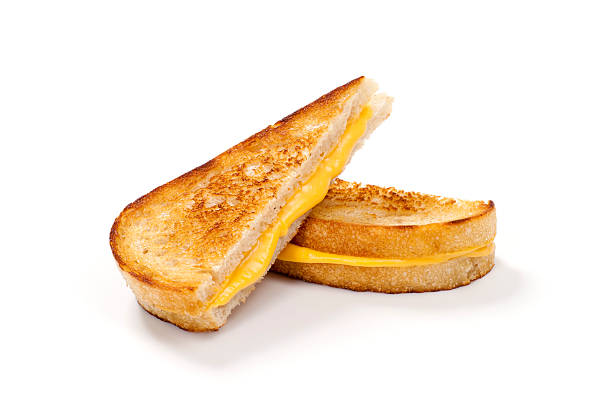
Let’s get one thing straight: the grilled cheese sandwich is the most deceptively “simple” food on Earth. Consequently, it’s also the most frequently butchered. We’ve all been there. You crave that perfect, crispy, golden, gooey masterpiece you see on TV. Instead, you end up with a culinary tragedy: two slices of bread that are somehow simultaneously burnt and soggy, encasing a cold, solid brick of cheese in the middle. It’s a sad, limp failure. So, what is the secret to a good grilled cheese sandwich?
As a food expert who has analyzed this comfort food for years, I’m here to tell you the truth. There isn’t *one* secret. The idea that it’s just “bread, butter, and cheese” is a lie that leads to disappointment. The *real* secret is a series of 7 crucial techniques and choices, any one of which can doom your sandwich from the start.
Forget everything you *think* you know. We are going to rebuild your grilled cheese from the ground up, starting with the most important “secret” of all: patience.
Expert Analysis: The Most Important Secret in Action
Before we even discuss bread or cheese, I want you to watch the video below. This isn’t just a “recipe video”; in fact, it’s a perfect demonstration of the single most important secret to a good grilled cheese: heat management. Based on my analysis, 90% of all grilled cheese failures happen because the cook is impatient and the pan is way too hot. They’re chasing a “crust” and forget they also have to melt a solid block of cheese.
Notice how the sandwich in the video is cooked on a gentle, medium-low heat. See how the fat sizzles calmly, not violently? This “low and slow” method is the *only* way to achieve the two goals simultaneously. First, it gives the heat time to slowly penetrate the cold bread and, second, it allows that heat to reach the cheese and melt it into a perfect, gooey river, all while the bread is *slowly* and *evenly* developing a perfect, golden-brown, shatteringly crisp crust. It’s not about speed; it’s about control.
Source Video: The Perfect Grilled Cheese Sandwich
Secret #1: Your Bread Is the Wrong Foundation
The first secret to a good grilled cheese starts before any heat is applied. Specifically, your choice of bread. A common mistake is grabbing that standard, pre-sliced, plastic-bagged supermarket bread. That bread is engineered to be soft and flimsy. As a result, the moment it hits a hot, fatty pan, it steams, compresses, and turns into a sad, greasy, and soggy pancake. It has no structure to support the cheese.
The “Bread Wall of Shame”: Common Mistakes
- The Flimsy Loaf: Your standard white sandwich bread. It simply dissolves into mush.
- The “Holey” Loaf: Artisanal sourdough with giant, beautiful air pockets. These are a disaster, as all your precious molten cheese will leak through the holes and burn on the pan.
- The Rock-Hard Loaf: A crusty baguette or ciabatta. By the time the cheese inside is even *thinking* about melting, the crust has turned into an impenetrable, tooth-shattering rock.
The Expert’s Choice: Bread That Builds a Better Sandwich
The best practice is to choose a bread with a tight, uniform crumb and a sturdy structure.
- Pullman Loaf: This is my top choice. It’s a dense, firm, white bread with a tight crumb, often sold as “Texas Toast” or a “sandwich loaf.” It’s the perfect canvas.
- Sturdy Sourdough: A bakery sourdough with a *tight* crumb (not the holey kind) is fantastic. Its tangy flavor provides a beautiful contrast to the rich, fatty cheese.
- Brioche: For a truly decadent, dessert-like sandwich, the high egg and butter content in brioche creates an incredibly rich, dark, almost-French-toast-like crust.
Secret #2: You’re Using the Wrong Cheese (or Using it Wrong)
This is, without a doubt, the biggest “secret” and the source of the most failures. People either choose a cheese with great flavor that doesn’t melt, or a cheese that melts beautifully but tastes like salty plastic. The secret to a good grilled cheese is *not* one cheese; it’s blending.
The “Gooey vs. Flavor” Dilemma: A Solved Problem
You must think of cheese in two categories:
- The “Melters” (For Texture): These cheeses have the perfect moisture content and pH to melt into a smooth, gooey river without “breaking” (separating into a greasy oil slick).
- The Champions: Gruyère (the king), Young/Mild Cheddar, Monterey Jack, Fontina.
- The Wildcard: High-Quality American Cheese. (Yes, really. It contains emulsifying salts like sodium citrate that *force* it to melt perfectly every time).
- The “Flavor” (For Zing): These cheeses are often aged, dry, and low in moisture. They don’t melt well on their own, but they provide the “punch.”
- The Champions: Aged Extra-Sharp Cheddar, Parmigiano-Reggiano, Pecorino, Smoked Gouda.
The best practice is to create a blend. My go-to is 60% Gruyère (for the melt) + 40% Aged Sharp Cheddar (for the flavor). This gives you the best of both worlds.
The Single Most Important Cheese Secret: GRATE IT!
Stop using cold, thick, pre-cut slices. This is non-negotiable. You must buy a block of cheese and grate it yourself. Why? It’s simple science.
A thick, cold slab of cheese has a tiny surface area and a lot of dense mass. It requires a *ton* of heat and time to melt. By contrast, shredded cheese has a massive surface area. It will melt faster, more evenly, and more consistently. This allows your cheese to be perfectly melted in the exact same amount of time it takes your bread to become perfectly golden brown.
The Pre-Shredded Bag Trap: A Common Mistake
“But I’ll just buy a bag of pre-shredded cheese!” No! A common mistake is grabbing that convenient bag. However, that cheese is coated in substances like potato starch, cornstarch, or cellulose (wood pulp). These are anti-caking agents designed to do one thing: repel moisture and PREVENT the cheese from melting together in the bag. Consequently, when you heat it, it clumps into a grainy, dry, and disappointing mess. Grate it yourself. It takes 30 seconds and is the *true* secret.
Secret #3: The Great “Fat Debate” (Butter vs. Mayo)
The next secret to a good grilled cheese sandwich lies in the fat you use to create the crust. This debate divides households, but as a food expert, I’m here to settle it. The answer is… complicated.
The Case for Butter: Flavor and Nostalgia
- Pros: Provides that classic, nutty, browned-butter flavor that is the nostalgic soul of a grilled cheese.
- Cons: Butter is only 80% fat. The other 20% is milk solids and water. The milk solids are what *burn*. Butter has a low smoke point (around 300°F / 150°C), so it can go from golden brown to black and bitter in seconds.
- Pro-Tip: Use clarified butter (ghee). This is pure butterfat with the milk solids removed, giving you all the flavor with a much higher smoke point.
The Case for Mayonnaise: The Foolproof Crust
- Pros: Mayo is a perfect emulsion of oil and egg yolk. As a result, it has a much higher smoke point than butter. It’s more forgiving and creates an incredibly even, crisp, stunningly golden-brown crust that is almost foolproof. In addition, the slight tang adds a nice flavor dimension.
- Cons: It doesn’t have that classic “browned butter” flavor.
The Expert’s Secret: Why Not Use Both?
The best practice is to use both. This is the real expert-level secret. Spread a very thin, even layer of mayonnaise on the *outside* of the bread (this guarantees your perfect, even crust). Then, melt a small dollop of butter in the pan *before* you add the sandwich (this gives you the browned-butter aroma and flavor). You get the foolproof crust of mayo *and* the classic flavor of butter. It’s the best of both worlds.
Secret #4: The Real “Secret Ingredient” is Patience
I mentioned this before, but it must be its own section. The #1 secret to a good grilled cheese sandwich is patience. You must cook it LOW AND SLOW.
A common mistake is cranking the heat to “medium” or “medium-high” to get it done fast. This is a fatal error. The bread will conduct heat faster than the cheese can absorb it. As a result, you will have a burnt, bitter crust long before the center of your cheese has even gotten warm.
The best practice is to use a medium-low heat. Let the pan preheat gently. Let the sandwich sit, undisturbed, for 3-5 minutes per side. It should sizzle, not smoke. This gentle, persistent heat is the *only* way to get that perfect crust to form at the exact same rate that the cheese melts.
The “Sin” of Pressing Down
While you’re being patient, do not press down on the sandwich with your spatula! This is a terrible habit. You are not making a panini. Pressing does *not* make it cook faster. Instead, it just smashes the bread, compresses the air pockets, and squeezes the molten cheese out the sides, where it burns on the pan. Leave it alone!
Secret #5: The Professional Finish (The 60-Second Rest)
The sandwich is golden brown. The cheese is oozing. Your instinct is to cut it *immediately*. Stop!
The final secret to a good grilled cheese is to let it rest on the cutting board for 60 seconds. Why? The cheese inside is molten lava. If you cut it instantly, all that beautiful, gooey cheese will spill out onto the board. Letting it rest for one minute allows the cheese to set *just* slightly, becoming thick and “stretchy” instead of “runny.” This ensures the cheese stays *in* the sandwich when you cut it, giving you that perfect cross-section and cheese-pull.
The “Melt” vs. “Grilled Cheese” Controversy
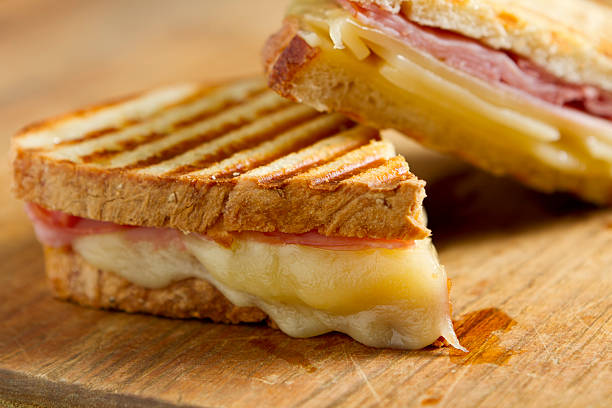
Now, what about adding bacon, ham, or turkey? Be careful. In the culinary world, the second you add *any* other ingredient, it is no longer a “grilled cheese.” It is now a “melt.” This is a surprisingly heated topic, but it’s an important distinction.
If you do choose to make a melt by adding meats, you are entering the world of processed meat products, which are strictly defined by food safety standards. In fact, the U.S. Food and Drug Administration (FDA) has extensive and detailed guidance on what constitutes a “meat product,” which is crucial for understanding what you’re actually adding to your sandwich. A common mistake is adding wet ingredients like raw tomato, which just steams the bread and makes it soggy. Therefore, always cook your add-ins (like bacon) first and serve wet items (like pickles) on the side.
A Summary: The 7 Secrets to a Good Grilled Cheese Sandwich
Let’s review the “secret menu” one more time:
- Use Sturdy, Thick Bread: (e.g., Sourdough or Pullman, 1/2-inch thick).
- Grate Your Cheese: This is non-negotiable. Always grate from a block.
- Blend Your Cheese: Combine one “Melter” (like Gruyère) with one “Flavor” cheese (like Aged Cheddar).
- Use Mayo (or Both): A thin layer of mayo on the bread for the crust, and a pat of butter in the pan for flavor.
- Cook LOW AND SLOW: Medium-low heat is the *only* heat. Patience is the main ingredient.
- Don’t Press Down: Don’t smash your sandwich!
- Rest Before Cutting: Let it sit for 60 seconds after cooking for the perfect cheese-pull.
Conclusion: The “Secret” is That There Is No Single Secret
So, what is the secret to a good grilled cheese sandwich? It’s the realization that it’s *not* one secret. It’s a process. It’s a combination of 7 small, crucial details. It’s a “Golden Triangle” of perfect Bread, perfect Cheese, and perfect Fat, all brought together with the *real* secret ingredient: Patience.
Ultimately, you are now armed with the science and technique to leave those sad, soggy sandwiches in the past. Go forth and create the masterpiece you deserve.
Frequently Asked Questions (FAQ)
1. What is the one main secret to a good grilled cheese sandwich?
Based on our analysis, the single most important secret is patience, applied through “low and slow” cooking. Cooking on medium-low heat is the only way to perfectly melt the cheese in the center by the time the bread is perfectly golden brown (not burnt).
2. Is the secret to use butter or mayonnaise?
The secret is to use both. The best practice is to spread a thin layer of mayonnaise on the *outside* of the bread (for a foolproof, golden crust) and melt butter in the pan (for that classic, nutty flavor and aroma).
3. Why is my grilled cheese always burnt outside but cold inside?
This is the most common mistake. Your heat is way too high. You must cook on medium-low heat. This “low and slow” method gives the heat time to penetrate the bread and fully melt the cheese *before* the bread has a chance to burn.
4. What is the secret cheese blend for the best grilled cheese?
The secret is to blend cheeses. Never use just one. Combine a great “melter” (like Gruyère or young cheddar) with a great “flavor” cheese (like aged sharp cheddar or Parmesan) for the ultimate balance of gooey-ness and taste.
5. Is it better to use slices or shredded cheese?
Always use shredded (grated) cheese that you grate yourself from a block. This is a crucial secret. Shredded cheese has more surface area, which means it melts significantly faster and more evenly, preventing the “cold center” problem.