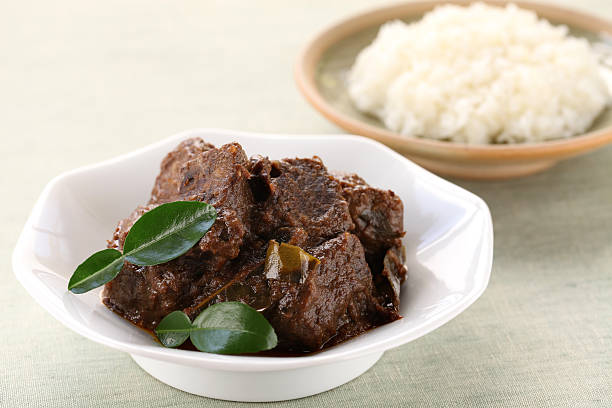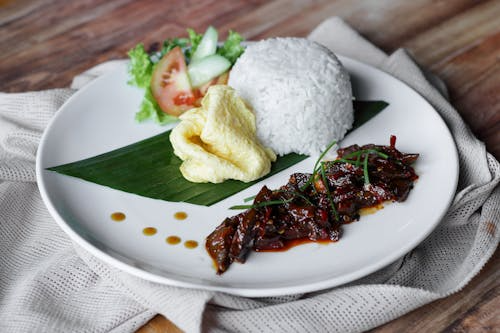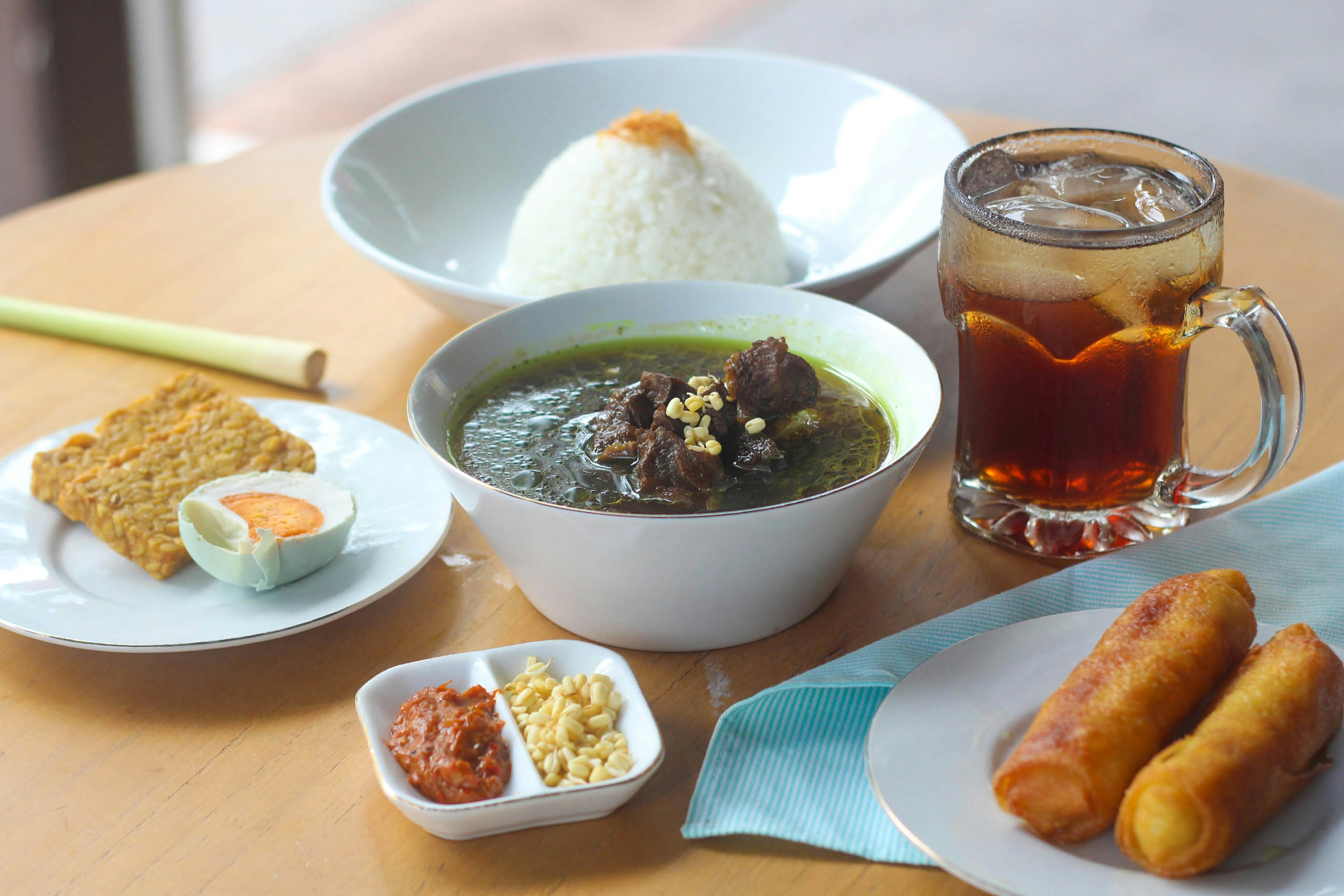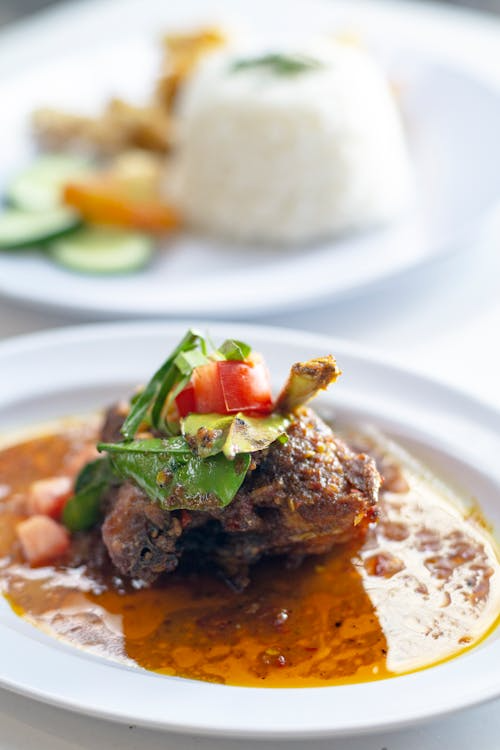
What Rice Is Best With Beef Rendang 5 Expert Picks
Last Updated on 2025-11-14 by Suryo
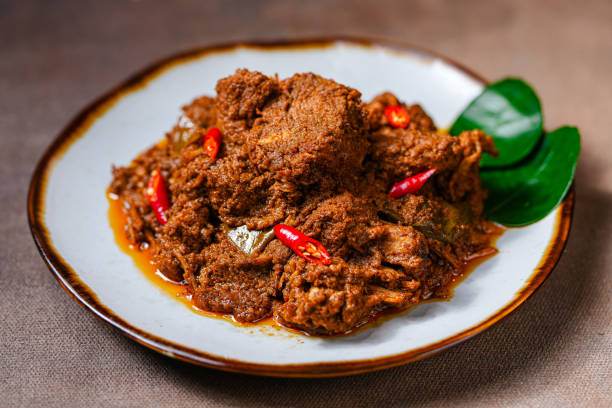
You did it. You made the best beef rendang recipe. Your house smells like a Padang restaurant. The beef is tender. The dedak (the delicious gritty paste) is dark and caramelized. You are a champion. You’ve conquered the world’s best food. And now… you’re about to commit a culinary felony.
You’re reaching for that generic, sticky, plain white rice, aren’t you? You’re about to scoop a clumpy, starchy pile of meh next to your masterpiece. As a chef with 30 years of experience, this… this hurts me. This is the most common mistake I see. You’ve spent 8 hours on the protein, and 8 seconds on its partner. The question “what rice is best with beef rendang” isn’t just a side-note; it’s half the dish.
Using the wrong rice doesn’t just “not help”—it actively damages the experience. A mushy, clumpy rice turns your rich, complex rendang into a one-note, heavy sludge. The texture is wrong. The flavor is wrong. It’s just… wrong.
So today, we’re fixing your plate. We’re going to dive deep into the philosophy of pairing rice with beef rendang. We’ll explore the traditional, the optimal, and the “secret pro” moves that separate a good meal from an unforgettable one. Stop ruining your rendang.
Expert Analysis: Stop Thinking “Grains,” Start Thinking “Texture”
The first thing I need you to do is get the word “rice” out of your head. Or at least, expand your definition. When you ask “what rice is best with beef rendang”, you’re probably thinking of fluffy, separated grains. But based on my analysis, the single best pairing isn’t about fluffiness at all. It’s about density.
The video below shows the process for making Lontong, or compressed rice cake. This is my number one, top-tier, chef’s-choice pairing. Why? Because it’s a “vehicle,” not a “soak.” Pay close attention to the technique in the video. The goal is not fluffy rice; it’s a firm, chewy, pliable cake. This dense texture provides a cool, neutral, and structurally-sound platform for the rendang. It doesn’t get mushy. It doesn’t fall apart. It cuts cleanly with a spoon and mops up the rich, oily sauce without turning into porridge. This is the practice terbaik for a truly authentic experience.
Source: Video Panduan Membuat Lontong di YouTube
The Philosophy: Why Your Rice Choice Is Failing Your Rendang
Let’s get technical. Beef rendang is not a “stew.” It’s not a “curry.” It’s a caramelized, rich, unctuous, and often (in its final form) “dry” dish. The flavor is profoundly deep, a bass note of toasted coconut, spices, and beef fat.
The “carrier” (your rice) has two critical jobs:
- Structural Integrity: It must be able to hold the rendang, and its oil, without disintegrating into a gummy mess.
- Palate Cleansing: It needs to provide a neutral, clean counterpoint to cut through the richness, allowing you to go back for another bite.
A common mistake is using short-grain, high-starch rice (like Japanese sushi rice) or even a medium-grain rice that’s been poorly rinsed. The high starch content mixes with the rendang’s rich oil and creates a heavy, cloying, sticky paste. This is a textural disaster. Your best rice for beef rendang is one that is either fluffy and separated OR intentionally dense and chewy. There is no in-between.
The 5 Best Rice Types for Beef Rendang: A Chef’s Ranking
Okay, let’s break down the options. As a professional, I’m ranking these not just on “tradition” but on performance. What rice to serve with rendang? Start here.
H3: 1. Lontong / Ketupat (The Textural Genius)
This is my #1 pick, as seen in the video. Lontong (rice cooked in a banana leaf) and Ketupat (cooked in a woven palm leaf) are compressed rice cakes. They are the same ingredient (rice) processed in a completely different way.
Why it works: It’s all about the texture. The rice is dense, firm, cool, and slightly chewy. It’s the ultimate “vehicle.” It doesn’t compete. It doesn’t get mushy. It provides a refreshing, clean-tasting bite that acts as a perfect foil to the warm, rich, spicy rendang. This is the pairing you’ll get in a high-quality Indonesian restaurant, and it’s the one that shows you know what you’re doing. It is, in my professional opinion, the absolute best rice for beef rendang.
H3: 2. Nasi Uduk / Nasi Lemak (The 5-Star Fragrant Upgrade)
This is the “luxury” choice. Nasi Uduk (its Indonesian/Jakartan name) or Nasi Lemak (its Malaysian twin) is rice cooked with coconut milk, pandan leaves, lemongrass, and sometimes ginger and a clove.
Why it works: Flavor harmony. You’re meeting “coconut” with “coconut.” The rice is unbelievably fragrant, rich in its own right, and fluffy. This pairing creates a symphony of flavor where the rice and the rendang are in a perfect, harmonious duet. The taste profile of the rendang is amplified by the rice, rather than just contrasted. It’s a decadent, celebratory choice. A word of warning: this makes the entire meal very rich. This is not a light lunch.
H3: 3. Nasi Putih (Plain White Rice) – But ONLY the Right Kind
This is what 99% of people use. It’s the standard. It’s the canvas. But “plain rice” is not a single thing. Using the wrong plain rice is the common mistake.
- THE WRONG RICE: Short-grain rice, sushi rice, Arborio. These are high-starch and designed to be “creamy” or “sticky.” They will turn into a culinary nightmare with rendang.
- THE RIGHT RICE: You must use a long-grain rice. Jasmine is the most common. It’s aromatic and fluffy. Basmati is also excellent, as the grains are even longer and more separated.
The Pro Technique: The practice terbaik is to rinse your rice. Rinse it in a bowl 5-6 times until the water runs almost clear. This removes the excess surface starch and is the non-negotiable secret to getting fluffy, separated grains that can stand up to the rendang sauce.
H3: 4. Nasi Kuning (Yellow Rice – The Celebration)
This is a “special occasion” rice, often served as part of a Tumpeng (a ceremonial cone of rice). It’s rice cooked with coconut milk, turmeric (which gives it the yellow color), and a bouquet of spices like lemongrass, kaffir lime leaf, and salam leaf.
Why it works: It’s a “feast in a bowl.” The rice is aromatic, visually stunning, and has a mild, savory, earthy flavor from the turmeric. It’s less “rich” than Nasi Uduk but more complex than plain rice. It’s a fantastic pairing rice with beef rendang for a dinner party where you want to impress. The flavor is a bit competitive, but in a fun, celebratory way.
H3: 5. Nasi Goreng Putih (White Fried Rice) – The “Secret” Pro Move
This is my controversial pick. You’re thinking: “Chef, fried rice? With rendang?” Hear me out. I’m not talking about the sticky, sweet-soy-sauce-laden (kecap manis) Nasi Goreng you get for breakfast.
I’m talking about Nasi Goreng Putih (White Fried Rice). This is day-old rice, fried at screaming-hot temperatures with nothing but shallots, garlic, a bit of egg, and salt. The “wok hei” (the smoky breath of the wok) imparts a subtle, smoky char that is unbelievably good with the deep, caramelized flavor of the rendang. It’s a total texture and flavor “left hook.” It’s not traditional, but it’s a genius-level move. This is what chefs do with leftovers.
I’m begging you. Do not let these near your rendang.
- Brown Rice: The healthy, nutty, fibrous, “wholesome” flavor of brown rice is a culinary clash with the refined, complex spices of rendang. It’s like wearing hiking boots with a silk dress. It doesn’t work.
- Sticky/Glutinous Rice (Ketan): (With the exception of Lemang, which is a different beast). Plain steamed sticky rice is a textural nightmare. It’s goo-on-goo.
- Risotto Rice (Arborio/Carnaroli): If you make a creamy, cheesy risotto and put rendang on it, you should be banned from the kitchen. This is a crime against two great culinary nations.
How to Prepare Your Rice: A Chef’s Non-Negotiable Rules
It’s not just what rice is best with beef rendang, it’s how you cook it. A great rice, cooked badly, is just as bad as the wrong rice. Here are my rules.
H3: Rule 1: Thou Shalt Rinse Thy Rice
I’m saying it again. For any fluffy rice (Jasmine, Basmati, etc.), you must rinse it. Put the rice in your cooker pot, cover with water, swirl aggressively with your hand, and pour out the cloudy water. Repeat until the water is 80-90% clear. This removes the surface starch. This is the single biggest key to fluffy rice. Do not skip this.
H3: Rule 2: The “Finger Knuckle” Water Method
Forget measuring cups. This is the traditional Indonesian way, and it works every time. After rinsing, pat the rice into a flat, even layer. Touch the tip of your index finger to the surface of the rice. Add water until it reaches the first knuckle (the first crease) of your finger. This 1:1 “volume” ratio (not by weight) is perfect for long-grain rice in a rice cooker.
H3: Rule 3: The 10-Minute “Rest” Is Mandatory
When your rice cooker clicks “Warm,” do not open it. I will know. Let it sit, undisturbed, for a minimum of 10 minutes. This 10-minute “rest” or “bloom” allows the moisture to redistribute, finishing the cooking process and ensuring the grains are perfect from top to bottom. If you open it immediately, the top is dry and the bottom is wet. Be patient.
H3: Rule 4: Fluff, Don’t Stir
After the 10-minute rest, open the lid. Use a rice paddle or a wooden spoon (not a metal fork!) to “fluff” the rice. This means gently turning it over and “cutting” it to release the steam and separate the grains. Don’t stir it like you’re mixing concrete. Be gentle.
Ultimately, the best rice for beef rendang is the one that respects the dish. Your rice is the supporting actor. It’s supposed to make the star (the rendang) look good. Stop being lazy. Rinse your rice. Try a Lontong. Or make a beautiful Nasi Uduk. You’ve already done the hard work on the Rendang Vlees; don’t fall at the final hurdle.
You’ve Mastered the Rice. Now Perfect Your Rendang (Our Best Recipe)Frequently Asked Questions (FAQ)
1. What is the most traditional rice for beef rendang?
The most common, everyday rice is Nasi Putih (plain white, long-grain rice). However, for special occasions or in many traditional Padang restaurants, Lontong or Ketupat (compressed rice cakes) are equally, if not more, traditional and authentic.
2. Is Jasmine rice or Basmati better for rendang?
Both are excellent long-grain choices. Jasmine is slightly softer, more aromatic, and will clump a tiny bit, making it a great “soak.” Basmati is firmer, and the grains stay incredibly separate and fluffy. Based on our analysis, it’s a personal preference, but both are infinitely better than short-grain rice.
3. Why is my rice always mushy with rendang?
This is a common mistake. There are two likely reasons: 1) You are using a short-grain or medium-grain rice (like sushi rice), which has too much starch. 2) You are not rinsing your long-grain rice before cooking, leaving all the “dusty” surface starch to create a gummy, mushy texture.
4. Can I use brown rice with rendang to be healthy?
As a chef, I strongly advise against it. You can do anything, but the strong, nutty, fibrous flavor and chewy texture of brown rice creates a severe flavor clash with the complex spices of the rendang. It’s a “healthy” choice that, in our opinion, ruins two different foods at once.
5. What’s the difference between Nasi Uduk and Nasi Lemak?
They are essentially “coconut rice” twins. Nasi Uduk is the beloved Jakarta (Indonesian) version, and Nasi Lemak is the national dish of Malaysia. While recipes vary slightly, both are cooked with coconut milk, pandan, and lemongrass. Both are a 10/10 pairing for beef rendang.
- 5 Reasons Why Is My Bread Not Rising in the Oven & How to Fix It
- 9 Ways How to Rescue an Overbaked Cake Before Guests Arrive
- 7 Ways How to Keep Muffins Moist While Baking Using The Overnight Protocol
- 7 Ways on How to Check Baking Powder Freshness Before You Bake
- 7 Best Non Alcoholic White Wine Substitutes Cooking