Fixing Watery Stir Fry Techniques
Last Updated on 2025-12-25 by Suryo
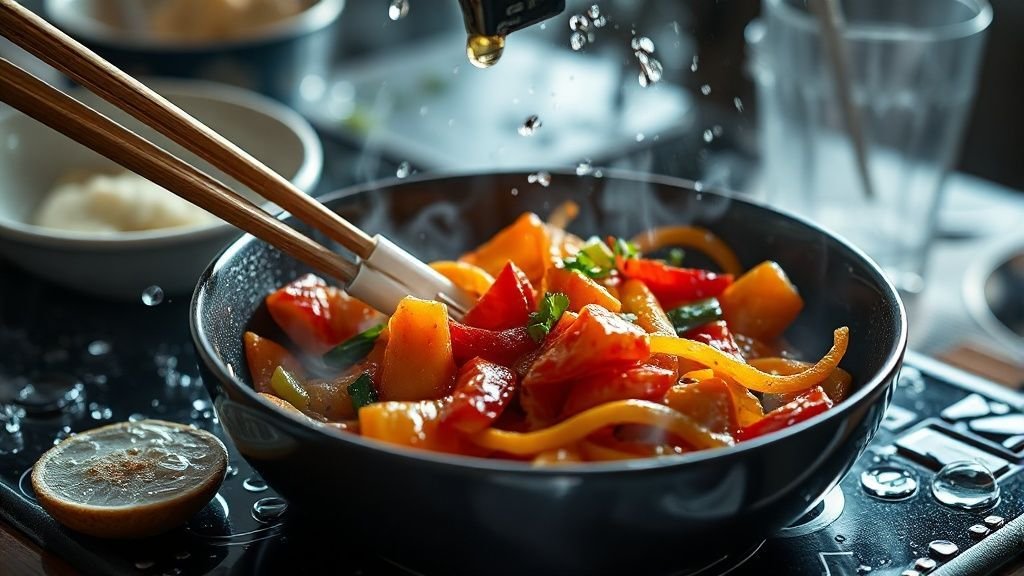
To effectively fix watery stir-fries, focus on optimizing heat management, ingredient preparation, and cooking sequence. This involves using a high-thermal-mass pan, ensuring ingredients are dry and not overcrowded, and cooking in batches to maintain high, consistent heat for rapid evaporation and crisp-tender perfection.
Ever dreamed of a stir-fry that sings with vibrant colors and tantalizing textures, where every bite offers a delightful crunch instead of a dismal, soggy chew? You’re not alone. The quest for the perfect stir-fry—one free from the dreaded pool of excess liquid—is a culinary challenge many home cooks face. While often attributed to “not enough heat,” the truth is far more nuanced, involving a delicate dance of physics, chemistry, and meticulous technique.
This comprehensive guide, penned from the heart of a professional kitchen, will equip you with the knowledge and actionable strategies to banish watery stir-fries from your repertoire forever. We’ll dive deep into the science behind effective stir-frying, dissecting common pitfalls and revealing the professional secrets that transform your dishes from dull to dynamic. Understanding the Maillard reaction is key to browning and flavor development, which is often thwarted by excess moisture. You can learn more about this fascinating chemical process on Wikipedia. Prepare to unlock a world of truly exceptional stir-fried creations.
The Culinary Calculus of Crispness: Beyond Just “High Heat”
Many believe merely cranking up the burner solves the watery stir-fry dilemma. While high heat is undeniably crucial, it’s merely one variable in a complex equation. True mastery lies in understanding how heat interacts with your ingredients, your pan, and even the surrounding air.
Thermal Mass: Your Pan’s Secret Superpower
Imagine trying to heat a swimming pool with a tea candle versus a powerful industrial heater. The amount of heat available isn’t the only factor; the rate at which that heat is supplied and maintained is paramount. This is where thermal mass comes into play. A thin, lightweight non-stick pan, while convenient for scrambled eggs, has poor thermal mass. When you introduce a significant amount of cold, wet vegetables, the pan’s temperature plummets dramatically, often below the critical threshold for searing.
This rapid temperature drop immediately shifts the cooking environment from high-heat searing to low-heat steaming. The vegetables, instead of browning and crisping, simply release their moisture into a cooler pan, creating that unwanted pool of liquid. A heavier pan, like a carbon steel wok or a cast iron skillet, possesses superior thermal mass. It retains heat far better, recovering its high temperature quickly even after cold ingredients are added. This ensures a consistent, scorching surface for immediate evaporation and Maillard browning.
The Evaporation Equation: Surface Area & Batch Cooking
Water requires energy (heat) to convert into steam and escape. If your pan is overloaded, the sheer volume of ingredients covers too much surface area, trapping moisture and hindering evaporation. Think of it like trying to dry clothes in a pile versus spread out on a line.
This is why batch cooking is non-negotiable for large quantities. By cooking smaller portions, you maximize the exposed surface area of your ingredients to the direct heat of the pan. This allows water to evaporate rapidly, preventing steaming and promoting that coveted crispy texture. It might seem like an extra step, but the difference in quality is profound.
The Vegetable Water Works: Understanding Moisture Release
Not all vegetables are created equal in their moisture content and cellular structure. Some, like mushrooms, spinach, zucchini, and eggplant, are veritable water balloons, ready to burst at the first touch of heat. Others, like broccoli, carrots, and bell peppers, are firmer and release moisture more gradually.
Understanding these differences allows for strategic layering during cooking. High-moisture vegetables can be added either first, cooked quickly to release and evaporate their water before firmer vegetables are introduced, or last, to minimize their time in the pan and prevent them from stewing. The goal is to cook each ingredient to its ideal texture while managing its unique moisture contribution.
Here’s a quick comparison of common stir-fry pan types and their suitability:
| Pan Type | Thermal Mass | Heat Recovery | Ideal for Stir-Frying? | Typical Cost (USD) | Notes |
|---|---|---|---|---|---|
| Carbon Steel Wok | High | Excellent | Yes, Traditional Best | $30 – $100 | Requires seasoning, heats rapidly and evenly, responsive to heat changes, perfect for authentic stir-fry. |
| Cast Iron Skillet | Very High | Excellent | Yes, Excellent Option | $25 – $150 | Holds heat incredibly well, provides fantastic sear, heavier, slower to heat up/cool down. |
| Stainless Steel Skillet | Medium | Good | Acceptable | $40 – $200+ | Durable, good for browning, less non-stick than others, often features an aluminum core for heat. |
| Non-Stick Wok/Skillet | Low | Poor | No, for prevention | $20 – $80 | Coating degrades at high heat, poor browning capability, prone to generating steam due to low thermal mass. |
The Maillard Magic vs. The Steaming Scourge
At the heart of a perfectly delicious stir-fry is the Maillard reaction, a complex chemical process responsible for the delectable browning, depth of flavor, and irresistible aroma in seared foods. This reaction thrives in a dry, high-heat environment. When water is present, the energy is diverted to heating and evaporating the water (creating steam) rather than driving the Maillard reaction.
Excess moisture, therefore, actively inhibits flavor development. Instead of savory, caramelized notes, you get boiled or steamed flavors. Our entire strategy for fixing watery stir-fries revolves around creating and maintaining conditions that prioritize the Maillard reaction, minimizing any opportunity for steaming to take over. This means every technique, from ingredient prep to pan choice, serves the ultimate goal of dry, intense heat application.
Practical Guide: Your Blueprint for Crisp Stir-Fries
Now, let’s translate theory into tantalizing practice. Follow these professional steps to transform your stir-fry technique and guarantee a perfect outcome every time.
Ingredient Anatomy & Prep: The Foundation of Dryness.
- Pat Dry, Always: This is perhaps the most fundamental step. Always pat your protein and vegetables thoroughly dry with paper towels before cooking. Any surface moisture will immediately cool the pan and contribute to steaming. Think of it as pre-emptively solving the water problem.
- Even & Strategic Cuts: Cut all ingredients into uniform, bite-sized pieces. This ensures even cooking. For high-moisture vegetables (like zucchini, mushrooms), consider cutting them into slightly thicker pieces or even pre-sautéing them separately to evaporate moisture if you’re very concerned about water.
- Layering Considerations: Separate your ingredients into groups: dense/hard vegetables (carrots, broccoli stems), medium vegetables (bell peppers, snow peas), quick-cooking/leafy greens (spinach, bok choy), and protein. This allows you to cook them efficiently.
Heat Mastery: The Foundation of Flavor.
- Preheat Relentlessly: Place your wok or heavy skillet over high heat and let it preheat for a solid 3-5 minutes before adding any oil or food. You want it smoking hot, almost shimmering. A properly preheated pan immediately sears the outside of your ingredients, locking in juices and initiating browning.
- Choose Your Fuel Wisely: Ensure your burner provides ample power. If you have a weaker stove, you’ll need to work in even smaller batches to maintain temperature. High-smoke-point oils like peanut oil, grapeseed oil, or canola oil are essential, as they can withstand the intense heat without burning.
The Pan’s Promise: Material Matters.
- Invest in Thermal Mass: As discussed, a carbon steel wok or a heavy cast iron skillet is your best friend. Their ability to retain and recover heat is unparalleled. If you’re using a lighter pan, compensate by reducing batch sizes even further and ensuring it’s screaming hot before each addition.
- Size it Right: Don’t use a pan that’s too small for the amount of food you’re cooking. A spacious pan allows ingredients to spread out, maximizing contact with the hot surface and facilitating evaporation.
Stir-Fry Staging: Order & Batches for Success.
- Cook in Batches (Seriously): This cannot be overstressed. If you’re cooking for more than 1-2 people, divide your ingredients. Cook proteins first, until browned and almost cooked through, then remove them from the pan. This allows the pan to stay hot and avoids overcrowding.
- Hardest First, Softest Last: Add denser vegetables (carrots, broccoli florets, onions) first, as they require more cooking time. Stir-fry for a few minutes, then add medium-density vegetables (bell peppers, snow peas). Finally, add quick-cooking items like leafy greens or pre-cooked protein, stirring only until wilted or heated through.
- Keep it Moving (But Not Too Much): Stirring is crucial for even cooking, but don’t obsessively flip everything. Allow ingredients to sit for 10-15 seconds at a time to get good contact with the hot pan and develop a sear. Then toss and repeat.
The Finishing Flourish: Sauces & Timing.
- Sauce Last, Not First: Sauces are often water-based and will immediately cool your pan and introduce moisture. Never add sauce until your stir-fry ingredients are cooked to your desired crispness and texture. Add the sauce at the very end, toss quickly for 30-60 seconds to coat and thicken slightly, then remove from heat.
- Thicken Wisely: If your sauce naturally creates a bit of liquid, a cornstarch slurry (cornstarch mixed with a small amount of cold water) can be added at the very end to thicken it rapidly. But remember, this is a thickening agent for the sauce, not a solution for a poorly executed, watery stir-fry.
Post-Cook Wisdom: Immediate Serving.
- Serve Promptly: Stir-fries are best enjoyed immediately. Letting them sit, especially with sauce, will inevitably lead to vegetables releasing more water as they cool, making everything soggy. Have your plates ready and serve directly from the wok.
By meticulously applying these techniques, you’ll find that fixing watery stir-fries isn’t a magical act but a scientific process of heat management, moisture control, and precise execution. Each step builds upon the last, culminating in a dish that showcases the vibrant freshness and textural integrity of its ingredients.
The journey to perfect stir-fry is one of continuous learning and subtle adjustments. Embrace the heat, respect the moisture, and you’ll soon be crafting stir-fries that are not just meals, but culinary masterpieces. The crisp, flavorful results will speak for themselves, proving that with the right knowledge, a soggy stir-fry can truly become a thing of the past.
FAQ
Q1: Why does my stir-fry get watery even with high heat?
Even with high heat, a stir-fry can become watery if the pan’s thermal mass is low, leading to rapid temperature drops when ingredients are added. Overcrowding the pan, adding wet ingredients, or introducing sauces too early also contribute significantly to steaming rather than searing.
Q2: Can I fix an already watery stir-fry?
While prevention is best, you can attempt to fix a watery stir-fry by carefully draining excess liquid from the pan. Then, remove all ingredients, reheat the pan to very high, and add back the ingredients in small batches to quickly evaporate any remaining moisture and achieve some searing. A cornstarch slurry added to a minimal amount of sauce at the very end can also help thicken the residual liquid.
Q3: What vegetables are most prone to making stir-fry watery?
Vegetables with very high water content and delicate cellular structures are most likely to release significant moisture. This includes mushrooms, zucchini, eggplant, spinach, bok choy, and certain types of cabbage. Strategic pre-preparation (like pre-sautéing mushrooms) or adding them last can help mitigate this.